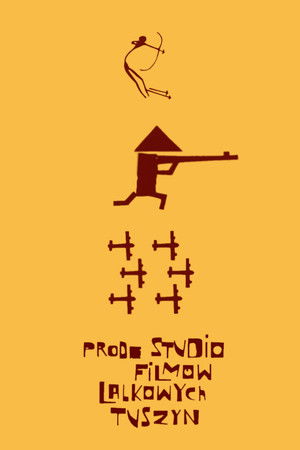
Milquetoast Henry Limpet experiences his fondest wish and is transformed into a fish. As a talking fish he assists the US Navy in hunting German submarines during World War II.
Jackie is a boy who is so trapped by his fears and doubts that he could not communicate with anyone. Then, a magic dragon named Puff comes to help Jackie by taking his soul force on a wonderous voyage to his island of Honah Lee. Along the way, they have adventures that nurture Jackie's imagination and courage in unorthodox ways.
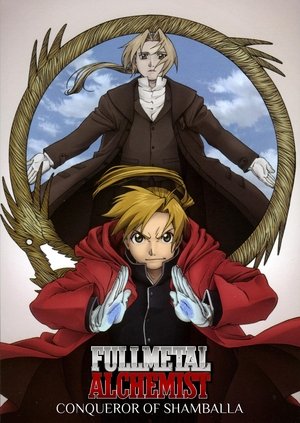
Munich, Germany, 1923. Two years have passed since Edward Elric was dragged from his own world to ours, leaving behind his country, his friends and his younger brother, Alphonse. Stripped of his alchemical powers, he has been all this time researching rocketry together with Alphonse Heiderich, a young man who resembles his own brother, hoping to one day find a way back home. His efforts so far had proven fruitless, but after lending a hand to a troubled gipsy girl, Edward is thrown in a series of events that can wreak havoc in both worlds. Meanwhile, at his own world, Alphonse Elric ventures deeper into the mysteries of alchemy in search for a way to reunite with his older brother.
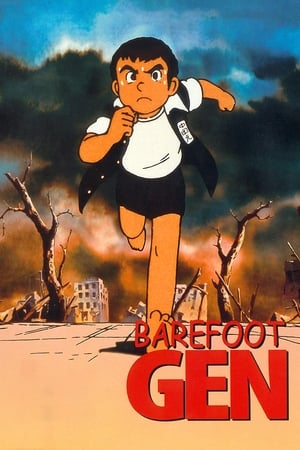
A story about the effect of the atomic bombing of Hiroshima on a boy's life and the lives of the Japanese people.
Grandmother Koba has to take care of her grandchild Emma's digital horse farm.
Mickey's friends throw him a surprise birthday party at Minnie's house. The chef brings out the cake (with 2 candles); Mickey manages to blow all the cake onto the chef's face, while the candles stay lit. He unwraps his present: a miniature piano. He plays a duet of I Can't Give You Anything But Love, Baby with Minnie, followed by an instrumental version of The Darktown Strutter's Ball, which everyone dances to (including Mickey and Minnie, while the piano stools keep playing). Mickey then plays There's No Place Like Home on the xylophone, then accompanies Minnie on another piece, after which the xylophone gets frisky and eventually dumps Mickey in the fish bowl.
The comparison of two rural families to demonstrate the need for proper hygiene and the consequences of its neglect.
A group of confectionary soldiers go to war against a neighboring cookie castle.
The moon and two owls sing to the Blue Danube Waltz, celebrating the night. Moths dance around a candle flame, fireflies glow, frogs chorus, and so forth.
Mickey walks into the tavern where Minnie is dancing, and begins to dance and play piano himself. Pegleg Pete comes in and treats Minnie badly. Mickey tries to defend her, but Pete steals her away. Mickey, riding Horace Horsecollar, gives chase. He manages to throw Pete off a cliff.
A short film advertising the newspaper Sztandar Młodych (The Banner of Youth), noteworthy for its abstract elements painted directly onto film stock. An attempt at showing the complexity of the world in a capsule, the film reflects the new policy of the openness to the West during the Thaw of the late 1950s in Poland.
Mammy Two-Shoes threatens to throw Tom out of the house if he makes a mess. Jerry sees an opportunity to rid himself of his feline nemesis.
Jerry runs into a dog pound (and right on top of a napping Spike) to escape a rather mangy-looking Tom. To avoid being ripped to shreds, Tom borrows the head of a nearby dog statue. This easily fools the dogs, but not Jerry, and Tom keeps losing his newfound head...
Tom ties up Spike and sneaks into the courtyard of the glamorous Toodles Galore with his bass, hoping to woo her with his song, much to the annoyance of a sleeping Jerry.
Jerry crashes a vase onto Tom's head, which gets Mammy to throw Tom out. Jerry at first revels in his freedom, but soon tires of this, and, under a flag of truce, hatches a plan with Tom.
It's a grand day at the beach for Tom and his girlfriend Toots - that is, until Jerry shows up (and, for a while, gets a rather vicious crab involved as well).
The seven short films making up GENIUS PARTY couldn’t be more diverse, linked only by a high standard of quality and inspiration. Atsuko Fukushima’s intro piece is a fantastic abstraction to soak up with the eyes. Masaaki Yuasa, of MIND GAME and CAT SOUP fame, brings his distinctive and deceptively simple graphic style and dream-state logic to the table with “Happy Machine,” his spin on a child’s earliest year. Shinji Kimura’s spookier “Deathtic 4,” meanwhile, seems to tap into the creepier corners of a child’s imagination and open up a toybox full of dark delights. Hideki Futamura’s “Limit Cycle” conjures up a vision of virtual reality, while Yuji Fukuyama’s "Doorbell" and "Baby Blue" by Shinichiro Watanabe use understated realism for very surreal purposes. And Shoji Kawamori, with “Shanghai Dragon,” takes the tropes and conventions of traditional anime out for very fun joyride.
Tom's new book on "how to catch a mouse" doesn't prove too helpful against Jerry; actually, Jerry seems to make better use of it than Tom.
Tom is playing with Jerry when a cute lady cat is delivered to Mammy for her to take care of. Tom is smitten at first sight.
The family dog warns Tom not to make any noise so he can take a nap. Jerry hears this and immediately devises plans to ensure that the dog's nap will be interrupted.