BERTHA LUTZ: WOMEN AND THE U.N. CHARTER reveals the important and unknown role of a Brazilian biologist and feminist in ensuring that gender issues were addressed at the basis of the United Nations.
"Spelkollektivet: To Build a Castle" is the story of the world's largest co-living space for game developers, and the people living there. Follow the founder James Newnorth as he navigates the many obstacles of turning an untried idea into reality. Meet the three indie devs Leene Künnap, Matej Jan and Michal Roch as they work on their respective games, "Death and Taxes", "Pixel Art Academy" and "Lords and Villeins". Find out if Spelkollektivet fosters the next indie dev star.
Despite the 1960s free-love and alternative culture, many women found that their lives and expectations had barely altered. But by the 1970s, the Women's Liberation Movement was causing seismic shifts in the march of the world's events, and women's creativity and political consciousness was soon to transform everything - including the face of publishing and literature. In 1973 a group of women got together and formed Virago Press; an imprint, they said, for 52 per cent of the population. These women were determined to make change - and they would start by giving women a voice, by giving them back their history and reclaiming women's literature.
Told by her daughter Wendy, MINK! chronicles the remarkable Patsy Takemoto Mink, a Japanese American from Hawai'i who became the first woman of color elected to the U.S. Congress, on her harrowing mission to co-author and defend Title IX, the law that transformed athletics for generations in America for girls and women.
A series of indie filmmakers are documented over the course of a few months throughout the production of their passion projects, as they change professionally and personally; moving closer to the lives they wish to live.
Norman Mailer and a panel of feminists — Jacqueline Ceballos, Germaine Greer, Jill Johnston, and Diana Trilling — debate the issue of Women's Liberation.
a filmmaker setting out to capture the life of demolition worker, an immigrant whose close friends and fellow workers went missing. As the filmmaker attempts to do so, the production faces many symbolic and frustrating obstacles in between. Disheartened, the filmmaker departs the site—defeated, exhausted, and grieving the story they couldn’t tell.
A docu-drama shot in 1970, but not completed until 1973, the film sought to encapsulate in an experimental form issues that were under discussion within the Women’s Liberation Movement at this time and to thus contribute to action for change. In its numerous community screenings, active debate was encouraged as part of the viewing experience.
This is Love tells the romance stories of 3 Nigerian LGBTQ+ couples and how they navigate romantic relationships in a conservative and hostile Nigerian environment. It is an attempt to humanize LGBTQ+ people in Nigeria by telling a story of how they find love amidst the risks and struggles. The cast includes a lesbian couple, a gay couple and a couple made up of a transman and a ciswoman. It covered conversations around acceptance, religion, health, the Same-Sex Marriage Prohibition Act (SSMPA), and finding love. 2 out of the 3 couples wore masks and had their voices distorted. Aside from helping to conceal the identity of the cast, the mask and distorted voices are also symbolic of the double life LGBTQ+ Nigerians have to live for their safety and security.
Four stories set between the 60s and the 70s in Italy. Four personal female adventures crossing the path of Italian history, the struggle for women rights, the liberation of the body, in a country without memory.
"Ellas en la ciudad" (Them in the City) focuses on the first settlers of the neighborhoods on the outskirts of Seville. Through their stories, we discover that they have been the backbone of a city that has turned its back on them.
In a world where technology and humanity intertwine, Tiffany, a self-aware feminist "sex robot", embarks on a journey of self-discovery. Conversing with leading experts, Tiffany confronts the issues that have shaped her design and asks about queerness concerning sex tech.
Award-winning documentary Resilience & Sacrifice follows an emerging musician from Vermont’s Northeast Kingdom who shelved his dreams to raise his family. Years later, he returns to the stage, facing the music industry and a medical crisis that nearly ends his career. A story of grit and passion.
Widerstandsmomente (Moments of Resistance) carries voices, writings, and objects from the anti-Nazi resistance into the present. Politically engaged women of today respond to historical resistance and make links to current events. A line is drawn from what was before and what is today to what might be: a society based on solidarity without discrimination or exclusion.
The story behind the growth of women's and girls' volleyball in the United States and how it continues to bolster and empower young women in their development. Featuring direct interviews with players, coaches, and families, as well as footage of the 2022 Big South Qualifier tournament.
The Post(?) Feminist Dissonance Project uses a quote by Kathleen Hanna as a prompt, a voicemail box as an interviewing device, found footage as a tool, and text as a character. it is a study in the cacophony of the inner life tuned against the perception of reality. i made this piece to see if i was alone, and i discovered that for better or for worse, i am not. this is above all about the process, not the resolution.
This is a story that’s never been told. SHOW HER THE MONEY addresses how women are getting less than 2% of venture capital funding and demystifies what venture capital is. Featuring rock-star female investors who invest in diverse women entrepreneurs with innovations that will change the world, Show Her The Money reminds us that money is power and women need it to achieve true equality.
Takes us to locations all around the US and shows us the heavy toll that modern technology is having on humans and the earth. The visual tone poem contains neither dialogue nor a vocalized narration: its tone is set by the juxtaposition of images and the exceptional music by Philip Glass.
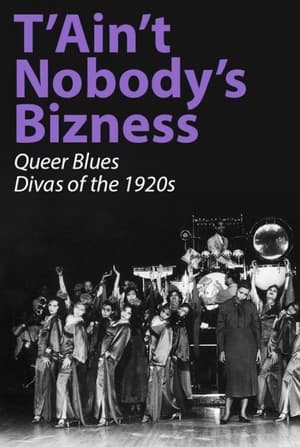
The 1920s saw a revolution in technology, the advent of the recording industry, that created the first class of African-American women to sing their way to fame and fortune. Blues divas such as Bessie Smith, Ma Rainey, and Alberta Hunter created and promoted a working-class vision of blues life that provided an alternative to the Victorian gentility of middle-class manners. In their lives and music, blues women presented themselves as strong, independent women who lived hard lives and were unapologetic about their unconventional choices in clothes, recreational activities, and bed partners. Blues singers disseminated a Black feminism that celebrated emotional resilience and sexual pleasure, no matter the source.
Personal stories taken from a survey on how women's lives are affected by a culture obsessed with body image and thinness.