A 1919 film directed by Sidney Franklin.
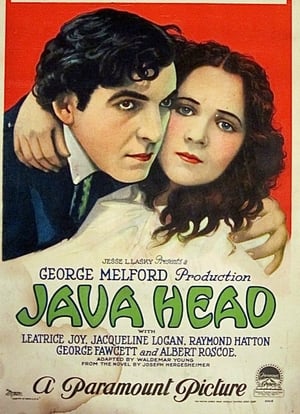
The niece and nephew of an eccentric millionaire try to get a share of the now deceased millionaire's inheritance from his adopted son who delights in squandering it. Considered lost.
Irked by the success of a brassy nightclub owner. her rivals set out to drive her out of business, and frame her for a murder in the bargain.
A Greek man falls for an injured French woman. When he is informed of her death, he continues to sing under her hospital window every night.
A man breaks into a flat, startling the occupant. They argue about the new girlfriend of the 'burglar', who's come to get her stuff. Then a third man bursts out of the cupboard...
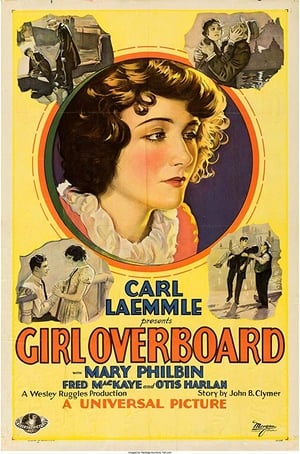
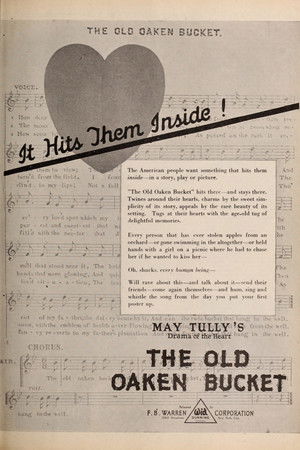
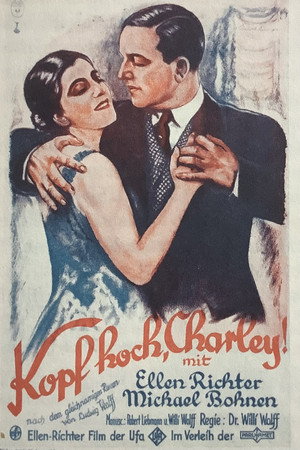
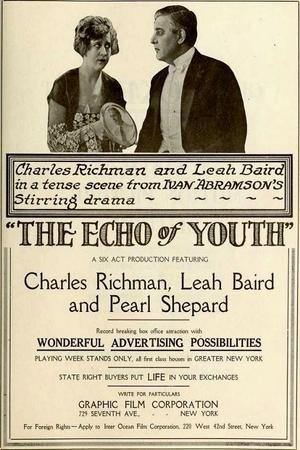
A poor but honest sheet-music salesman is parted from his wealthy fiancée when she comes to believe he’s nothing but a golddigger. But circumstance places him on the board of an exclusive girls’ school, where he can prove his integrity as well as his love. This film is believed lost.
A successful artist and a struggling one both love the same woman; she chooses the poor one but as the years roll on and other choices she makes and her husband’s misunderstanding lead to a near breaking point for the couple.
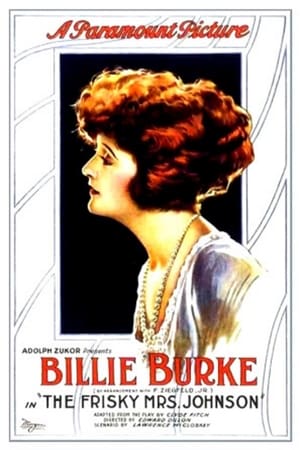
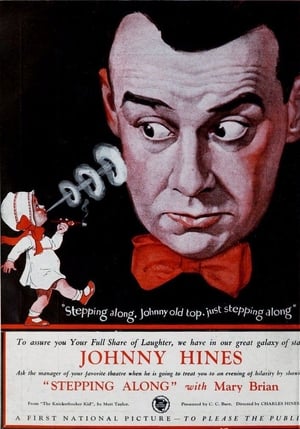
Gerald Faulkner, a young tin-can salesman, has fallen for sexy chorus girl Carlotta La Mere. One day Gerald's wealthy uncle Dunley makes him an offer: if he gets married by the following Saturday, Dunley will give him $100,000. Gerald rushes to propose to Carlotta, who agrees. However, the day before the wedding she asks for a postponement. Complications ensue.
Impresario Thomas Sullivan arrives in Ossawatomie, Kansas, to debut a new musical show written by local boy Gene Harris. After auditioning with a song by her bookkeeper boyfriend Brian McBride Sullivan hires Millicent Lloyd and takes her to New York City, where she becomes a famous singer. Brian, arriving in the city with a new opera, keeps his presence secret from Millicent until he has achieved success. But Harris suffering writer’s block steals Brian's work and presents it to Sullivan as his own. With the help of music publisher Gus Hertz, Brian exposes Harris and reclaims his composition. He and Millicent are reunited, and the opera goes on to enormous success.
Five-episode adaptation of the eponymous Russian novel, directed by Pyotr Chardynin et al.
Prosecutor Olsen's lover, the singer-songwriter Betsy, leaves him for a new passion. And he, speaking in court as a prosecutor, remains deaf to the dictates of feelings, a ruthless servant of the harsh Law. Some time later, Betsy kills her new lover in a fit of jealousy; Olsen, who retained his feelings, nevertheless becomes her accuser at the trial. He seeks the condemnation of Betsy, but comes to the realization that he lived unrighteously, allowing himself to be judged, becoming a servant of Themis. Exit in the classic tradition of the great mute: Olsen commits suicide.
When his opponent is killed after a duel over the honor of Virginia belle Judith Fairfax John Valiant flees North. Before taking flight John entrusts a note of explanation for Judith to Major Bristow. Bristow, however, has designs on the belle and withholds the missive. As the years pass John founds a successful business, loses his wife in childbirth and Judith marries Tom Dandridge and has a daughter, Shirley. Many years later, John Jr., now head of the Valiant Corporation, returns to his father’s estate during a financial crisis and falls in love with Shirley Dandridge. To rekindle her romance with John, Katherine tells Shirley of the family feud and Shirley suddenly cools toward John. On his deathbed, Barstow finally gives Judith John's letter in which John reveals that Edward had shot himself during the duel. John and Shirley are happily reconciled.
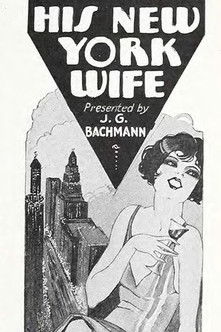
On her way to New York for her first stage appearance, Linda Cunningham meets Mame Jarrow, a nightclub singer; Linda later drops by to hear Mame sing, accompanied by their angel, Paul Nicholson, a wealthy roué. Mame gradually comes to realize that Linda is her own daughter, from whom she was separated years before by pious relatives. Using all her wiles, Mame attempts to keep Linda from falling prey to Nicholson, and when all else fails, she sends for Jerry Connor, Linda's small town sweetheart.
Young marrieds Guy & Bee are ostracized by their supposed friends in town when Bee discovers she is expecting but the legitimacy of their union is called into question. Eventually the squire who performed their ceremony becomes aware of the scandal and produces the necessary certificate.
Directed by Vladimir Gardin and Yakov Protazanov, this two-part epic was the most expensive Russian film at the time and smashed box office records. It is now considered lost, with only a 4 minute clip surviving.
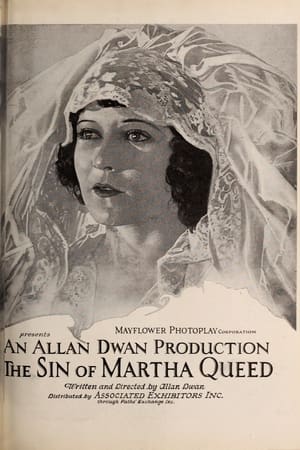
Robert Moore is the general manager of the firm run by John Gibson. After Gibson makes several visits to Moore's home, unfounded rumors begin of a relationship between Gibson and Moore's wife, Martha. Moore is discovered with a revolver in his hand, standing over Gibson's dead body. In fact, Moore’s best friend committed the murder, but Moore is convicted of second-degree murder and sentenced to 20 years in prison. Impulsively Martha remarries to a man who proves to be a brute. When Moore is set free after the real murderer confesses, he visits his former wife just as her husband attacks her. In a struggle, Moore shoots him in self-defense and is then reunited with his family.
The Kreutzer Sonata is a 1911 Russian silent film directed by Pyotr Chardynin. The film is considered lost.
Madison Hale, a wealthy American financier, is bidding against Govrian Texler, the financial advisor to the King Stephen III of Maritizia, for the concession to run a transcontinental railway through the country. After Madison's son, Dick, completes his college education, he decides to visit Maritizia, the birthplace of his great-grandfather. There he meets Princess Irenia and they fall in love, arousing the jealousy of Ferdinand Vaslof, Govrian's nephew, who is also in love with the princess.
A three-part historical film: the first episode takes place in ancient Egypt, the second is based on the Hugo novel La Fin de Satan, and the third takes place during the 1917 Russian revolution. Lost film, minor fragments survive
Drama in the Futurists' Cabaret No. 13