Charts the life and career of Scottish boxer Ken Buchanan, the 1970-71 undisputed lightweight world champion.
In the Company of Kings follows a fight fan's unforgettable journey into the dark heart of American boxing to talk to eight former World Champs and those closest to his hero, Muhammad Ali, about race, struggle, victory, defeat and picking yourself up off the canvas. Features Larry Holmes, Bernard Hopkins, Tim Witherspoon, Earnie Shavers, the Spinks brothers, Bob Arum and more.
Cast as America’s Villain in the famed Rumble in the Jungle against Muhammad Ali, George Foreman lost one of the greatest fights in sports history. Immediately after the defeat, "Big George" fell into a spiral that made him abandon boxing and spend 10 years becoming an ordained minister following a near death experience. 20 years later on and into his 40’s, Foreman began an improbable climb back to the summit of world boxing becoming the heroic figure he’d always been destined to be, and writing one of the greatest underdog stories ever told.
In 1976, Muhammad Ali and Ken Norton met inside the ring at Yankee Stadium. The conclusion of the fight would go down as one of the most controversial decisions in boxing. But the civil unrest around Yankee Stadium in the Bronx — and in New York City as a whole — became the story of the evening.
Two elite boxers, Katie Taylor and Amanda Serrano, prepare for their epic trilogy finale, a live-streamed match on Netflix July 11. Uma Thurman narrates their rigorous training journey.
The story of Jack Johnson, the first African American Heavyweight boxing champion.
Experimental film fragment made with the Edison-Dickson-Heise experimental horizontal-feed kinetograph camera and viewer, using 3/4-inch wide film.
The life and times of Muhammed Ali shown through the lens of his numerous appearances on The Dick Cavett Show. The film features new interviews with Dick Cavett, Rev. Al Sharpton, and Larry Merchant, as well as archival material from the Cavett Show.
1974 documentary about Ali.
Stanley Kubrick’s debut documentary, following Irish-American middleweight boxer Walter Cartier on April 17, 1950—the day of his bout with Bobby James. The film traces Cartier’s quiet morning rituals, training, and anxious hours before the match, culminating in his swift victory that night in Newark. Opening with a brief history of boxing, Kubrick’s tightly crafted short captures the discipline, isolation, and tension behind a fighter’s daily routine.
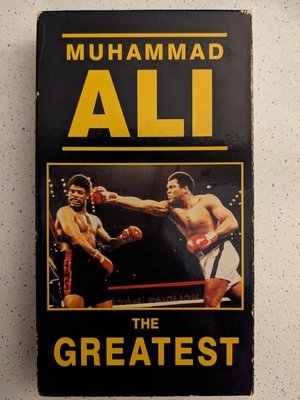
The study of crazy brilliance and flamboyant sincerity. a.k.a. Cassius Clay presents a fascinating look at the incredible life and achievements of one of the most courageous, outspoken and charismatic figures of boxing: Muhammad Ali. Born Cassius Clay in 1942, Ali soon rose to become a renowned athlete, an articulate author and a compelling political; leader. Audacious, ambitious and totally fearless, Ali became a symbol of pride, a legend of hope and one of the most extraordinary cultural icons of the 20th century.
From his humble, troubled beginnings at age 10 in New York, to his discovery by Cus D'Amato, his rise to Champ, his marriage, divorce, rape conviction, prison term and release, Tyson's life is profiled.
Junji Sakamoto's documentary follows legendary boxing champ Joichiro over 20 years, from the ages 25 to 44. In a series of meetings, like the 7 Up series, Sakamoto conducts intimate interviews with Tatsuyoshi. Narrated by actor Etsushi Toyokawa.
In October of 1980 Muhammad Ali was preparing to fight for an unprecedented fourth heavyweight title against his friend and former sparring partner Larry Holmes. To say that the great Ali was in the twilight of his career would be generous; most of his admiring fans, friends and fight scribes considered his bravado delusional. What was left for him to prove? In the weeks of training before the fight, documentarians Albert and David Maysles took an intimate look at Ali trying to convince the world and perhaps himself, that he was still “The Greatest.” At the same time, they documented the mild-mannered and undervalued champion Holmes as he confidently prepared to put an end to the career of a man for whom he had an abiding and deep affection
On the evening of Sept. 7, 1996, Mike Tyson, the WBC heavyweight champion, attempted to take Bruce Seldon’s WBA title at the MGM Grand in Las Vegas. At this point in his career, Tyson’s fights had become somewhat of a cultural phenomenon, where the ever present hype of the professional boxing scene would come face to face with the worlds of big business, Hollywood, and hip hop. Sitting ringside was controversial rapper Tupac Shakur. Shakur and Tyson were friends, a feeling of kinship linked them as each rose to stardom from poverty only to be thrown in prison. Following Tyson’s victory, Shakur and “Iron Mike” were to celebrate at an after party, but the rap star never arrived. Shakur was brutally gunned down later that night, and the scene in Las Vegas quickly turned from would-be celebratory revelry to ill fated and inopportune tragedy.
Documentary on gymnasiums in Philadelphia, Pa. specializing in training kids to box. By learning boxing and competing in tournaments, kids are helped in staying out of trouble
Christy Martin broke boundaries and noses as she rose in the boxing world, but her public persona belied personal demons, abuse and a threat on her life.
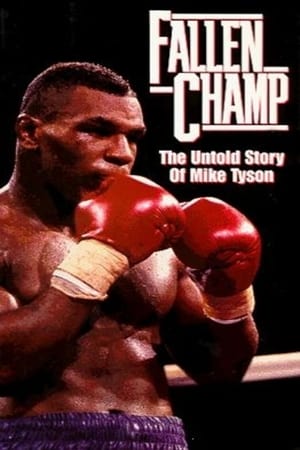
Fallen Champ: The Untold Story of Mike Tyson is a 1993 film made by acclaimed American documentary filmmaker Barbara Kopple. Though Tyson was in jail serving a sentence for rape, Kopple used existing interviews with the boxer, as well as her own extensive interviews with those closest to Tyson, to explore the man's history. The film traces Tyson's story from his troubled and tumultuous upbringing, through his rapid ascendancy in the ranks of the boxing world and his subsequent struggle with the trappings of fame. Fallen Champ earned Barbara Kopple a Directors Guild of America award as Best Documentary Director of 1993.
It's 1974. Muhammad Ali is 32 and thought by many to be past his prime. George Foreman is ten years younger and the heavyweight champion of the world. Promoter Don King wants to make a name for himself and offers both fighters five million dollars apiece to fight one another, and when they accept, King has only to come up with the money. He finds a willing backer in Mobutu Sese Suko, the dictator of Zaire, and the "Rumble in the Jungle" is set, including a musical festival featuring some of America's top black performers, like James Brown and B.B. King.
Co-directed by Gentry Kirby and Erin Leyden, “Tommy” examines Morrison’s remarkable rise to the spotlight, followed by a stunning, confounding, and ultimately tragic fall. He was one of the best heavyweights of his time; a handsome, charming, yet unsettled young star. Born into a troubled family in America’s heartland, Morrison’s initial emergence as a fighter was bolstered by a starring role in “Rocky V.” A few years later he beat George Foreman for the WBO heavyweight title, and seemed primed for more stardom, even in the face of blown opportunities and upset losses. But everything changed in early 1996 when he tested positive for HIV, abruptly forcing him into retirement at age 27. From there, Morrison’s life spiraled further and further downward, plagued by drug problems, jail time, and an eventual denial that he had the virus at all.