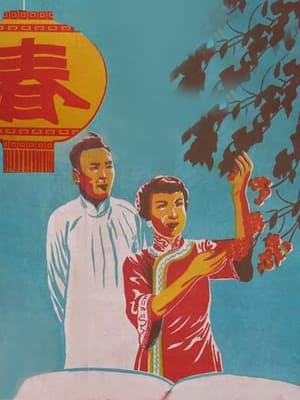
"Family" (1953), which launched the Union Film legacy, "Spring" (1953) and "Autumn" (1954) are adaptations of Ba Jin's highly regarded novel "Torrent Trilogy". In "Family", director Ng Wui skilfully condenses the voluminous first part of the novel into an emotionally powerful and intellectually focused story of youngsters struggling to survive oppression and repression in a feudalistic family. This well-received film quickly established the company's reputation.
In this Dickens adaptation, orphan Pip discovers through lawyer Mr. Jaggers that a mysterious benefactor wishes to ensure that he becomes a gentleman. Reunited with his childhood patron, Miss Havisham, and his first love, the beautiful but emotionally cold Estella, he discovers that the elderly spinster has gone mad from having been left at the altar as a young woman, and has made her charge into a warped, unfeeling heartbreaker.
Trials and tribulations of a Jewish family from Sarajevo during turbulent times between 1914 and 1945. Based on TV series of the same title.
A woman comes to Sarajevo to find out more about her brother's death. The only source she has is a message on a piece of paper she got from him: "Look for Vanda Kos".
In 1840s New York, the uneventful and boring days of the daughter of a wealthy doctor come to an end when she meets a dashing poorer man — who may or may not be after her inheritance.
Ruža left Serbia, her country, over 30 years ago and lives in Zurich. Her daily life is a string of repetitive moments until, one day, Ana arrives on the scene and upsets Ruža's painstakingly organized world. A subtle friendship develops between the two strong willed women.
An adaptation of the J.P. Sartre story "Le Mur". What goes on in his mind and what happens outside when he has left only few more hours left to live. The existential dilemmas of a prisoner condemned to death from a repressive regime for his participation in a resistance movement and his friendship with the leader of this resistance. When all seems lost and he has already given up the most unlikely coincidence changes the course of events and his life.
Industrialist Tam Kar-cheung knowingly puts the lives of his workers at risk so as to line his pocket with insurance payments. The chivalrous Bus Money gets into fisticuffs with Tam's chauffeur, Tam Biu, who bears a grudge against the assailant. When Money catches wind of Kar-cheung's vicious plot to set fire to a squatter area to clear the path for a property development project, she moves in and watches vigilantly for signs of arson. Soon, she saves Ah-hau, Biu's girlfriend and a young victim of drug rape, from her suicidal attempt by drowning. Money pursues fragments of clues which lead her to the victim's boss, Taipan Cheung who sucks up to his master Kar-cheung by drawing his prey to her trap. Money then organises squatter residences into fire brigade to guard against arson attacks and exposes Kar-cheung's evil. Realising he has been exploited for his blind loyalty, Biu teams up with Money to dispense justice.
Bus Money dons various disguises on public buses to protect the defenceless from the bullies and receives heroic praise. Money meets Tai Ngau, a righteous journalist, when they bear witness to the callous response of Manager Mo to the death of his servant Ah-kwai. Tai writes to redress grievances of the deceased. When visiting the family of orphans, he chances on his kindred spirit giving the eldest daughter Ah-yin a gift of gold. Money exploits the weakness of Mo and her connection with his son Sze-fu to swindle a fortune out of the lewd man for the benefits of the fatherless children. Her rage grows learning that Mo's friend Fong Hak-sang has pulled off a lucrative fraud on returned overseas Chinese and forces Ah-yin to pledge herself in paying off her father's debts. Money, who has all kinds of tricks up her sleeve, teams up with Tai and gives Mo and Fong their comeuppance before setting off on her next mission.
Hak-ming heads the Ko Family, but he and his brothers, Hak-ting and Hak-on, and the second wife of the late Master Ko quarrel. Young Cousin Mui, who has tuberculosis, is forced by to marry an older woman. Kok-sun is guilty of being unable to stop the marriage. Sun and maid Chui-wan are wary of their feelings for each other due to class difference. Cousin Mui dies of illness. Hak-ting has his eyes on Wan. His wife, Wong, complains to their daughter, Shuk-ching, who cannot take it and commits suicide. Wong blames herself for her death. Undergone these tragedies, Cousin Kam's mother let Kam have a modern wedding with Kok-man. When Ming is ill, Ting and On want to sell the ancestral home. Hak-ming dies of angst. When the fifth uncle of Sun forces Wan to be his concubine, Wan tries to kill herself but is intercepted by Sun. Pressurised by people of the house over the issue of inheritance, Sun protests by declaring his love for Wan and leaves the family, with his mother, brother Man and Wan.
Ko Suk-ying is saddened over her arranged marriage as manipulated by her father Hak-ming. Ko Kok-sun's Cousin Chow Wai's spends the Mid-Autumn Festival before her marriage with the Kos. She has been in love with Sun. Sun finds out about her love for him when she is about to be married off, he is too weak to oppose to Wai's betrothal to another man. Sun's son, Hoi-sun, falls ill. Fearing the displeasure of his elders, Sun dares not consult a western doctor. Meanwhile, another dispute arises among members of the family over the ancestral land. When accused of being incompetent in his management, Sun takes the blame silently. Wai dies of grief while Hoi-sun becomes a victim of mistreatment. Sun is devastated at this double blow. Hak-ming instructs Sun to arrange for Ying's wedding. Knowing the kind of man Ying's fiancee is, Sun is reluctant. Not wanting to follow in Wai's footsteps, Ying fights for her own rights, and backed by an enlightened Sun, she leaves for a new start.
Chor Yuen started his directorial career with a bang. From its very first image, The Natural Son establishes Chor as a filmmaker of stylistic flourish, which would be sustained in various forms throughout his long tenure. Adapted from '30 cents' pulp fiction, it is a Kong Ngee melodrama made in the studio's mould, with Westernised characters and trendy middle-class lifestyles. Yet, Chor's first film is not exempt from the social urgency that characterises the Cantonese cinema of his father, Cheung Wood-yau. The film cloaks its entertainment in a moral deliberation on blood ties, its story about the raising of a bastard child a head-on challenge of archaic family values. An ostentatious start for a colourful and eventful career.
An exiled filmmaker finally returns to his home country where former mysteries and afflictions of his early life come back to haunt him once more.
The horrors of war are examined from the view points of lifelong friends (Linus Roache, Vincent Perez), who end up on opposing sides in the civil war in Sarajevo. One is an expert marksman, who trains the snipers used to terrify the city and the other becomes a freedom fighter, who rejects his friend's offer to gain an escape from the city. As might be expected, the two eventually have to face-off against one another.
Adapted from the short story by Franz Kafka, The Judgment is a psychological drama exploring themes of alienation, memory, and the lines between fantasy and reality. The film follows Georg Bendemann, a young merchant living 1900s Prague, who is struggling to maintain balance in an ever changing world. As his situation deteriorates due to complicated familial relationships, we are compelled to question the very nature of what we are seeing.
The last film made in Yugoslavia, tells a story about Sarajevo during the last days of Europe, better known as the "Belle Epoque", between the years 1910-1914. A time of troubled events in the Balkans and an assassination attempt of Franz Ferdinand, which caused the beginning of the First World War.
The true-crime story of legendary outlaw Jack Black, whose 1926 memoir became an unlikely bestseller upon its release and later inspired generations of counter-cultural writing.
A defrocked Episcopal clergyman leads a bus-load of middle-aged Baptist women on a tour of the Mexican coast and comes to terms with the failure haunting his life.
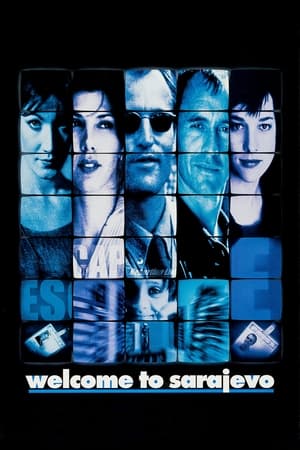
Follow a group of international journalists into the heart of the once cosmopolitan city of Sarajevo—now a danger zone of sniper and mortar attacks where residents still live. While reporting on an American aid worker who’s trying to get children out of the country, a British correspondent decides to take an orphaned girl home to London.
A woman and her daughter struggle to make their way through the aftermath of the Balkan war.