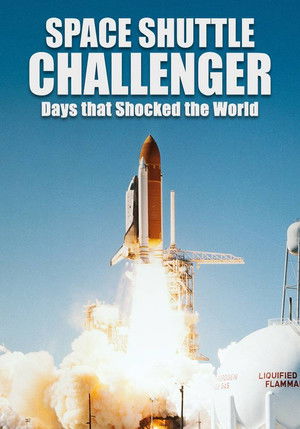
Recently discovered footage reveals the secret history of NASA's first landing on the moon, and using this brand-new evidence, former astronauts and experts challenge everything known about the Apollo missions.
"Race d’Ep!" (which literally translates to "Breed of Faggots") was made by the “father of queer theory,” Guy Hocquenghem, in collaboration with radical queer filmmaker and provocateur Lionel Soukaz. The film traces the history of modern homosexuality through the twentieth century, from early sexology and the nudes of Baron von Gloeden to gay liberation and cruising on the streets of Paris. Influenced by the groundbreaking work of Michel Foucault on the history of sexuality and reflecting the revolutionary queer activism of its day, "Race d’Ep!" is a shockingly frank, sex-filled experimental documentary about gay culture emerging from the shadows.
The history of the Yakuza Eiga at the TOEI studio is roughly outlined. Real Yakuza and also their connections to the movie business are discussed, and many important actors and directors of the genres are interviewed. Former real yakuza boss turned actor Noboru Ando, Takashi Miike, Sonny Chiba and many more get a chance to speak.
A documentary about Shaolin Kung Fu starring Jet Li
Handbook of Movie Theaters' History is a documentary about the history, the development in the present days and the future of movie theaters in the city of Turin, Italy. It mixes the documentary language with comedy and fiction, and is enriched by interviews to some of the most important voices of Turin cinematography. The film follows the evolution of movie theaters by enlightening its main milestones: the pre-cinema experiences in the late 19th Century, the colossals and the movie cathedrals of the silent era, the arthouse theaters, the National Museum of Cinema, the Torino Film Festival, the movie theaters system today and the main hypothesis about its future. The mission of Handbook of Movie Theaters' History is to explore and give back to the audience a deep reflection about the identity and the value of movie theater, in its social and anthropological role and as a mass media, and to analyze the experience of the viewer.
Everyone knows his name. The novels on the life and crimes of Hannibal Lecter are a worldwide phenomenon, and so are the movies and the TV show. Not mentionning the parodies, the plays... and even a wine named after him! He has become an icon of evil, but also of intelligence and refinement. Let's look back on the incredible Hannibal Lecter phenomenon.
Hotel rooms are rarely the destination for pilgrimage. In one hotel room, an iconic picture was taken - the portrait of Theodor Herzl, the most renowned zionist leader. Filmmaker Matan Tal visits the room and explores how the connection between Herzl and the room, echos Herzl’s own ideology. Which raises the question: Can people and places be connected forever?
By asking the same question across generations of Southern Chinese in the UK, this film documents a vignette of two recent Hong Kong immigrants and reflects their own socio-political conditions through their conversation.
Director Denys Arcand made an inquiry on textile industry in Quebec, meeting employers and workers of that industry.
Follows the story of "Grizzly Man" Timothy Treadwell and what the thirteen summers in a National Park in Alaska were like in his attempt to protect the grizzly bears. The film is full of unique images and a look into the spirit of a man who sacrificed himself for nature.
A patient camera glides over the everyday objects: still lives on the wall, flowers in the vase, a swaying drop light. The sun enters the cosy home where Noëlla sits smoking at her laptop, playing Solitaire. The situation is hopeless. She’s going to lose against the computer once again. All the while her son-in-law, Pierre, is organising everything she needs, pragmatic and friendly: breakfast, the (last) doctor’s visit – and then the transfer.
Une histoire très simple
Documentary exploring the thirty-seven years of preparatory work that director Carl Th. Dreyer did for "Jesus of Nazareth" – a film that was never produced.
An abstract perspective into two young South African workers in the heart of Johannesburg's industrial sector during Covid-19
An insider's account of Jack Warner, a founding father of the American film industry. This feature length documentary provides the rags to riches story of the man whose studio - Warner Bros - created many of Hollywood's most classic films. Includes extensive interviews with family members and friends, film clips, rare home movies and unique location footage.
Working men and women leave through the main gate of the Lumière factory in Lyon, France. Filmed on 22 March 1895, it is often referred to as the first real motion picture ever made, although Louis Le Prince's 1888 Roundhay Garden Scene pre-dated it by seven years. Three separate versions of this film exist, which differ from one another in numerous ways. The first version features a carriage drawn by one horse, while in the second version the carriage is drawn by two horses, and there is no carriage at all in the third version. The clothing style is also different between the three versions, demonstrating the different seasons in which each was filmed. This film was made in the 35 mm format with an aspect ratio of 1.33:1, and at a speed of 16 frames per second. At that rate, the 17 meters of film length provided a duration of 46 seconds, holding a total of 800 frames.
After his father’s death, Vicky, a young dancer, abandons his art and succumbs to alcohol, while his mother faces an impossible dilemma of sending her son to a de-addiction centre.
Filmmaker Abraham Ravett attempts to reconcile issues in his life as the child of a Holocaust survivor in this experimental non-narrative film. Ravett reflects upon his relationships with his family, from his now-deceased father (who survived both the Lodz Ghetto and Auschwitz) to his own young children. He utilizes family photographs and film footage, archival film footage from the Ghetto Fighters' House in Israel, cell animation by Emily Hubley, and computer graphics to create a film about memory, death, and what critic Bruce Jenkins calls "the power of the photographic image and sound to resurrect the past."
A journey into the 1920s and 1930s featuring restored and edited home movies taken by Japanese American immigrant pioneers.
This documentary captures the sounds and images of a nearly forgotten era in film history when African American filmmakers and studios created “race movies” exclusively for black audiences. The best of these films attempted to counter the demeaning stereotypes of black Americans prevalent in the popular culture of the day. About 500 films were produced, yet only about 100 still exist. Filmmaking pioneers like Oscar Micheaux, the Noble brothers, and Spencer Williams, Jr. left a lasting influence on black filmmakers, and inspired generations of audiences who finally saw their own lives reflected on the silver screen.