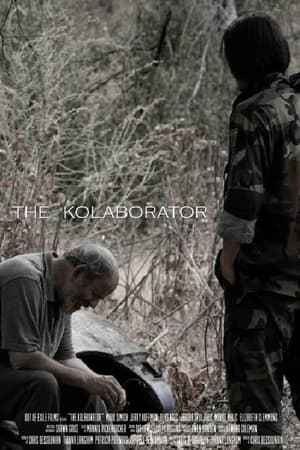
During the conflict in the former Yugoslavia many soldiers were convinced to kill fellow citizens including friends and relatives in the name of patriotism. The Kolaborator follows the story of Goran, 24, a promising young soccer player who is forced to become a soldier. Goran goes from being a talented athlete to an executioner virtually overnight. Following orders, Goran lines up civilians, shoots them and drags them into mass graves. Justifying his role as a protector of his people, Goran becomes increasingly detached from the task until his soccer coach and life-long friend, Asim, is led in front of him. As a familiar face stands defeated before him, Goran must reconsider his actions and choose between his own life and that of his dear friend.
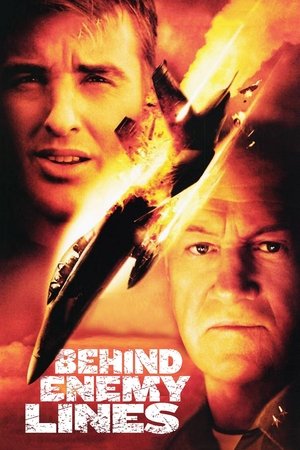
While flying a routine reconnaissance mission over Bosnia, fighter pilot Lt. Chris Burnett photographs something he wasn't supposed to see and gets shot down behind enemy lines, where he must outrun an army led by a ruthless Serbian general. With time running out and a deadly tracker on his trail, Burnett's commanding officer, Admiral Reigart, decides to risk his career and launch a renegade rescue mission to save his life.
It's cold up on Mount Manjaca. "In the winter it snows, there's nowhere to go," says the central figure in Celebration. "We have to wait until someone comes to clear the road. Sometimes they come, and sometimes they don't." He diligently ploughs the knee-high snowdrifts as the wind howls at his ears.
What is the true phrase? Heart is where the home is? Home is where the heart is? Bajo (37) is Bosnian-born Swede. After 18 years he has to visit his hometown. Against his will, Sarajevo is changing him. But that does not make him less Swedish or more Bosnian, just more himself. Or simply, home is where you are.
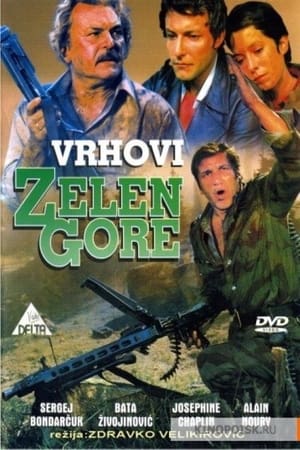
During the Battle of Sutjeska, partisan troops must endure 24 hours of big and heavy attacks on German units Ljubino grave, to the main Partisan units, with the wounded and the Supreme Headquarters, pulled out the ring that is tightened around them.
A woman and her daughter struggle to make their way through the aftermath of the Balkan war.
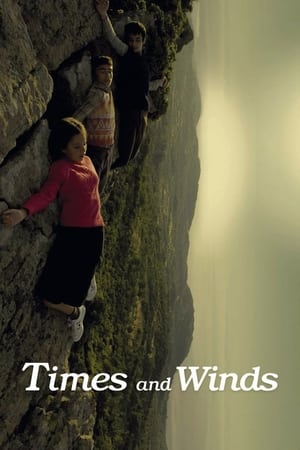
In a small, poor village leaning over high rocky mountains, the villagers are simple and diligent people who struggle to cope with a harsh nature. They earn their living off the earth and a few animals they feed. Fathers always prefer one of their sons. Mothers command their daughters ruthlessly. Ömer, the son of the imam, wishes hopelessly for the death of his father. When he understands that wishful thinking does not have any concrete results, he begins to search for childish ways to kill his father. Yakup is in love with his teacher, and one day after seeing his father spying on the teacher he dreams too, like Ömer, of killing his father. Yıldız studies and tries to manage the household chores imposed by her mother. She learns with irritation about the secrets of the relationship between men and women.
A beautiful and poetic at the same time difficult and tragic story. In the distant mountain village in Herzegovina, shortly after the end of World War II, lonely women and children await the return of men from the front. The few men that remained in the village trying to go to America and find the salvation of the lumber and stone. Center of the story is loneliness and anticipation. This is a tragic story of two men whose fight for the heart of a woman cost the head of both.
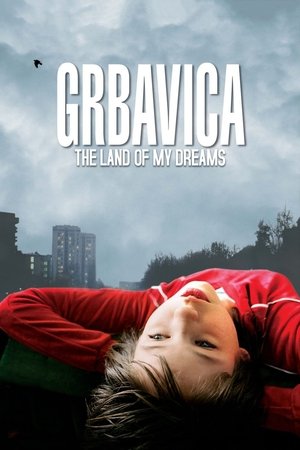
Bosnia, a summer's day at the country side 20 years after the latest war. Being the only witness of the secret plan of her favorite aunt Ljilja, little Maja takes a major step in her life. The boundaries of her childhood start to break apart.
The war has ended. Villages of Bosnian Croats have been destroyed, and they are living in the homes of the Croatian Serbs. An old man, a Bosnian Croat, disappears. A policeman Filip, himself living in a Serbian home, investigates the case uninterestedly. Through the relationship with his father, Filip tries to understand the motives of the missing old man. As the film moves towards the end, Filip’s investigation becomes more and more personal.
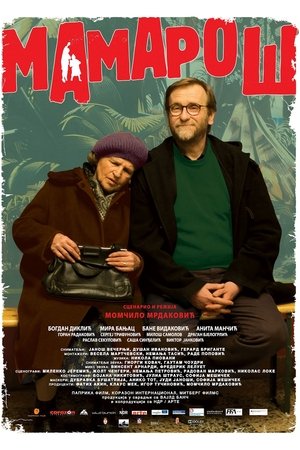
Middle-aged cinephile and film projectionist Pera still lives with his mother - and best friend - Mara, in Belgrade. It's 1999 and when NATO bombs start raining down on Serbia, the two of them become refugees. After a surreal journey, they end up in New York, where Pera realizes that he can no longer do the old job he loved so much. While he and Mara were struggling to survive, the new age of digital projection was born. Then Pera stumbles upon some discarded projectors and his new mission in life becomes clear: he will travel around and show people the magic of Real Cinema - the magic that can only be created by celluoid, mechanical projectors, the silver screen and flickering light.
An exciting story of Husine coalminers who formed a partisan batch and put up an armed resistance during WW2 in Bosnia and Herzegovina.
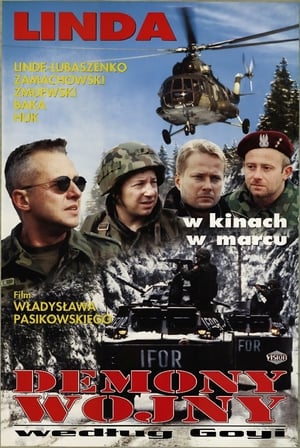
A detachment of the Polish IFOR forces in Bosnia is led by Major Keller, who is being investigated for insubordination during a patrol in Srebrenica. The investigation is to be led by two arriving officers - Lieutenant Czacki and Major Kusz who will also replace Keller as CO. When the camp's RTO receives a communication from a downed Norwegian chopper, Keller ignores his standing orders and leads a platoon to rescue the crew.
A young journalist is sent to a small Bosnian town to interview people on happiness. He mixes up with local affair and has a romance with a student. He gets a shock when he finds out that he is going to be important due to childhood mumps.
The abolishment of a railway station in a remote Bosnian village affects the lives of the local railwaymen.
When Gavrilo Princip killed Franz Ferdinand, Austrian future king , the World War I began. What will Gavrilo Princip do? He has to choose, hard jail untill death, or hanging. There are so much things happening in Bosnia.
1893, city of Mostar, Herzegovina, Austro-Hungarian Empire. Stoyan, a poor country boy comes to town and starts to work for a rich but crooked and greedy store owner.
One weird but at the same time very difficult and sad story about the Bosnians, the temporary workers in Slovenia. Their survival and the constant demand for a better place under the sun. It also movie speaks of the great longtime animosity between Bosnians and Slovenians.
The story of a boy from the orphanage for abandoned children who tried to find out the truth about his origins. Through the story of a boy Alen, it describes the consequences of war casualties and immense injustice that war brought most helpless, the children.
Silent Gunpowder (Serbo-Croatian: Gluvi barut) is a Yugoslavian war film Based on a novel by Branko Ćopić and set during World War II, the film tells the story of a Serbian village in the mountains of Bosnia and its villagers who found themselves divided along two opposing ideological lines, represented by the Chetniks and the Partisans. These two opposing sides are personified in the Partisan commander Španac and a former Royal Army officer Radekić. Španac sees Radekić as the cause of villagers' resistance to the new, Communist, ideology and so the main plot axis is the conflict between them. At the 1990 Pula Film Festival, the film won the Big Golden Arena for Best Film, as well as the awards for Best Actor in a Leading Role (Branislav Lečić), Best Film Score (Goran Bregović). The film was also shown at the 1991 Moscow International Film Festival, where both Branislav Lečić and Mustafa Nadarević won the Silver St. George Award for their performances.