Scar Tissue by Su Friedrich is a filmic version of a white canvas or a silent music piece.The fact that Friedrich never really shows the whole body, but rather plays off of body parts could be read as a desire to show less of the people on the screen, so that the viewer's reading can be generalized. If the "characters" existed as people, the images would inevitably read to be telling a story about these people. The legs and torsos do not signify people; it is the experience of these body parts and the rhythm with which they are portrayed that constitute the work.
A feature-length documentary on Yvonne Bezerra de Mello, award-winning artist and human-rights activist who has gained international recognition for her work with street children in Rio. The film recounts how a woman turned her back on a wealthy lifestyle, driven into action by the execution of 8 streetkids by military police in 1993. In subsequent years Yvonne's struggle to better the lives of endangered and abandoned children has led her to found "Projeto Uere" ("Children of Light") a radical project committed to protection and education of kids who live in the streets and slums of Rio which has brought her into conflict with Brazil's wealthy elite.
The unbelievable story of 22 year old Or, who secretly finances his sex change operation in Thailand by lying to his conservative parents and then returns home as a woman to face her new life, her family and the cost of living her dream
The Pimp and His Trophies
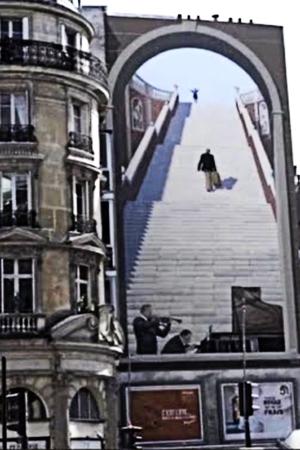
Harmonies de Paris, restored by the Cinémathèque Française in the 1990s, was shot entirely on panchromatic film and was meant to be a documentary tour of Paris in thirteen thematic chapters. The subject is a tourist group arriving in the French capital by airplane, which explains the many shots of monuments and other canonical places.
Lissette's favorite aunt Adriana, who lives in Australia, is arrested in 2007 while visiting her family in Chile and accused of having worked for dictator Pinochet's notorious secret police, the DINA, and of having participated in the commission of state crimes. When Adriana denies these accusations, Lissette begins to investigate her story in order to film a documentary about her.
Inspired by an exclusive interview and performance footage of Chavela Vargas shot in 1991 and guided by her unique voice, the film weaves an arresting portrait of a woman who dared to dress, speak, sing, and dream her unique life into being.
In this segment on immigrant cultures for the television program Mosaïque, a young Senegalese woman who cooks in a workers’ hostel dreams of traveling throughout France and getting to know her adopted country, taking issue with the cliché of the impoverished and helpless immigrant.
Eleven major film makers from Europe, America and Asia talk about Akira Kurosawa and discover surprising influences on their own work.
One is a former police officer, bodyguard and hairdresser. Currently retired, he takes care of his extravagant and almost hundred-year-old illiterate mother. He writes poems and hopes to see them published one day. The other, a declared womanizer, workaholic, and leftist, was imprisoned during the dictatorship, runs a small grocery shop, and controls the life of his young second wife. Both were born in the Uruguayan hinterland during the Second World War, and share the same name as well as the fact that neither has wished to change it. The film is a tragicomic portrait of a country whose cultural diversity, its peculiar history and the character of its inhabitants allow the existence of exceptional and remarkable persons that depict a live picture of Uruguay, with its plurality and contradictions, its small and large history, without departing a single moment from irony or reflection.
The armies of Fascist Italy conquered Addis Ababa, capital of Abyssinia, in May 1936, thus culminating the African colonial adventure of the ruthless dictator Benito Mussolini, by then lord of Libya, Eritrea and Somalia; a bloody and tragic story told through the naive drawings of Pietro Dall'Igna, an Italian schoolboy born in 1925.
When a Mongolian nomadic family's newest camel colt is rejected by its mother, a musician is needed for a ritual to change her mind.
This short documentary focuses on the very end of Washington Boulevard, where the city of Los Angeles meets the ocean and the Venice Pier begins. The rough and simplistic concrete pier braves pacific storms and provides stillness and stability. People come to walk, to fish and ease their minds. The film takes a closer look at the diverse people all around the pier. Among them the filmmakers find two citizens, both immigrants, who take us on their personal journey through history.
In 1988, Tilda Swinton toured round the Berlin Wall on a bicycle - starting and ending at the Brandenburg Gate - accompanied by filmmaker Cynthia Beatt. As Swinton travels through fields and historic neighborhoods, past lakes and massive concrete apartment buildings, the Wall is a constant presence.
A diffraction of the autobiography using family footage filmed between the 1940s and today, this "science fiction documentary" creates multiple "I"s and transcends a story of mourning
This investigation into the layers of mass incarceration and its shaping of the modern black American family is seen through the eyes of a single mother in New Orleans, Louisiana.
Part two of Leni Riefenstahl's monumental examination of the 1938 Olympic Games, the cameras leave the main stadium and venture into the many halls and fields deployed for such sports as fencing, polo, cycling, and the modern pentathlon, which was won by American Glenn Morris.
Both during and after pregnancy, yoga is a perfect way to firm your body, build strength, and gain flexibility. These two yoga practices, filmed in a serene garden overlooking the Pacific Ocean, are also a wonderful way to maintain emotional balance and reduce stress during the exciting and often hectic times surrounding the birth of a child. In the prenatal sequence you'll practice safe and simple movements intended to strengthen and tone your body at any stage of pregnancy, while providing relaxation that will help create a luminous space in which your baby will thrive. The postnatal sequence is designed to redefine your body, restore your energy, and help you reconnect to yourself and your own wellness.
Two tons of snow—flown from New Hampshire to Puerto Rico in 1952 in order to “gift” Puerto Ricans a “white Christmas”—become a metaphor for the colonialist paternalism of America’s relationship to Puerto Rico.
Starting with a long and lyrical overture, evoking the origins of the Olympic Games in ancient Greece, Riefenstahl covers twenty-one athletic events in the first half of this two-part love letter to the human body and spirit, culminating with the marathon, where Jesse Owens became the first track and field athlete to win four gold medals in a single Olympics.