At the Munich Olympics of 1972, John Akii Bua, from the impoverished African country of Uganda, powered round the inside lane in the 400m hurdles, past the English favourite, and reigning Olympic Champion David Hemery, to win the gold medal, 10m clear of the field. John Akii Bua had become the first African to win gold in an event under 800 metres. He was also the first man to break the 48 seconds barrier in the 400 metre hurdles, an event so gruelling its nickname is 'The Mankiller'. This is the story about that amazing triumph - and what happened next. David Hemery retired to respectable fame and fortune, later becoming president of the UK's athletics federation. John Akii Bua returned to a Uganda carving the name of its military "President", Idi Amin, into genocidal notoriety. This is a film about the pinnacle of athletic achievement - and the search to discover what followed.
People have doubted Helen Maroulis her entire life. Many believed there was no room for her in the sport. That didn't stop her though. Since she was 13 she believed that she would be an Olympic gold medalist and nothing was going to keep her from achieving her dream. In Episode 1, Helen opens up about the obstacles she had to overcome to become the wrestler that she is today.
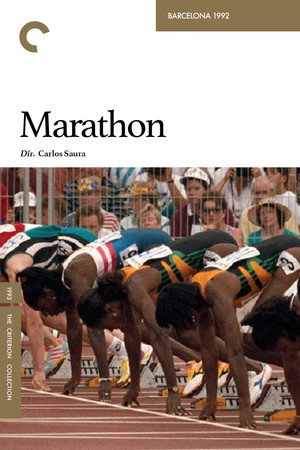
Eight acclaimed filmmakers bring their unique and differing perspectives to the 1972 Summer Olympic Games held in Munich. The segments include Lelouch's take on Olympic losers and their struggle to remain dignified even in the face of bitter disappointment and defeat; Zetterling's dramatic exploration of the world of weightlifting; and Pfleghar's piece on young Russian gymnast Ludmilla Tourischev's majestic performance on the uneven bars.
Alain Vastine, les combats d'un père
The incredible story of the 1992 Lithuanian basketball team, whose athletes struggled under Soviet rule, became symbols of Lithuania's independence movement, and – with help from the Grateful Dead – triumphed at the Barcelona Olympics.
Three teenagers battle their way through the world of competitive ping pong with their hearts set on the Olympics.
In December 2021, three-time Olympian Elise Christie retired from short track speed skating, broken and unwell. Elise tells her story.
Moroccan paralympic gold medalist Azzedine Nouiri is no longer looking for the longest throw, but to overthrow the system that keeps athletes with different abilities marginalized as destitute second-class citizens.
Five-time Olympic medalist and Native Hawaiian Duke Paoa Kahinu Mokoe Hulikohola Kahanamoku shattered records and brought surfing to the world while overcoming a lifetime of personal challenges. Waterman explores his journey and legacy as a legendary swimmer, trailblazer, and the undisputed father of modern-day surfing, following the sport’s first-time inclusion in this year’s Summer Olympics – a fitting tribute to his work promoting the sport around the globe.
A 1981 documentary film directed by Yuri Ozerov. It showed the opening and closing ceremonies of the 1980 Summer Olympics held in Moscow. The director was awarded the State Prize of the USSR in 1982. The film was selected as the Soviet entry for the Best Foreign Language Film at the 54th Academy Awards, but was not accepted as a nominee.
Eighteen year old Irma Testa is Italy’s first female boxer to make it to the Olympics. It’s a remarkable outcome for a girl raised in one of the poorest, most crime-ridden neighborhoods of Naples.. The more Irma succeeds though, the more fragile she becomes. After a crushing defeat at the Games in Rio, she questions whether boxing is her future. She wants to chart her own path, but must first take a hard look at her personal life which she has avoided for so long.
In August 2020, Olympic artistic swimmer Ona Carbonell became a first time mother, an experience that reshaped her life overnight.
Filmed over four years, a portrait of up-and-coming British sprinters in training and competition on the eve of the 2012 Olympics, and a deeply personal account of their lives as they strive towards their dreams.
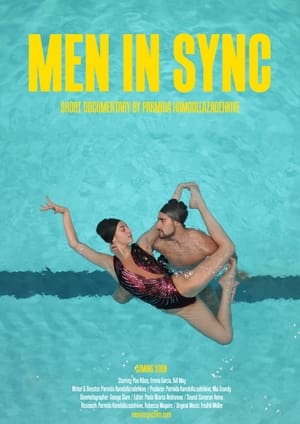
In February 2022, in Kharkiv, twin sisters Maryna and Vladyslava Alexiiva had to flee in the middle of the night under the bombs. In extremis, they take with them their bronze medals, won in Tokyo a year earlier in synchronized swimming. They took refuge in Italy for six months, then decided to return to Ukraine to reunite with their team. From then on, they were obsessed with a single goal: to win the gold medal in Paris in 2024.
Experience the broadcasting of the Olympic Games from behind-the-scenes.
Pushing the limits of the human race: that is what runners aspire to when they take to the Olympic 100-meter track every four years. But for Usain Bolt, the record holder for the distance with his explosive 9.58 seconds, to become the fastest sprinter in history, crossing the finish line at some 44 km/h, it took more than a century of technical refinement. From the early days of sprinting to Usain Bolt's records, directors Jean-Christophe Rosé and Benoît Heimermann trace the history of the 100 meters, the flagship event of the Olympic Games, and its champions.
Follows the 1936 Berlin Olympics when Black athlete Jesse Owens won 4 golds against the backdrop of Hitler's racist Nazi regime in Germany.
Welcome to a hard driving video about the biggest winners of all, the athletes and teams who broken records in their sports.
100m Olympic champion Linford Christie is one of Britain’s most successful athletes. Now, he’s confronting his complicated legacy, in a story about race, respect and reputation.
The history of surfing is like one long ride in which surfers relay the baton to each other across the years on a single, endless wave. In order to understand how this ancestral Polynesian tradition was able to span the globe and the eras until it became a competitive sport and eventually won a place at the Olympics, we’ll plunge into its history through the exceptional stories of those who allowed it to survive and be reinvented.