A synaesthetic portrait made between French Polynesia and Brittany, Color-blind follows the restless ghost of Gauguin in excavating the colonial legacy of a post-postcolonial present.
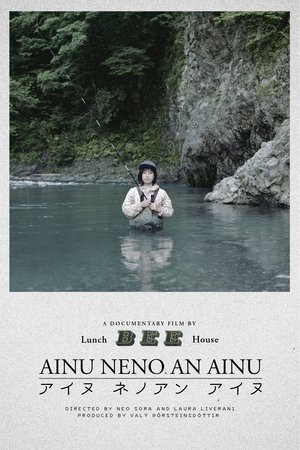
Shigeki, one of the Ainu people of northern Japan, follows the traditions of his ancestors and teaches his son Motoki about their heritage. But how can old customs be revived after centuries of suppression?
An account of the journey that King Alfonso XIII of Spain made to the impoverished shire of Las Hurdes, in the province of Cáceres, in the region of Extremadura, in 1922.
A unique 'direct cinema' feature length documentary (no narration or interviews) originally filmed in the Spring of 1970 and concluded during the Summer of 2017 (footage added, restored, and re-edited). A day in the life of an inner-city Harlem elementary school. In 2018 filmmaker Phil Gries reunited with seven of his former Harlem elementary students whom he hadn't seen in 50 years.
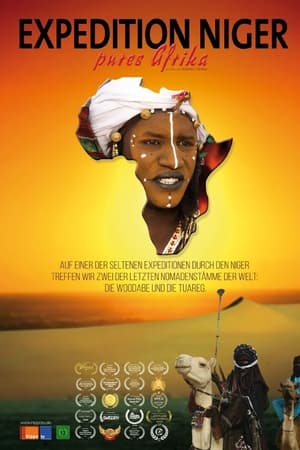
Niger is one of the poorest countries in the world and is also plagued by numerous terrorist organizations that repeatedly kidnap people. Accompanied by a military convoy, the travel group explores the country and the cultural traditions of two of the last nomadic tribes, the Woodabe and the Tuareg. From the capital Niamey in the southwest, the journey continues through the interior of the country to Iférouane, where the Nigerien tour guide provides information about the country and its people.
This intimate ethnographic study of Voudoun dances and rituals was shot by Maya Deren during her years in Haiti (1947-1951); she never edited the footage, so this “finished” version was made by Teiji Ito and Cherel Ito after Deren’s death.
Filmed in May 1971 in Niger, this short documentary records a possession ritual performed by the Simiri people in response to a locust invasion. The ceremony centers on the beating of the archaic drums Tourou and Bitti, used to invoke spirit forces through music, dance, and trance. Shot in a single continuous take, the film documents a concentrated moment of collective ritual practice, reflecting Jean Rouch’s first-person ethnographic approach and direct participation in the event.
Taking the form of a travel diary of a television journalist, this documentary tells about the life and work of the people of Yakutia: pilots, artists, drivers, and reindeer herders.
In the Darhat valley in northern Mongolia, the horses of nomadic tribes are stolen by bandits who then sell them to Russian slaughterhouses. Shukhert, a brave horseman, relentlessly pursues them through the Mongolian taiga, bordering Siberia.
The people of Unamenshipu (La Romaine), an Innu community in the Côte-Nord region of Quebec, are seen but not heard in this richly detailed documentary about the rituals surrounding an Innu caribou hunt. Released in 1960, it’s one of 13 titles in Au Pays de Neufve-France, a series of poetic documentary shorts about life along the St. Lawrence River. Off-camera narration, written by Pierre Perrault, frames the Innu participants through an ethnographic lens. Co-directed by René Bonnière and Perrault, a founding figure of Quebec’s direct cinema movement.
Robert J. Flaherty’s follow-up to Nanook of the North shifts from the Arctic to the South Seas, portraying Samoan village life with a painterly eye. Blending ethnographic detail with a romanticized “Gauguin idyll,” the film celebrates daily rituals, communal traditions, and the passage into adulthood, suffused with what Flaherty called “pride of beauty, pride of strength.”
Portrays the Nuer, Nilotic herdsmen of the Nile basin. Shows how their daily lives revolve about their cattle, and depicts the psychological bonds between them. Includes extensive use of Nuer music and poetry.
Forest of Bliss is an unsparing yet redemptive account of the inevitable griefs, religious passions and frequent happinesses that punctuate daily life in Benares, India's most holy city. The film unfolds from one sunrise to the next without commentary, subtitles or dialogue. It is an attempt to give the viewer a wholly authentic, though greatly magnified and concentrated, sense of participation in the experiences examined by the film.
This documentary started as part of a photography project about the indigenous Ainu population in northern Japan, portraying people from tightly knit communities. They feel deeply connected by their culture and tradition. With gorgeous pictures, the directors explore how different generations of Ainu reflect on their identity after centuries of oppression.
How’s the Big Everything? Garba asks Nicole. For them, the “Big Everything” encompasses family, politics, History, daily life, the stars, small things, and time passing like the wind. By delving into their memories, at the time of Niger’s independence, we come face to face with the complexity of the present.
The story of a poor girl who leaves her starving family and sheep for a more prosperous village. Her grandfather finds her and tries to convince her to return to her home.
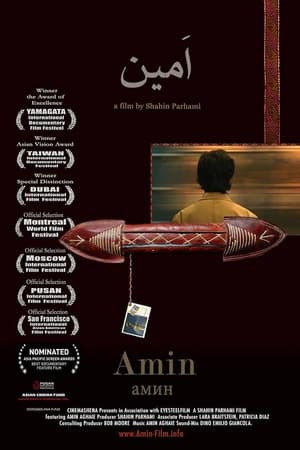
AMIN portrays Qashqai musician Amin Aghaie, a young modern nomad and his family who despite facing steep financial, cultural and political obstacles are dedicated to their art and culture. Amin travels to remote towns and villages to record the music of the surviving masters whose numbers decline each year. His nomadic family are selling their meager belongings to help support their son's education in performance and ethnomusicology at Tchaikovsky's Conservatory in Kyiv, Ukraine, but it is not enough. Amin, desperate to finish his academic education, sells his violins one at a time just to pay for his tuition.
A young student heads back to his village during the COVID-19 lockdown to collect ethnographic material for his thesis, but as quarantine stretches on, the rituals and everyday scenes he records start bringing back childhood memories-leading him to piece the footage together into something more personal.
Remember the culture clash in THE GODS MUST BE CRAZY? This time it's real. One of the most ancient cultures on our planet is undergoing a major change. The Ju/Hoansi Bushmen in Namibia are not allowed to hunt anymore and need to converge with our so called “civilized” lifestyle. For the first time the Ju/Hoansi Bushmen travel through the Kalahari and then right into the heart of Europe. What starts as a look at their fascinating culture becomes an even more fascinating look at our Western lifestyle. A warm and humorous reflection of our habits through the eyes of people who are about to give up their million year old traditions.
A collection of seven little stories about Niger and its Sahara desert from the illustrated book by Hideko Fukuda & Masanori Inui.