During World War II, Helmut Dantine specialized in playing villainous Nazis in Hollywood melodramas. He offers a compelling performance in a variation of these earlier roles in this suspense filled and politically loaded tale of intrigue. The story opens in German-occupied Athens during the darkest hours of the war. Civilians are not allowed on the streets after dark.
It's night on a Paris bridge. A girl leans over Seine River with tears in her eyes and a violent yearning to drown her sorrows. Out of nowhere someone takes an interest in her. He is Gabor, a knife thrower who needs a human target for his show. The girl, Adele, has never been lucky and nowhere else to go. So she follows him. They travel along the northern bank of the Mediterranean to perform.
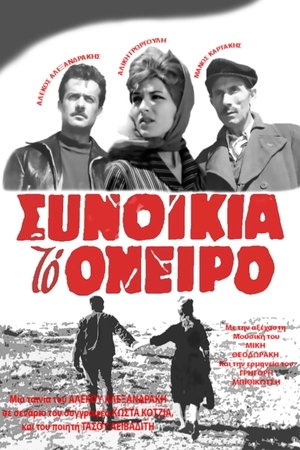
A poor neighborhood of Athens, Asyrmatos, is the center of the world for the people who live there and try in every way to escape from poverty and destitution. A handsome released youth, Ricos (Alekos Alexandrakis), is trying to make money, at the same time that his lover, Stefi (Aliki Georgoulis), is seeing other men and her father, Nekrophoras (Manos Katrakis), is trying to contribute in family finances. Rico will set up a job, but will spend the money raised before he can put it into action. As a result, one of his "partners" (Alekos Petsos) will commit suicide, leaving his pregnant wife, Eleni (Aleka Paizis), to her fate. Rikos, his beloved and her father, defeated and disappointed because of the expectations that were never fulfilled, will be forced to come to terms with the harsh reality.
The story of an introverted young girl just reaching adulthood who takes a liking to an older woman she meets at a party and determines to match her off with her father, despite the latter's already having a lover of his own.
British historian Bettany Hughes tours the eastern Mediterranean in search of facts behind the legends of "the face that launched a thousand ships," exploring the ways Greeks made love and war circa 1300 B.C.
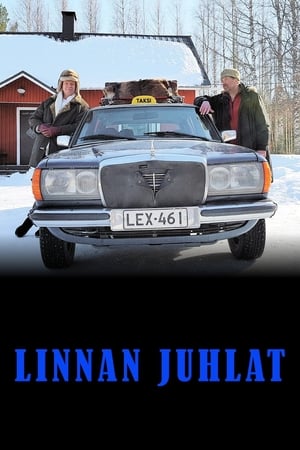
In 2017 Finland celebrates 100 years of independence. The famous philosopher Bruno is curing his writers' block in Lapland, when he gets an invitation to the President's Grand Ball in Helsinki. The railway systems are frozen and he misses the only plane, but the Laplander Jallu agrees to drive him 1200 km (745 miles) south.
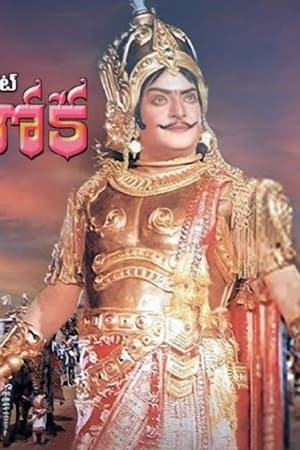
The life story of emperor Ashoka.
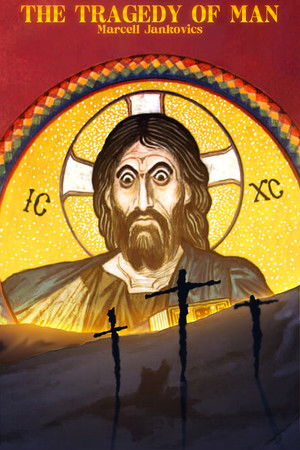
Jankovics's adaptation of the eponymous play is divided into multiple parts, and depicts the creation and fall of Man throughout history.
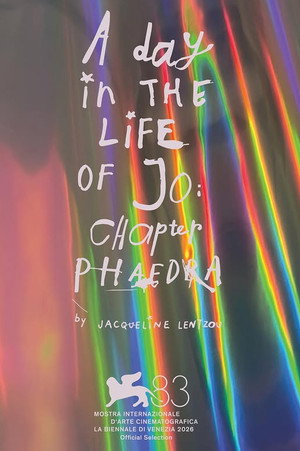
Jo is wild, melancholic, only 15 and today she misses the school bus, once again. Her mother insists she doesn’t have a car, even though it’s parked outside. Furious, Jo tries to damage the car. Her mother intervenes, and that is the last time they will meet in the physical world – at least in body form. Throughout the day, subtle signs and symbols from the dream world quietly surface around her, but she fails to recognize them, indeed Jo is unaware that she is living the last day of her life.
In Barcelona, Queralt, a painter, tries to talk by phone with her daughter Gemma, also a painter, who lives and works in a small studio in Athens.
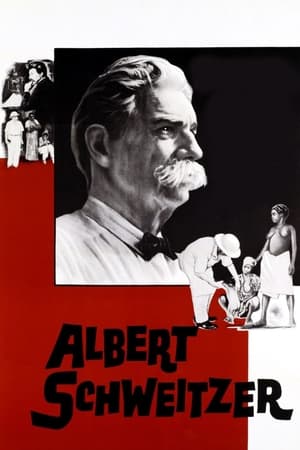
This biographical docudrama traces the life of Dr. Albert Schweitzer, from his birth in Alsace, up to the age of 30 when he made the decision to go to French Equatorial Africa and build his jungle hospital. The latter half of the film encompasses a full day in the hospital-village, following the octogenarian Samaritan in his daily rounds.
The life and work of German political philosopher of Jewish descent Hannah Arendt (1906-75), who caused a stir when she coined a subversive concept, the banality of evil, in her 1963 book on the trial of Nazi war criminal Adolph Eichmann (1906-62), held in Israel in 1961, which she covered for the New Yorker magazine.
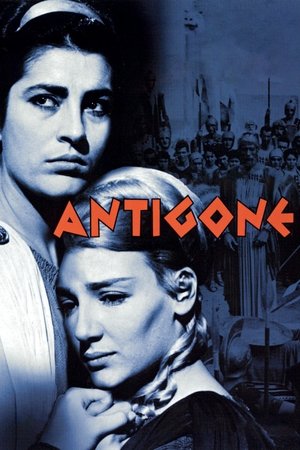
In Thebes in ancient Greece, King Oedipus kills his father and marries his mother Jocasta, having two sons - Eteocles and Polyneices - and two daughters - Ismene and Antigone. King Oedipus dies a beggar in the exile after gouging out his own eye, and Eteocle agrees to reign in Thebes in alternating years with Polynices. However, he refuses to resign after the first year and Polynieces raises an army and attacks Thebes, and they kill each other. The ruler of Thebes Creon decrees that Eleocles should have an honorable burial while the body of the traitor Polyneices should be left on the battlefield to be eaten by the jackals and vultures. However, Antigone, who was betrothed to Creon's surviving son Haemon, defies Creon's orders and buries her brother. When Creon is reported of the attitude of Antigone, he sentences her to be placed in a tomb alive. Antigone hangs herself in the tomb and Haemon tries to kill his father first and then he kills himself with his sword...
In contemporary Athens, two young women from conflicting cultures embark on a brief yet torrid affair that endangers the life of one, while propelling the other to instant online fame.
A young man sentenced to death manages to postpone his execution because of the impending wedding of his poor sister, who is to be married off. His best friend vouches for his return. After taking care of his sister, the young man hurries back, but is delayed by numerous unexpected obstacles. Nevertheless, he continues the journey, determined to join his now-presumably dead friend.
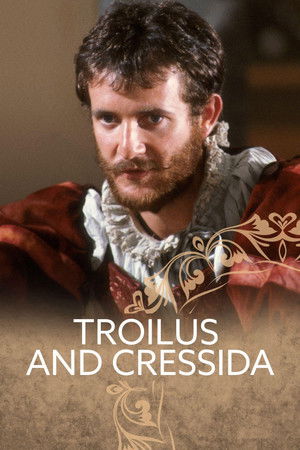
The bitter Trojan War drags on - the Greeks blame Achilles' apathy for low morale, while Troy's hero Hector challenges one of the enemy to a personal duel. And after her father exchanges Cressida for a Trojan prisoner, the war becomes personal for her distraught lover Troilus.
A portrait of the genius that shook the world with her discovery of “the banality of evil.” After she attends the Nazi Adolf Eichmann’s trial in Jerusalem, Arendt dares to write about the Holocaust in terms no one has ever heard before. Her work instantly provokes a furious scandal, and Arendt stands strong as she is attacked by friends and foes alike. But as the German-Jewish émigré also struggles to suppress her own painful associations with the past, the film exposes her beguiling blend of arrogance and vulnerability — revealing a soul defined and derailed by exile.
The movie tells the story of Melos, a Greek country man that gets arrested and accused of conspiracy against the king. He gets three days to travel to his sister's wedding while Selinentius (Selinae), a genius sculptor that Melos just met stays as a hostage.
On October 25, 1946... in a small crowded room at Cambridge University, two of the world’s greatest twentieth-century philosophers, Ludwig Wittgenstein and Karl Popper, came face-to-face for the first and only time. A third man, Lord Bertrand Russell was also present, acting as umpire of the event. The meeting - which lasted only 10 minutes - did not go well. To this day, no one can agree precisely what took place in those fiery minutes. Almost immediately, rumours started to spread around the world that the two philosophers, Wittgenstein and Popper, had come to blows armed with red-hot fire pokers!
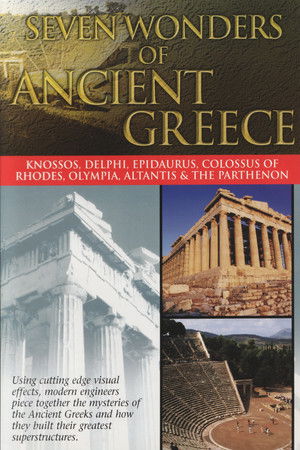
Greece, a land of breathtaking beauty and light. A land where science, art and inspiration from the gods combined to produce some of the world's greatest marvels of architecture and design. The ancient Greeks used buildings and structures to reflect the variety of life at the core of their civilisation - they built the first theatres, staged the first sports events and worshipped in some of the most spectacular temples ever built.