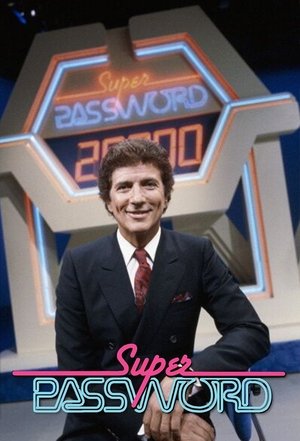
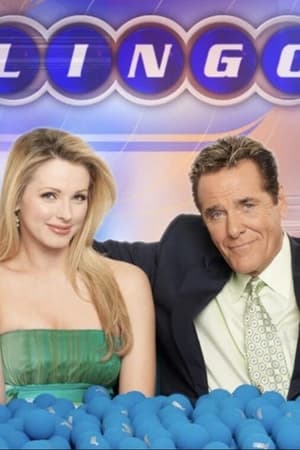
Card Sharks is an American television game show created by Chester Feldman for Mark Goodson-Bill Todman Productions. Two contestants compete for control of a row of oversized playing cards by answering questions posed by the host and then guessing if the next card is higher or lower in value than the previous one. The concept has been made into a series four separate times since its debut in 1978, and also appeared as part of CBS's Gameshow Marathon. The primary announcer for the first three series was Gene Wood.
Around the Horn is a daily, half-hour sports roundtable on ESPN filmed in Washington, D.C. It airs at 5:00 pm ET, as part of a sports talk hour with Pardon the Interruption. The show is currently hosted by Tony Reali.
Sporting quiz show, with regular captains leading teams of celebrities.
A show that’s a bit techie, a bit geeky, but always funny! Every week, Valérie Roberts and her sidekick Julien Corriveau welcome a celebrity and look through their cellphone. Their favourite apps, the number of selfies they take, what song they listen to on repeat, the person they text most often … everything goes!
A game show following contestants as they travel through a massive maze, answering multiple-choice questions along the way. The maze consists of rooms filled with money; and the further in they go, the bigger the prize. But in order to collect the price, however, contestants must remember what they learned along the way as they find their way out.
Based on the hit UK format, The Cube challenges players with what appear to be simple tasks all to be completed in — you guessed it — a 4m x 4m x 4m perspex cube. The games may sound simple, like bouncing a ball into a bucket within a timeframe, but once the clock starts counting down everything becomes a little bit more tense. Add to that the promise of $250,000 in prize money and you’ll be setting up your own practice Cube at home.
In this competition show, a group of couch investigators are challenged to solve a fictional murder every day. The contestant who has solved the most crimes at the end of the series wins a cash prize.
El purgatorio
Perfect Score is an American game show in which contestants attempt to choose the most compatible person for themselves from a group of ten strangers based solely on first impressions and short questions in hopes of earning $50,000. The series premiered on The CW on July 16, 2013. Two contestants, usually friends, take turns eliminating individuals of the opposite gender whom they feel they are not compatible with. Each person of the opposite gender is assigned a dollar value for each contestant based on a compatibility test they took before the game began; higher dollar values indicate a higher compatibility, and lower dollar values indicate a lower compatibility. These values range from $50,000 to $1. When three individuals remain, the two contestants choose which of the three they feel they are most compatible with. The contestant who selects the individual with a higher dollar value wins both the money and a date with the person they selected.
Eight celebrities with a passion for darts step up to the oche to see if they have what it takes to become the first Showbiz Darts Champion.
Game$how Marathon is an American television program which aired on CBS from May 31, 2006 to June 29, 2006. It is based on the UK series Ant & Dec's Gameshow Marathon which aired on ITV in 2005. The show features contestants competing in some of television's most historically popular game shows, in a single-elimination format until an ultimate winner is found. Both the UK and US versions featured celebrity contestants. The US version was produced by FremantleMedia North America and Granada America and was hosted by Ricki Lake and announced by Rich Fields. In the US, the series only aired for a single season, while in the UK a second season aired in 2007, this time entitled Gameshow Marathon and hosted by Vernon Kay. This program was recorded at Stage 46, CBS Television City in Los Angeles, CA, USA.
Dinner for Five is a television program in which actor/filmmaker Jon Favreau and a revolving guest list of celebrities eat, drink and talk about life on and off the set and swap stories about projects past and present. The program seats screen legends next to a variety of personalities from film, television, music and comedy, resulting in an unpredictable free-for-all. The program aired on the Independent Film Channel with Favreau the co-Executive Producer with Peter Billingsley. The show format is a spontaneous, open forum for people in the entertainment community. The idea, originally conceived by Favreau, originated from a time when he went out to dinner with colleagues on a film location and exchanged filming anecdotes. Favreau said, "I thought it would be interesting to show people that side of the business". He did not want to present them in a "sensationalized way [that] they're presented in the press, but as normal people". The format featured Favreau and four guests from the entertainment industry in a restaurant with no other diners. They ordered actual food from real menus and were served by authentic waiters. There were no cue cards or previous research on the participants that would have allowed him to orchestrate the conversation and the guests were allowed to talk about whatever they wanted. The show used five cameras with the operators using long lenses so that they could be at least ten feet away from the table and not intrude on the conversation or make the guests self-conscious. The conversations lasted until the film ran out. A 25-minutes episode would be edited from the two-hour dinner.
Tipping Point is a British television game show presented by Ben Shephard and is broadcast on ITV. The show began airing on 2 July 2012 and sees contestants answering general knowledge questions to win counters which they use on a large coin pusher arcade-style machine which releases the counters worth £50 each. The third series began airing on 20 May 2013. Twelve celebrity editions of the show, known as Tipping Point: Lucky Stars, aired between June and August 2013. These feature three celebrities, playing to win up to £20,000 for their chosen charities.
Unsuspecting members of the public secretly will be recruited to pull a prank on their unwitting companions with absolutely no time to prepare. If they agree to participate, they must obey all instructions given through an earpiece from a secret control room nearby. With the opportunity to prank their way to cash and prizes, these everyday people will be shown no mercy as they are tasked with pulling off some of the most ridiculous behavior ever caught on hidden camera.
Taxi
On a colourful and festive stage, host Guillaume Lemay-Thivierge welcomes a wide range of beloved Quebec celebrities for a friendly competition aimed at determining who can deliver the best performance. Each guest’s identity is kept secret as they all perform in outlandish costumes. As the season advances, our judges and viewers will be given clues to try to unmask the celebrities hiding underneath the costumes, so they can ultimately identify the best singer of them all.
Simplement vedette
Bad Influence! is an early to mid-1990s British factual television programme broadcast on CITV between 1992 and 1996, and was produced in Leeds by Yorkshire Television. It looked at video games and computer technology, and was described as a "kid’s Tomorrow's World". It was shown on Thursday afternoons and had a run of four series of between 13 and 15 shows, each of 20 minutes duration. For three of the four series, it had the highest ratings of any CITV programme at the time. Its working title was Deep Techies, a colloquial term derived from 'techies' basically meaning technology-obsessed individuals.
Wheel of Fortune is a British television game show created by Merv Griffin. Contestants compete to solve word puzzles, similar to those used in Hangman, to win cash and prizes. The title refers to the show's giant carnival wheel that contestants spin throughout the course of the game to determine their cash and/or prizes. The programme aired between 19 July 1988 and 21 December 2001 and was produced by Scottish Television for the ITV network and mostly follows the same general format from the original version of the programme from the United States.
Concentration is an American television game show based on the children's memory game of the same name. Matching cards represented prizes that contestants could win. As matching pairs of cards were gradually removed from the board, it would slowly reveal elements of a rebus puzzle that contestants had to solve to win a match. The show was broadcast on and off from 1958 to 1991, presented by various hosts, and has been made in several different versions. The original network daytime series, Concentration, appeared on NBC for 14 years, 7 months, and 3,770 telecasts, the longest run of any game show on that network. This series was hosted by Hugh Downs and later by Bob Clayton, but for a six-month period in 1969, Ed McMahon hosted the series. The series began at 11:30 AM Eastern, then moved to 11:00 and finally to 10:30. Nearly all episodes of the NBC daytime version were produced at 30 Rockefeller Plaza, New York City. A weekly nighttime version appeared in two separate broadcast runs: the first aired from October 30 to November 20, 1958 with Jack Barry as host, while the second ran from April 24 to September 18, 1961 with Downs as host.