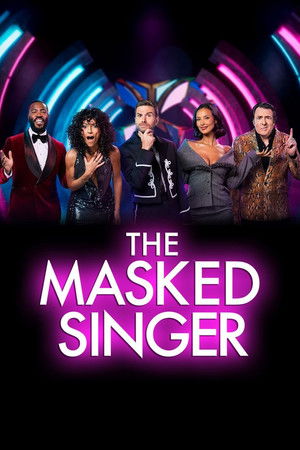
A singing competition where celebrities compete with each other but with one particularity: their identity is hidden by full masks. The British adaptation of the worldwide hit.
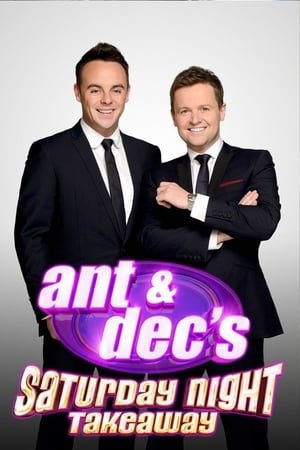
A gameshow hosted by Ant and Dec filled with stunts, sketches, and special guest appearances.
Sale of the Century is a television game show format that has been screened in several countries in various incarnations since 1969. The show found its biggest success in Australia, where it aired weeknights from 1980 to 2001. A new version had aired in Australia from May 2005 to January 2009 and in the United States during the 2007-2008 television season in syndication under the title of Temptation. The format is a general knowledge quiz, where a set of contestants earn money for correct answers, and occasionally have the chance to "buy" heavily-discounted prizes with their score money via "Instant Bargains". Long-running champions would compete to win enough money to buy larger prizes, such as trips or cars, at show's end; more successful ones could end up buying all the prizes on offer and/or a large cash jackpot. In 1973 the three contestant format was dropped and two married couples were used as contestants. This two couple format was also used during the 1973-1974 night time syndicated version as well. After its original run in the USA and during its successful run in the UK, the format was purchased by Australian TV mogul Reg Grundy, whose Grundy Television had produced a similarly formatted program called Temptation between 1971 and 1976. The Grundy version of Sale premiered on Nine Network on July 14, 1980 and became a massive success, spawning versions all across the world. At its close in 2001 it was Australia's longest-running game show.
Mastermind is a British quiz show, well known for its challenging questions, intimidating setting and air of seriousness. Devised by Bill Wright, the basic format of Mastermind has never changed — four and in later contests five contestants face two rounds, one on a specialised subject of the contestant's choice, the other a general knowledge round. Wright drew inspiration from his experiences of being interrogated by the Gestapo during World War II. The atmosphere is helped by Mastermind's famously ominous theme music, "Approaching Menace" by the British composer Neil Richardson. The quiz programme originated and was recorded in Manchester at studios such as New Broadcasting House and Granada Studios, before permanently moving to MediaCityUK in 2011.
Don't Forget Your Toothbrush is a light entertainment show originally broadcast on Saturday nights in the United Kingdom in 1994, and has also been adapted in several other countries including Australia, Belgium, Finland, France, Germany, Denmark, Italy, Norway, Sweden, the United States, the Netherlands and Portugal. The format was distributed internationally by DRG.
You Should Be So Lucky! was a BBC children's television programme hosted by Colin Bennett in the character of Vince Purity. It was a game show, during which contestants played on a giant snakes and ladders board. Points were earned by their team partners through talent tasks.
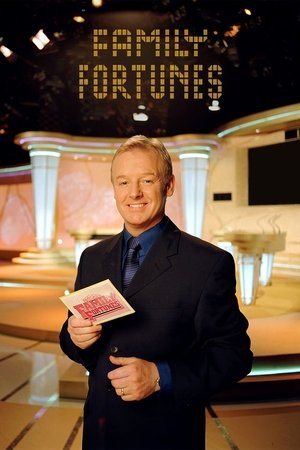
Two families go head to head as they try to name the post popular answer to survey-based questions posed to 100 people for a chance to win a jackpot prize.
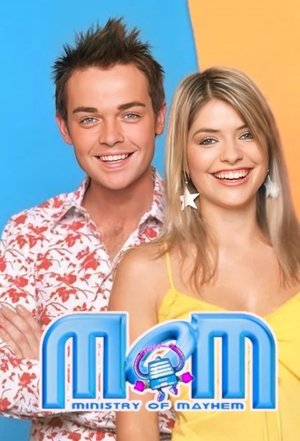
Holly & Stephen's Saturday Showdown is a CITV children's game show show which was broadcast on the ITV Network from January 2004 to July 2006.
Le Grand Quiz
Quiz show hosted by Vernon Kay. Traitors star Paul Gorton tours a different UK destination each day as celebrities battle it out across the week to prove who knows the most.
"The King of Masked Singer" is a music challenge reality show of the same name introduced by Jiangsu Satellite TV from South Korea's MBC TV station. It has 11 issues and is hosted by Li Hao.
Whew! is an American game show that aired on CBS from April 23, 1979, until May 30, 1980. It was hosted by Tom Kennedy and announced by Rod Roddy. The game was created by Jay Wolpert. Production was initially credited to the Bud Austin Company, then later changed to Jay Wolpert Productions in association with Burt Sugarman Inc.
Prepare for an all-new game show event where the smartest people in the country try to achieve the seemingly impossible task of answering 500 of the most difficult general knowledge questions ever devised. There’s only one simple rule: never get three wrong in a row—or you’re gone. No saves, no helps, no multiple choice, 500 Questions will keep you on the edge of your seat to see if any of these geniuses can do it.
The Krypton Factor was a British game show produced by Granada Television for broadcast on ITV. The show originally ran from 7 September 1977 to 20 November 1995, and was hosted by Gordon Burns. Contestants from across the United Kingdom and Ireland competed in a series of rounds that tested their physical stamina and mental attributes. The title of the show is a reference to Superman's home planet Krypton, the title perceiving that the contestants had strong superhuman "powers" for taking part in the challenges they were set.
American version of the tense gameshow where contestants tackle a series of multiple-choice questions to win large cash prizes.
A spin-off of the American version of "Who Wants to Be a Millionaire?." In this version of the gameshow where contestants tackle a series of multiple-choice question, the dollar prizes are much higher.
Based off of American game show Family Feud, hosted by Johnson Lee.
Going for Gold is a British television game show that originally aired on BBC One between 12 October 1987 and 9 July 1996. It has since been revived for Channel 5 from 13 October 2008 to 20 March 2009.
Comedy series in which Rob Brydon plays himself as the host of a low-rent panel show
You Bet! is a British game show based around the format of the German show Wetten, dass..? developed by Frank Elstner. You Bet! ran on ITV, mostly on Saturday nights but sometimes on Fridays, between 20 February 1988 and 12 April 1997, initially hosted by Bruce Forsyth from 1988 to 1990, then by Matthew Kelly from 1991 to 1995 and finally by Darren Day from 1996 to 1997. It was replaced the following year by Don't Try This At Home!, which emulated the challenges of You Bet!, but were considerably more risky and dangerous.