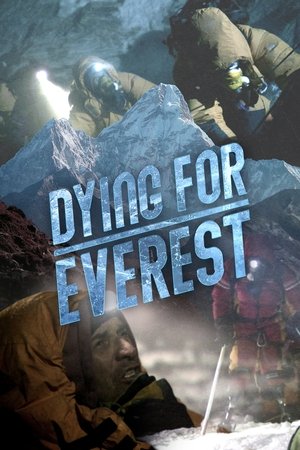
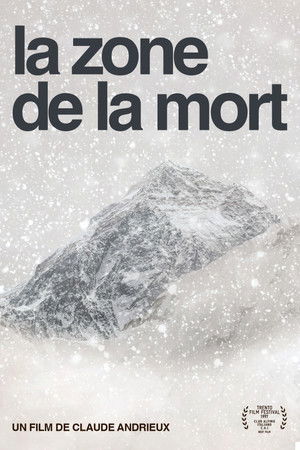
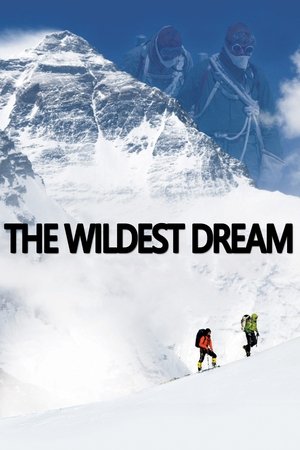
On 15 May, 2006, double amputee Mark Inglis reached the summit of Mt Everest. It was a remarkable achievement and Inglis was feted by press and public alike. But only a few days later he was plunged into a storm of controversy when it was learned that he had passed an incapacitated climber, Englishman David Sharp, leaving him to a lonely end high in the Death Zone.
Six blind Tibetan teenagers climb the Lhakpa-Ri peak of Mount Everest, led by seven-summit blind mountain-climber Erik Weihenmayer.
Upcoming National Geographic documentary.
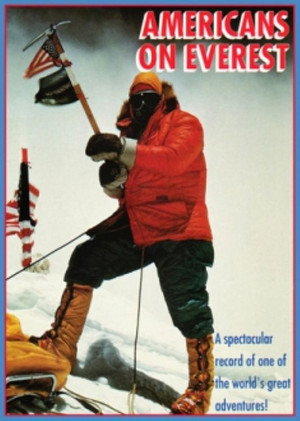
An international team of climbers ascends Mt. Everest in the spring of 1996. The film depicts their lengthy preparations for the climb, their trek to the summit, and their successful return to Base Camp. It also shows many of the challenges the group faced, including avalanches, lack of oxygen, treacherous ice walls, and a deadly blizzard.
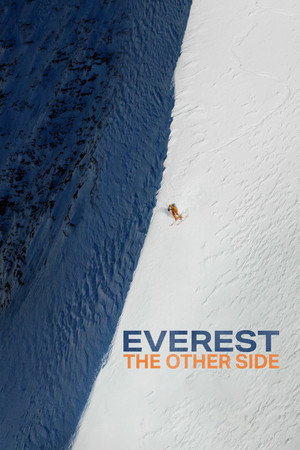
This Oscar-winning documentary tells the story behind Japanese daredevil Yuichiro Miura's 1970 effort to ski down the world's tallest mountain. Preserved by the Academy Film Archive in 2010.
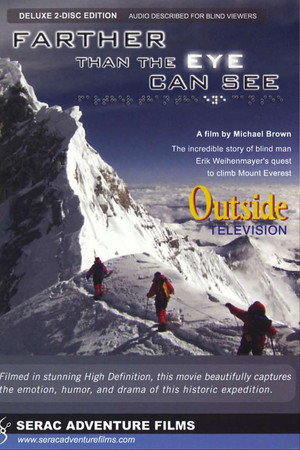
Blind climber Erik Weihenmayer and his team's highly successful ascent of Mount Everest along with four other remarkable milestones on the mountain. Time magazine called this the most successful Everest expedition of all time.
In 1924, British climber George Mallory and his partner Andrew Irvine attempted to conquer Everest for the third time. They never returned. Could they have been the first to successfully climb the mountain before meeting their deaths? In 1999, German geologist Jochen Hemmleb discovered Mallory's body just below the summit, reigniting speculation. In 2010, he organized a new expedition to follow up on this sensational discovery. His goal: to find the base camp from which Mallory and Irvine set out to conquer the summit.
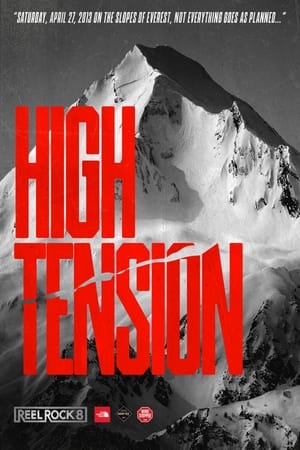
Ueli Steck (Switzerland), Simone Moro (Italy) and Jon Griffith (GB) are not like 95% of the climbers on Everest: they don't use oxygen, altimeters (improperly called Sherpas), or fixed ropes. In 2013, the trio aims to repeat the arduous Western Spur. The Sherpas have the mission to equip the mountain with fixed ropes on this famous day, up to Camp 3: ropes without which customers of commercial expeditions could not climb Everest. An argument ensued, insults were hurled from both sides. The confrontation at Camp 2 degenerated: a Sherpa water bottle physically attacked the trio of Europeans. Blows and stones were thrown and threats led the trio to flee the mountain. The Réel Rock film crew, which is part of the climbing team, films this chaos without complacency.
Reaching 29,029 feet, Mount Everest has long captivated mountaineers of all stripes. But a peak that draws athletes and mountaineers to new heights isn’t without danger — or a dark side. Perhaps the peak’s greatest mystery is the missing body of Andrew “Sandy” Irvine who disappeared alongside George Leigh Mallory in 1924 just 800 vertical feet from the summit. In Lost on Everest, we follow along as a team of elite climbers with new intel on the location of his missing body set out to solve what may be mountaineering’s great mystery. Along with the body, the team hopes to find Irvine’s camera and the footage that could rewrite history.
Uses astonishing visuals to tell the intersecting stories of George Mallory, the first man to attempt a summit of Mount Everest, and Conrad Anker, the mountaineer who finds Mallory's frozen remains 75 years later.
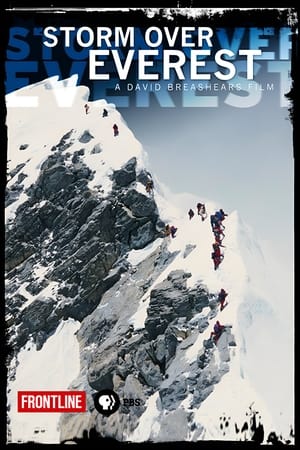
As darkness fell on May 10, 1996, a fast moving storm of unimaginable ferocity trapped three climbing teams high on the slopes of Mount Everest. The climbers, exhausted from their summit climb, were soon lost in darkness, in a fierce blizzard, far from the safety of High Camp at 26,000 feet. World-renowned climber and filmmaker David Breashears, who aided the rescue efforts back in 1996, now returns to Everest to tell the fuller story of what really happened on that legendary climb. Through remarkably intimate interviews with the climbers and Sherpas many who have never spoken before on American television Breashears sheds new light on the worst climbing tragedy in Mount Everest s history.
Surrounded by the mountains and people who are his inspiration, in ‘Path to Everest’, the mountain athlete Kilian Jornet reveals his most intimate fears, contradictions and passions. Summits of My Life is the personal project of Kilian Jornet, in which for five years he has traveled to some of the most important peaks of the planet to try to establish FKT (fastest known time) of ascent and descent of some of the most emblematic mountains of the world. The project is closely linked to values and a way of understanding the purist and minimalist mountain. The experiences lived in each challenge have been captured in different films.
The film tells the life story of Roman Romancini, one of the most important Brazilian mountaineers, in his endeavor to reach his greatest dream: climbing Mount Everest, the highest mountain on the planet. Directed by Rafael Duarte (Bambalaio Filmes) and produced by Leonardo Edde (URCA Filmes), the documentary shows how Roman reached, during his preparation years, 4 of the “7 summits” during winter, considered by many an almost impossible mission. Survivor of the avalanche that hit the Khumbu Falls in 2014, a few feet from Everest Base Camp, Roman returned to the Himalayas four years later with Rafael Duarte and Padawa Shepa, who together documented the most challenging expedition of his life.
In 2019, Nepalese mountain climber Nirmal “Nims” Purja set out to do the unthinkable by climbing the world’s fourteen highest summits in less than seven months. (The previous record was eight years). He called the effort “Project Possible 14/7” and saw it as a way to inspire others to strive for greater heights in any pursuit. The film follows his team as they seek to defy naysayers and push the limits of human endurance.
Reaching 5 1/2 miles into the sky, Mt. Everest is a massive pyramid of intimidating rock, freezing cold and hurricane force winds. This extraordinary mountain is the highest point on Earth and has become the ultimate test of man's strength, endurance and will power. It is also deadly...for every five people who reach the summit, one dies trying. All who attempt its slopes risk their lives. Some survive in triumph, but many others never return from its icy heights.
The great successes and tragedies in the life and work of Hans Kammerlander, the renowned mountaineer.
It was a sporting feat, a national feat, but also and above all a technical feat: on October 15, 1978, three French mountaineers, for the first time, reached the summit of Everest: Pierre Mazeaud, Nicolas Jaeger, Jean Afanassieff, accompanied by Kurt Diemberger, Austrian mountaineer and cameraman. A performance broadcast live on the radio thanks to the France inter teams and filmed for television by TF1. Christian Brincourt, a great French reporter, tells us about this expedition and questions the members of the expedition on their motivations. With Pierre Mazeaud (expedition leader), Jean-François Mazeaud (doctor), Claude Deck, Raymond Despiau, Nicolas Jaeger, Walter Cecchinel, Jean Afanassieff, Kurt Diemberger.
Two young cameramen are asked to film a Mount Everest expedition by German mountaineer Thomas Weber; a man wishing to climb Everest, in spite of his visual handicap. For cameramen Milan Collin and Kevin Augello this is a dream come true. They accept the challenge with full excitement In the first weeks Milan and Kevin are confronted with their own physical limitations. Are they capable of climbing this mountain? Surrounded by people who are prepared to die for their dream, giving up is not an option. They are confronted with accidents and death. In the isolated environment Milan and Kevin turn the camera on each other. This film is a personal story of two men confronted with the harsh and extreme conditions high up on the mountain.
In a groundbreaking expedition on Mount Everest, dozens of scientists converge to investigate what secrets the world’s highest peak has to tell us about our changing climate. The notorious Khumbu Glacier is mapped in stunning detail, biologists study extreme lifeforms, and a team of Sherpas and climate scientists climb straight toward the “death zone” to install the highest weather station in the world.
A team of 20 elite Nepali climbers venture into the Death Zone of Mount Everest to restore their sacred mountain and the contaminated water source of 1.3 billion people. They ascend the highest point on the planet to the 150 bodies of deceased climbers and 100,000 pounds of rubbish that remain on the high slopes of Everest. This is the self-documented story of their life-threatening journey.