From his journey from Class of '92 prodigy to Premier League Hall of Fame icon, he talks us through the moments that defined his legacy at Manchester United. A story on one of the league's most influential right-backs and a leader whose impact still shapes English football today.
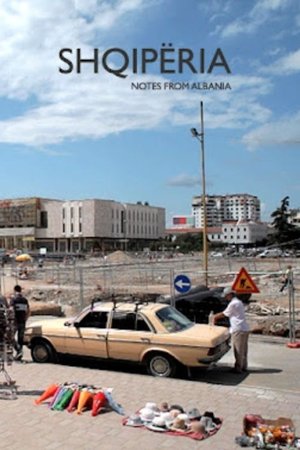
21 years after the collapse of the Communist regime, Albania experiences democracy with it's many contradictions. An exclusive insider perspective given by three young protagonists.
Arsenal - Arsène's Eleven
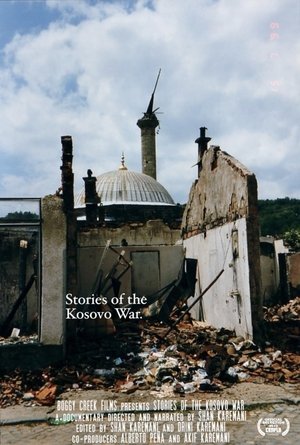
A documentary unraveling the untold stories and brutal experiences of the Kosovo War in the late 1990s.
A documentary that investigates the complexity of a nation, Albania, through the narration of the convoluted history of its monuments. What happens to the statues when they are destroyed, what are they replaced with and where do their marble shreds end up? What happens to their expensive bronze? And again: what do the sculptors who made these statues think of these destructions, what is their opinion. And today? Which statues are being destroyed in Albania today?
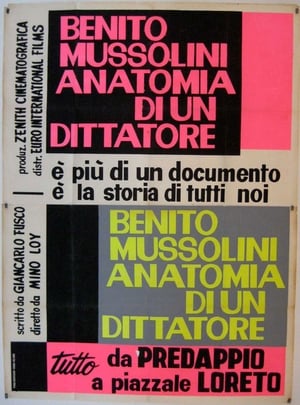
Benito Mussolini: Anatomy of a Dictator
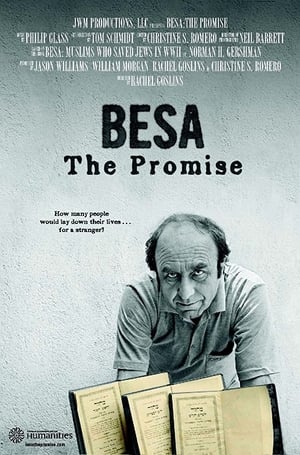
A documentary exploring how Albanians, including many Muslims, helped and sheltered Jewish refugees during WWII at their own risk, and trying to help the son of an Albanian baker that housed a Jewish family for a year return some Hebrew books that the family had to leave behind.
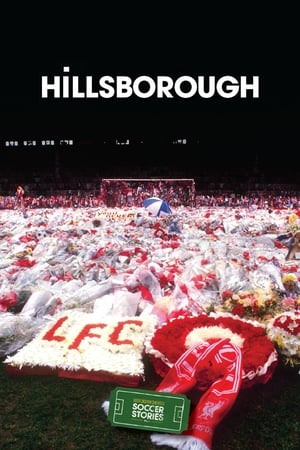
A look at the April 15, 1989 tragedy at Hillsborough Stadium in Sheffield, England, where a stampede in the stadium's standing-room-only areas killed 96 people and injured 766. The film also examines the ongoing efforts of victims' families to seek truth and justice, as well as tangible effects on English football, including stadium upgrades and the emergence of the English Premier League.
Skutečná Albánie
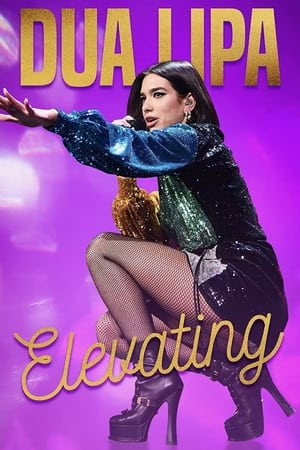
One of the most recognizable voices in all of modern day music, Dua Lipa quickly rose to fame. Her catchy tunes and sultry vocals make her music appeal to a global audience.
Eliza Dushku takes on her homeland of Albania.
Children get ready to start the first grade. They start learning the first letters.
Documentary about Congres VI of the Women's Union.
“Gjama” is a rarely practiced mourning ritual that was performed by Albanian men throughout the centuries. By shouting specific phrases and acting out a strict choreography, it is a way of paying respect to the deceased but also overcoming grief and pain over the loss of a loved one. Through the documentation of the re-enactment of the ritual, Zgjim Elshani seeks to recover fragments of the practice in the communities where this form of collective grieving is still a way of overcoming loss. By doing so, the project intends to rethink collective grieving and what it means to publicly display emotions in a male-headed society.
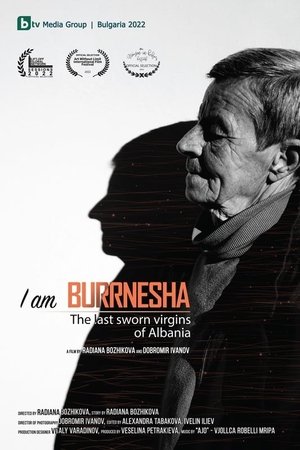
Patriarchal times in northern Albania gave birth to a phenomenon - the replacement of the man at the head of the household by a woman. These are masculine times, in which the woman is only tasked with taking care of the household and raising the children. But, locked in these social roles, girls emerge, ready to abandon their female identity and follow the path of honor. They want to be respected women with the power of a man, not for themselves, but for others. They give up marriage and sexual relations. They choose to live as men. The fall of the regime opened the country to the modern world, but neither communism nor the emerging democracy succeeded in changing the age-old traditions in the isolated mountainous regions of Albania. In the Cursed Mountains, to the north, the last sworn virgins in Europe today live a man`s life.
Made by the highly influential Russian cameraman Roman Karmen, this documentary vividly features Albanian life immediately after the communists came to power in 1944. The film is especially memorable since it’s missing much of the heavy socialist realism that marked Albanian doc making. Shortly after he completed the film, Karmen set off for Berlin to shoot the Soviet victory over Nazi Germany.
The story of Viktor Stratoberdha (1921-1991) mirrors many of Albania’s tragedies. Stradoberdha’s humorous, buoyant style led him to be one of the country’s most promising filmmakers. But after being denounced in 1956, he was expelled from the Kinostudio and sent into internal exile. In 1967, Stratoberdha directed a local theater play in which the economic five year plan was placed in a coffin. He was then jailed for the next two decades. Urime Shokë Studentë! is one of the surviving documentaries of Viktor Stratoberdha’s all too short career.
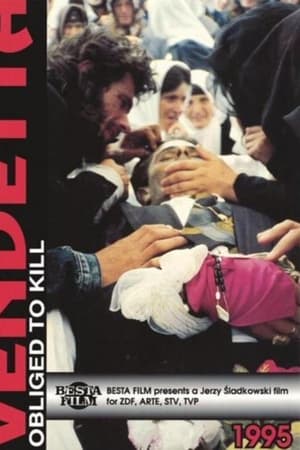
In northern Albania, ancestral customs still exist, governing the laws of vendetta between families. Sometimes, for generations, an old feud has pitted two clans against each other, condemning them to take turns murdering a member of the opposing family. This blood code, known as the Kanoun, has painful consequences for many Albanians, who are condemned to live in seclusion to avoid being killed.
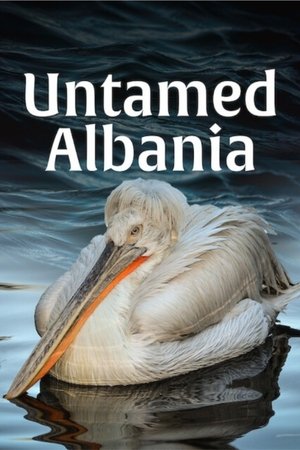
Albania in the southeast of Europe – situated between Greece, Macedonia, Kosovo and Montenegro – hosts an astonishingly diverse landscape. Harmonic coastal areas lead to harsh karst landscapes. Snow-covered mountain regions, wild canyons, waterfalls, deep-blue lakes and untouched rivers are perfect conditions for an immensely rich flora and fauna. Decades of war preserved wide areas of the country from industrial exploitation, so the natural environment is still untouched.
Albania and neighboring Yugoslavia officially broke ties in 1948. But in 1971, the Hoxha regime was honored to welcome the ethnic Albanian actor Bekim Fehmiu (1936-2010), at the time an international star in Yugoslav theater and film. Before his trip to Albania, Fehmiu had appeared in the popular Italian television smash The Odyssey (1968) and the Cannes-winning I Even Met Happy Gypsies (1967). Dokufest will also feature a photo exhibit of recently-discovered still images taken during Bekim Fehmiu’s Albanian visit.