The world knows the image of the good Canadian. But what if there was a dark secret behind a national identity? THE GOOD CANADIAN exposes the truth behind the idea of a True North strong and free. In this unflinching and eye-opening documentary, directors Leena Minifie and David Paperny move us through the corridors of systemic inequity, from the Indian Act to residential schools, to modern-day family separation. Fusing shocking footage with detailed interviews with experts, advocates, whistleblowers and politicians, THE GOOD CANADIAN challenges national myth-making, while offering Canadians the chance to forge a new identity from the truth.
Kiyukta
When an impulsive boy named Kenai is magically transformed into a bear, he must literally walk in another's footsteps until he learns some valuable life lessons. His courageous and often zany journey introduces him to a forest full of wildlife, including the lovable bear cub Koda, hilarious moose Rutt and Tuke, woolly mammoths and rambunctious rams.
This pioneering documentary film depicts the lives of the indigenous Inuit people of Canada's northern Quebec region. Although the production contains some fictional elements, it vividly shows how its resourceful subjects survive in such a harsh climate, revealing how they construct their igloo homes and find food by hunting and fishing. The film also captures the beautiful, if unforgiving, frozen landscape of the Great White North, far removed from conventional civilization.
The director goes back to her roots in Pangnirtung, amongst her family and community. It leads her to another journey: to Qipisa, the outpost camp from where they were uprooted.
A young shaman must face her first test: a trip underground to visit Kannaaluk, The One Below, who holds the answers to why a community member has become ill.
A lonely fisherman drifts into haunted waters in search of food and finds much more than he bargained for. Based on an Inuit folktale.
A group of Nunavut elders travel to five museums in North America to see and identify artifacts, tools and clothing collected from their Inuit ancestors. Directed by Zacharias Kunuk and Bernadette Dean.
Children of the Arctic is a portrait of five Native Alaskan teenagers growing up in Barrow - the northernmost community in the United States. As their climate and culture undergo profound changes, they strive to balance being modern American kids and the inheritors of an endangered way of life.
The drawings and recollections of Inuit artist Pitseolak, from the book of the same title written by Dorothy Eber. Now in her seventies, Pitseolak is one of the most famous of the graphic artists of the Cape Dorset (Baffin Island) artists' colony and co-operative. Her coloured pencil and felt-pen drawings vividly illustrate her memories of past life in the Arctic, and of the birds, animals and spirits that figured so large in the daily life of the Inuit.
This feature film is a documentary portrait of Joseph Idlout, a man who was once the world's most famous Inuit. Unknown to most Canadians today, Idlout was the subject of many films and books, and one of the Inuit hunters pictured for many years on the back of Canada's $2 bill. In this film Idlout's son, Peter Paniloo, takes us on a journey through his father's life - that of a man caught "between two worlds."
One day in the lives of an average Greenlandic family, which happens to be of great importance for 8-year old Kali - he's about to catch his first prey with the harpoon. The whole family is looking forward for the huge step in boy's maturation.
This short documentary looks at the government relocation of the Labrador Inuit and the effects on their culture and social structures.
This short documentary studies life in the village of Kangirsujuaq, Nunavik. In this community on the edge of the Arctic Ocean, children’s laughter fills the streets while the old people ponder the passage of time. They are nomads of the wide-open spaces who are trying to get used to the strange feeling of staying put. While the teenagers lap up Southern culture and play golf on the tundra to kill time, the Elders are slowly dying, as their entire culture seems to fade away. Elisapie Isaac, a filmmaker born in Nunavik, decides to return to her roots on this breathtaking land. To bridge the growing gap between the young and the old, she speaks to her grandfather, now deceased, and confides in him her hopes and fears. Grappling with isolation, family relationships, resource extraction, land-based knowledges, the influence of Southern culture and the ongoing impacts of colonialism on Inuit ways of life, Elisapie Isaac offers a nuanced portrait of the North.
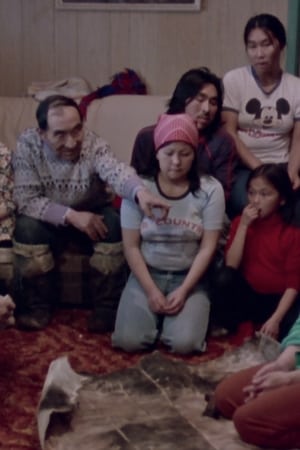
In the mid-1950s, lured by false promises of a better life, Inuit families were displaced by the Canadian government and left to their own devices in the Far North. In this icy desert realm, Martha Flaherty and her family lived through one of Canadian history’s most sombre and little-known episodes.
Greenland
Renowned Inuit lawyer Aaju Peter has long fought for the rights of her people. When her son suddenly dies, Aaju embarks on a journey to reclaim her language and culture after a lifetime of whitewashing and forced assimilation. But can she both change the world and mend her own wounds?
In this short film, artist Jobie Weetaluktuk turns his gaze on his family and the power of ritual through the story of a young woman and her unplanned child. In Inukjuak, an Inuit community in the Eastern Arctic, a baby boy has come into the world and they call him Timuti, a name that recurs across generations of his people, evoking other Timutis, alive and dead, who will nourish his spirit and shape his destiny.
This short documentary depicts the formation in 1959 of the first successful co-operative in an Inuit community in Northern Québec. The film describes how, with other Inuit of the George River community, the Annanacks formed a joint venture that included a sawmill, a fish-freezing plant and a small boat-building industry.
Through Inuit voices, HERD: Inuit Voices on Caribou tells the story of the social, emotional, and cultural disruptions from ecological change by putting an essential human face to the caribou declines - including a 99% decline of the once-massive George River Caribou Herd. The film was developed over four years of collaboration between filmmakers and 11 Inuit communities across Labrador. It cinematically explores an array of lived experiences, from youth to Elders and hunters to cooks, to ensure that the stories of those living on the frontlines of this ecological crisis are HERD. It is a portrait of the deep connections that exist between humans and non-humans, a glimpse of heartbreaking loss felt by entire communities, and a lasting testament of cultural resilience in the context of ecological uncertainty.