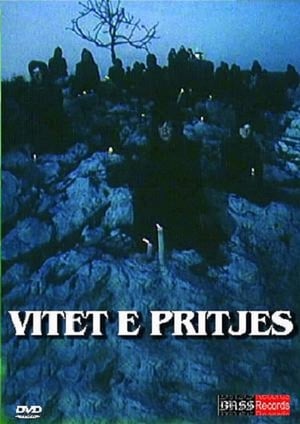
This is the true story about a group of Romani's (gypsy) in occupied Poland during World War II as they confront the atrocities and tragedies of a forgotten holocaust.
January 1942, in Nazi-occupied Poland during World War II. Thousands of Jews have been confined to the Warsaw ghetto for more than a year. Outside, life goes on; inside, they struggle to survive another day. Still, on a cold winter night, a group of Jewish actors manage to stage a lively musical comedy.
The true story of pianist Władysław Szpilman's experiences in Warsaw during the Nazi occupation. When the Jews of the city find themselves forced into a ghetto, Szpilman finds work playing in a café; and when his family is deported in 1942, he stays behind, works for a while as a laborer, and eventually goes into hiding in the ruins of the war-torn city.
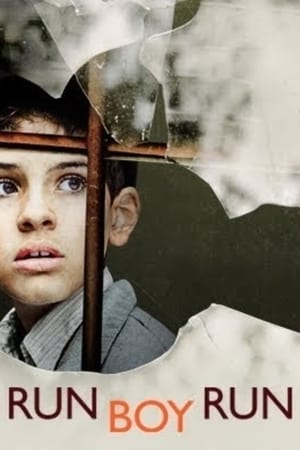
A true story of Jurek, an eight-year-old boy, who escapes from the Warsaw ghetto, then manages to survive in the woods and working as a farmhand, disguising himself as a Polish orphan.
Insurgées ! Les résistantes du ghetto de Varsovie
Shielding the Flame
During the Nazi occupation of Poland, an acting troupe becomes embroiled in a Polish soldier's efforts to track down a German spy.
The history of the Warsaw Ghetto (1940-43) as seen from both sides of the wall, its legacy and its memory: new light on a tragic era of division, destruction and mass murder thanks to the testimony of survivors and the discovery of a ten-minute film shot by Polish amateur filmmaker Alfons Ziółkowski in 1941.
The film traces two families, one of which is Jewish, who preserved the images for decades but hadn’t brought them to light. 80 years after their creation, the son of the photographer finds the forgotten negatives and launches an investigation. With a team of researchers, archivists, and animators who use near-forensic precision to reconstruct locations and contexts, they trace the circumstances of those tragic days and the lives captured in each frame.
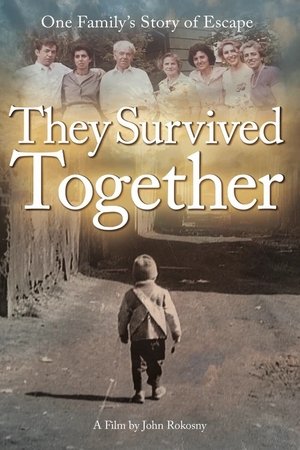
The Neiger family was living a peaceful life in the Jewish community in Krakow when the arrival of World War II changed their lives forever. When Nazi soldiers forced the family from their home into the harsh life of the Ghetto, they made a vow to escape as a family. But when circumstances forced the family to separate from older brother Ben, their will to survive was put to the test. They Survived Together" is the incredible, true story of one family as they desperately tried to stay alive... and together as a family with four small children, attempted to escape certain death at the hands of the Nazis. They are believed to be one of the only families to escape and survive as a family.
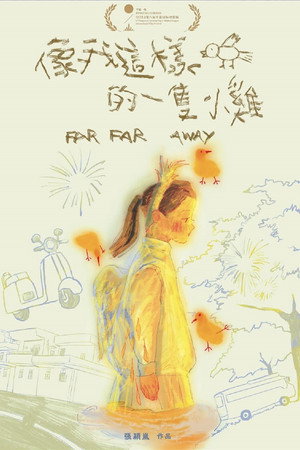
After her mother went to Hong Kong to work, the little girl Jin Ling lived with her mother-in-law and brother in a rural area of Guangdong. Her mother rarely appeared in the screen, but she seemed to “fill” Jin Ling’s life.
The Bandit Tamer is a 1925 American silent film directed by J.P. McGowan.
After the mysterious murder of John Cowles' father, the son starts west to borrow money of his father's business partner, Col. Meriwether. He meets the Colonel's daughter, Ellen, and falls in love with her, not telling her of his fiancée, Grace Sheraton. Gordon Orme, an old acquaintance, turns up, tells Col. Meriwether about Grace, and the Colonel is so enraged he refuses to lend the money. John's mother and Grace have followed John and his mother urges him to try the gold fields. He discovers gold and wins Ellen, after both Gordon and Grace, who is really in love with Gordon, are killed.
In an age of overlapping ecological, political, and social crises, the question of care and responsibility takes on enormous significance. Who cares for whom, and under what conditions? How can we think of care beyond normative role models, structural isolation, and exploitation? In light of the climate crisis, wars, growing social inequality, and the profound experiences during the pandemic, one thing is clear: without radically rethinking care work, a more just future cannot be achieved. The group screening brings together three video works that deal with practices of care. Starting from the private sphere, the works develop perspectives on care beyond the neoliberal burden of personal responsibility and examine how solidarity can be conceived and lived.
The movie is about a 15 years old depressed boy who meets an old man when he goes to a park. Meeting him he gets to learn some life lessons and he thinks those lessons change his life and one of the advice from those life lessons could bring him inner peace of mind for lifetime.
It would seem that the life of Lena - girls from the provinces - was a success. She did everything to become a famous TV presenter in her incomplete 30 years. She has a beautiful wealthy husband, she is valued and respected. But behind this prosperous facade lies a deeply unhappy person. Because you can not be happy by abandoning true love and your own child for the sake of career and fame. And now, in order to find herself the same, she needs to go back, win her beloved again and become a real mother. And she will have to find out the truth that has been hidden from her for so many years ...
Portrays the lives of families and other loved ones left behind when husbands, fathers, brothers and children, because of desperate economic conditions in Albania, travel as far as America, looking for work and economic security.
A young woman is accused of "Immorality" (aka prostitution) and she is sent for re-education to work on a construction site.
Indian Army soldier Shankar gets injured in cross-firing at the border. Senior Officer suggests he take 8 days to rest after consultation with doctors. Shankar requests for leave instead of rest, officers agree and tell him to report to duty on the morning of the 8th day. While traveling, he helps citizens and ends up missing his train. Online news reporter covers his story without acknowledging him. The story later revolves around how he reaches his home and then back to duty in a short span of time.
A story of reuniting twin sisters, who were seperated when young. Maiko, who lives in Hachijo Island, organizes a local festival. Just before the festival starts, she leaves the island to look for her sister Seiko in Tokyo.