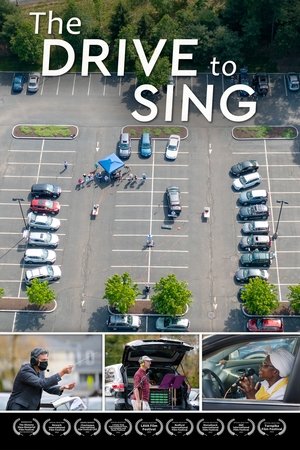
When the COVID-19 pandemic forced musical activities to shut down in March 2020, singers searched for ways to stay connected and sing live music together. Online solutions such as Zoom helped groups socially, but did not allow a choir to rehearse and perform together. Several tech-savvy musicians turned to old-school audio technology to organize parking lot choirs, with each singer safely isolated in their own car. The idea spread through social media across the US and Canada, and reached the attention of the New York Times, the Today Show, and NPR. "The Drive to Sing" tells the story of the parking lot choir, the cast of characters who worked together to develop and refine it, and the singers who kept their musical communities going during this time of fear and isolation.
Via Dolorosa captures director’s journey in reconnecting with Vietnamese homeless persons whom she filmed for another short film two years ago. While she accompanied a man in his final days, Jo searched within herself to resolve the original sin of the documentary filmmaker as a bystander to the suffering of others.
A homeless musician finds meaning in his life when he starts a friendship with dozens of parrots.
For almost half of his life, Kenneth Viken has been in prison, and he does not know how many times he has been released, only to soon return . In January 2016 he is released again.
Valery Liashkevich is a homeless artist who lives at a railway station and for over twenty years has painted pictures in the streets of the town of Gomel in Belarus. For the natives he is no more than a local attraction. For art critics he is a phenomenon worth close attention.
What if democracy fails citizens by not serving them all equally? What if inequality becomes the norm and the most vulnerable citizens are left behind with no money, no home, no rights, and no country of their own? In Hungary, the government has slashed social benefits and criminalized homelessness, but a group of activists, homeless and middle class, is confronting authorities to defend social justice and their right to be citizens. After the tragic death of two of its founding members, the group feels that Hungary is growing more hostile and their struggle is more important than ever. Despite all odds, their own community keeps them going—a mini-society with democracy and solidarity at its heart, an island of hope, belonging and dignity in a society gradually shifting the other way.
Would you fall in love with a homeless person? Six years after Occupy Wall Street, Jehan is 42 years old and homeless on the streets of New York City. As she works to save money, get an apartment and return to a "normal" life, she decides that she would also like to get married. Would someone willing to put a dollar in her begging bag also be willing to fall in love with her? Can she find true love with a "normal" person?
Much as Buena Vista Social Club revealed a rich and unexplored world of music and culture, Cool & Crazy introduces us to a group of men who find purpose, companionship and even fame, as members of a male choir in Berlevåg.
We follow Roach, a 17-year-old ex-junkie and squeegee punk living on the streets of Toronto and Montreal. As part of the filmmaking process, he's been given a camera to document his world. The footage he gets is urgent, because there's a war against squeegee kids. This documentary is from the point of view of the kids themselves, in order to provide alternative voices. Roach's camera is positioned behind "enemy" lines: living in derelict buildings, squeegeeing for money, being hunted by police.
Picnickers in punts, ‘bumpers’ and bubbly.
Poignant stories of homelessness on the West Coast of the US frame this cinematic portrait of a surging humanitarian crisis.
In January 2011 Paul Crane discovered a tent city in downtown St. Louis, along the Mississippi River. He was curious as to who these people were, how they ended up there, and what life was like for them each day. He initially thought he would simply go down during the day and capture footage when possible, but he quickly realized that if he wanted to truly capture how these people lived and the full reality of their collective and individual existence, he would have to be there full time and become a part of the place, so he moved in with them.
The film accompanies members of a Hamburg choir singing modern pop songs.
This is Vol. 1 of god’s movie. A series of interviews and performances with the chosen few that came in contact with the late Joe Cole’s mighty video 8 camera. This video is as much about Joe as it is about the people that he filmed. Joe was able to make people feel comfortable enough to let themselves go in front of his lens. I used to watch the raw footage of Joe’s hours of interview footage culled from walking the streets of cities all over. I was constantly amazed at his ability to find these totally unique people. When you watch this you will see what I’m talking about. Reminds me of a quote I have heard over the years, something that amounts to those who can see it (in) others must have some of it in themselves.
From the glitzy sidewalks of Hollywood Boulevard to the urban wasteland of Skid Row, "Forgotten" portrays the cruel reality of being homeless in Los Angeles and how these men and women cope with life on the streets of one of America's largest cities.
Acclaimed documentarian John Walker catches the legendary Cape Breton Miner’s singing group The Men of the Deeps just as the last mines on the island are shut down. Featuring ravishing cinematography of Cape Breton, and plenty of music, Men of the Deeps is a deeply touching portrait of a culture that still survives despite the ultimate end of an industry, and a tribute to the men and the songs that kept things moving on the Island for almost two hundred years.
Zu ebener Erde
Every Tuesday twenty-five tattooed middle-aged men take a break from their everyday lives to meet and drink beer, tell bad jokes and sing dirty rock songs. They have landed their biggest gig ever – warming up for Black Sabbath. But one of them confides he’s got little time left to live. This summer becomes a race against time and death.
Pia Sjögren was the subject of three documentaries by director Tom Alandh, beginning in 2001. He first saw her on the street selling newspapers, homeless, addicted to drugs, trying to make enough money for the day. Since then, she has become clean, and now gives lectures about her experiences, sharing her knowledge. This is the fourth film about her, filmed between 2011-2020. At the start of this installment, Pia has recently begun having heart and breathing issues, her own daughter is in prison for narcotics, and her mother, who we were introduced to in previous installments, continues to struggle with rapidly decreasing eyesight.
1994 at the Ambassador Hotel, 55 Mason Street in the Tenderloin district of San Francisco, California. From 1978 to 1996, the hotel was managed by Hank Wilson, a San Francisco LGBT activist who made the hotel a model for harm reduction housing. 134 run-down and exhausted rooms populated by homeless men and women, sometimes even children. All of them in urgent need of care, compassion and humanity. Nobly provided by voluntarily working professional health care and social workers staff, various benefactors, volunteers, neighbors, and community contributions.