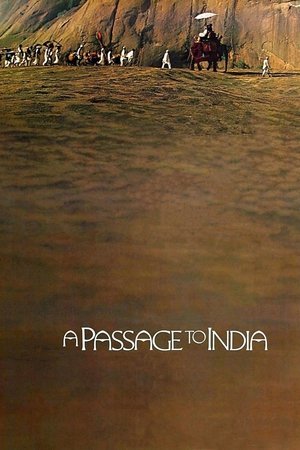
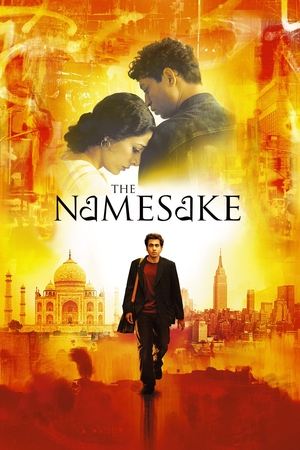
A father and his daughter came to India as refugees post-war in their country. Few good hands help them to rebuild their lifestyle.
A married woman realizes how unhappy her marriage really is, and that her life needs to go in a different direction. After a painful divorce, she takes off on a round-the-world journey to "find herself".
In a small village in Darjeeling, Sahuji the merchant has weaved a web of corruption in every layers of the social fabric. And he is also involved in rampant smuggling of goods across the border, and everyone from the local jeweler to the local police inspector are part of his intricate web. While the father has created a position of influence by spreading corruption, his son Kaaliram has ushered in a reign of terror. Desperate villagers make a plea to the owner of the tea garden, who calls (presumably) the higher ups in police force and they promise to send someone.
Jharia, India, one of the most dangerous places on earth. Fires rage underground, smoke and dangerous fumes belch from cracks in the ground. This is the home of Anant, an 8 year old boy who scrapes a living picking coal and selling it at the local markets to try and feed himself and his sick mother. One day, a chance encounter changes Anant's life, forever. This is a coming of age drama that casts a spotlight on a humanitarian disaster area and gives us a chance to see the world through the eyes of one of India's many child labourers.
Director Jean Renoir’s entrancing first color feature—shot entirely on location in India—is a visual tour de force. Based on the novel by Rumer Godden, the film eloquently contrasts the growing pains of three young women with the immutability of the Bengal river around which their daily lives unfold. Enriched by Renoir’s subtle understanding and appreciation for India and its people, The River gracefully explores the fragile connections between transitory emotions and everlasting creation.
The film starts in the early 1950s showing Sreedharan, the protagonist, as a very popular communist leader and trade union activist. He is forced to go underground after his name was associated with the murder of the owner of a tile factory. He is considered to be dead by his party and they even erect a memorial for him. But he makes an unexpected comeback almost 10 years later, after the first communist ministry gained and lost power in Kerala and after the Communist Party of India has split. On his return, he spends his time sleeping and drinking. His come back is first a puzzle and then an embarrassment to his comrades and family. As the disappointment on his new face grows, he is found murdered. The film ends when both the communist parties jointly celebrate his martyrdom.
Three brothers are separated after their parents are murdered by a gangster. Years later, they find their paths intertwined around a family song.
Indian parents have to meet with Chinese parents when their kids decide to get married in LA.
The film begins in 1857, when India was ruled by the British East India Company. Mangal Pandey is a sepoy, a soldier of Indian origin, in the army of the East India Company. Pandey is fighting in the Anglo-Afghan Wars and saves the life of his British commanding officer, William Gordon. Gordon is indebted to Pandey and a strong friendship develops between them, transcending both rank and race.
Utilizing the 1920s jazz vocals of Annette Hanshaw, the epic Indian tale of exiled prince Ramayana and his bride Sita is mirrored by a spurned woman's contemporary personal life, and light-hearted but knowledgeable discussion of historical background by a trio of Indian shadow puppets.
Waris Hussein’s acclaimed drama is based on the autobiography of Firdaus Kanga, who stars in the lead role of Brit, a young man born with brittle bone disease, which causes him to have never grown beyond four feet tall. The film follows his sexual awakening whilst his family simultaneously disintegrates all around him. An extremely moving drama confronting stereotypes around disability, sexuality and race, featuring a powerhouse performance from Kanga.
Lovable goon Munna falls for a morning radio host by the name of Jahnvi, who also runs an elders' home which an unscrupulous builder seeks to attain. In order to gain Jahnvi’s attention, he cheats his way to winning a Mahatma Gandhi radio quiz. When Jahnvi consequently expresses interest in Munna, he and his best friend Circuit attempt to keep up the facade.
Chidambaram is based on a short story by noted Malayalam writer C. V. Shriraman. The film is a deeply symbolic exploration of the man-woman attraction leading to betrayal and eventually to the purgatory of guilt.
It's an ordinary winter's day when disillusioned Police Inspector Azaad Singh is tasked with delivering a very important file to his superior. Traversing expanses of rural and urban Punjab along the way, he reckons with the state's past and present realities, and faces an untimely existential crisis as a result.
A Punjabi family is thrown into chaos following the eldest son's refusal to go through with an arranged marriage to a woman who has travelled over from India.
College freshman Krishna Reddy, who has never cared for his Indian-American cultural heritage, looks forward to a new life on campus but is surprised to find that he has been assigned Indian roommates.
Set in post-independent India, this film narrates the story of a naive villager who has warped ideas about an atrocious communal group called Razzakars and wishes to join it until he realises what they are capable of.
A stylized version of Vijay Tendulkar’s radical Marathi play chronicling the Peshwa regime in western India, a collective effort of direction and cinematography made by an independent group of young filmmakers.
Zubeidaa, an aspiring Muslim actress, marries a Hindu prince to become his second wife. Her tumultuous relationship with her husband, and her inner demons lead her to a decision which has fatal consequences for them all.
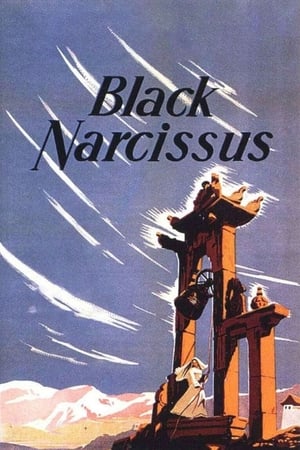
A group of Anglican nuns, led by Sister Clodagh, are sent to a mountain in the Himalayas. The climate in the region is hostile and the nuns are housed in an odd old palace. They work to establish a school and a hospital, but slowly their focus shifts. Sister Ruth falls for a government worker, Mr. Dean, and begins to question her vow of celibacy. As Sister Ruth obsesses over Mr. Dean, Sister Clodagh becomes immersed in her own memories of love.