David McVicar's exhilarating new production, with Anne Sofie von Otter in the title role, restores the Opera Comique to Bizet's masterpiece. Philippe Jordan, in his Glyndebourne debut, conducts the London Philharmonic Orchestra, the Glyndebourne Chorus, and a cast which includes Marcus Haddock, Laurent Naouri, and Lisa Milne.
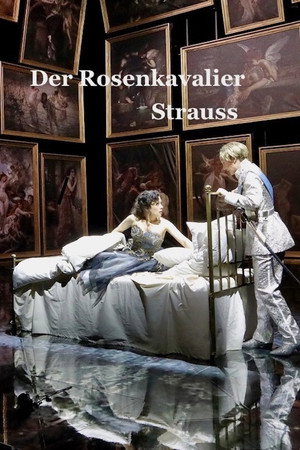
The Semperoper caused a sensation in November 2007 when it visited Japan for the first time in twenty-six years. The demand for tickets and the audience's enthusiasm were unprecedented, not least because the company was staging a piece that is performed more authentically in Dresden than anywhere else in the world: Richard Strauss' Der Rosenkavalier, which received its first performance in Dresden in 1911. Leading the ensemble was the radiant-voiced and profoundly thoughtful Marschallin of Anne Schwanewilms.
What happened to Figaro and his friends after the events told in Rossini’s and Mozart’s operas? One possible sequel is told in John Corigliano’s “grand opera buffa” The Ghosts of Versailles—an uproariously funny and deeply moving work inspired by Beaumarchais’s third Figaro play, La Mère Coupable, and commissioned by the Met to celebrate its 100th anniversary. This telecast captures its world premiere run, conducted by James Levine. Håkan Hagegård is Beaumarchais, Figaro’s creator, who is deeply in love with Marie Antoinette (Teresa Stratas in a heart-searing performance) and determined to rewrite history and save her from the guillotine. A young Renée Fleming, at the beginning of her international career, sings the unfaithful Rosina. Gino Quilico is the wily Figaro who tries to take matters in his own hands, and Marilyn Horne stops the show as the exotic entertainer Samira.
Live 2001 production from the Zurich Opera House of the classic Mozart/Da Ponte opera, with Nikolaus Harnoncourt conducting and directed for television and video by Brian Large.
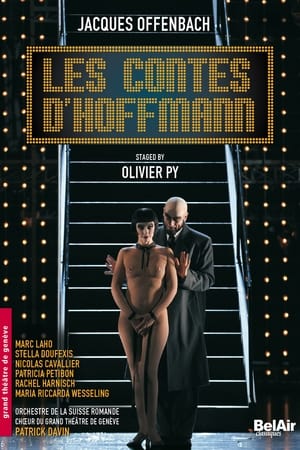
Among DVDs of "Hoffmann" currently available, this is the only one that even begins to stand comparison with the superlative Powell and Pressburger film (whose ideas it occasionally borrows). Olivier Py's baroque imagination, which sometimes leads him into self-indulgence and incoherence, is well suited to bringing out this opera's darkness and he does an excellent job
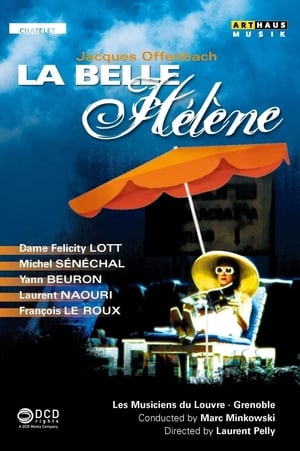
This is a joy from beginning to end. Although there are many tricks and ideas from Laurent Pelly, as always he seems to still retain the Offenbach magic. La Lott and Monsieur Beuron are a joy, but so is everyone else. The Patriotic Trio by the sea is both a hoot and wonderfully sung, the score seems truly complete yet never flags and the finale sequences for especially acts 1 & 2 are a joy of movement and sound fused as one glorious Offenbachian moment.
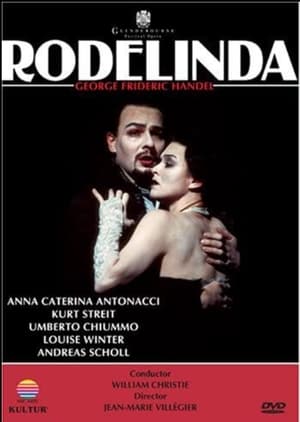
Jean-Marie Villegier's modern interpretation of Handel's "Rodelinda" – filmed live at the world-renowned Glyndebourne Opera House in the United Kingdom, sets the timeless tale of jealousy and treachery in the black-and-white world of the silent-movie era. Soprano Anna Caterina Antonacci sings the title role of Rodelinda, with tenor Kurt Streit and bass Umberto Chiummo performing the parts of Grimoaldo and Garibaldo, respectively.
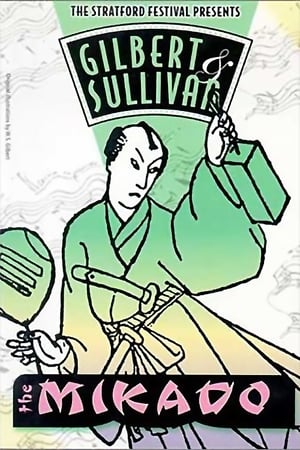
In a small Japanese town, Ko-Ko is appointed to the unenviable position of executioner. Knowing he must successfully perform before the appearance of the Mikado in a month's time, Ko-Ko finds a suitable victim in Nanki-Poo, who is distraught over his unrequited love for the maiden Yum-Yum. Nanki-Poo agrees to sacrifice his life if he is allowed to spend his remaining days with Yum-Yum, who is betrothed to Ko-Ko. Filmed live from the 1982 Stratford Festival in Ontario.
Giancarlo Del Monaco's passionate and intelligent production of Jacques Offenbach's magnum opus creates a climactic kaleidoscope of deep and convincing emotions. A highly credible incarnation of the pitiable Kleinzach he sings about, Aquiles Machado is the poet who loses his romantic idealism, his reflection and finally his soul to a 'trio of charming enchantresses'.
Gaetano Donizetti and his librettist Felice Romani kept the focus of their opera ANNA BOLENA on the personal rather than the political in this fictionalized Tudor tale: Henry VIII of England wants to get rid of his second wife, Anne Boleyn, so that he can marry her lady-in-waiting, Jane Seymour. He brings Lord Richard Percy, Anne's first love, back from exile so that he can find an excuse to accuse her of adultery. With the unwitting aid of Smeaton, a court musician, and Lord Rochefort, Anne's brother, the trap is easily sprung. This 2011 live recording from the Wiener Staatsoper showcases Anna Netrebko as she "scored a personal triumph" in her debut as the hapless Tudor Queen, while her stage partners - notably Elīna Garanča as Jane Seymour and Ildebrando D'Arcangelo as Henry VIII - were likewise showered with critical acclaim.
Figaro and his betrothed Susanna are preparing for their wedding day. The Count, Figaro's master, has plans to use his ancient right to sleep with Susanna on their wedding night. The couple and the Countess plot to keep the Count at bay.
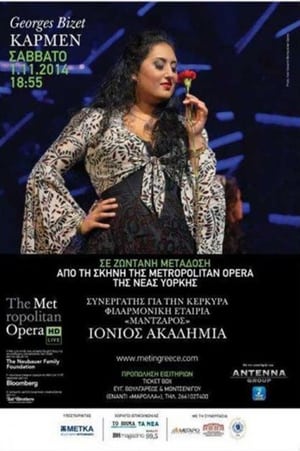
Georgian mezzo-soprano Anita Rachvelishvili gives a dynamic performance as Bizet’s iconic gypsy, the woman who lives by her own rules. Aleksandrs Antonenko is Don José, the soldier who falls under her spell, and Ildar Abdrazakov plays Escamillo, the swaggering bullfighter who takes Carmen away from Don José—an action that seals Carmen’s tragic fate. Anita Hartig is Micaëla, and Pablo Heras-Casado conducts Richard Eyre’s hit production, set in 1930s Spain.
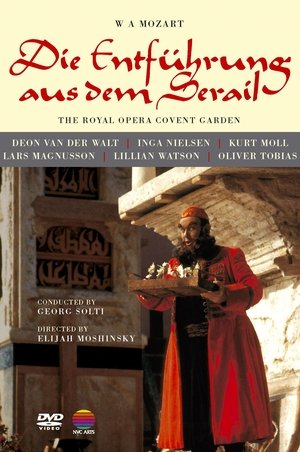
Mozart's famous Singspiel after Christoph Friedrich Bretzner's work "Belmonte und Konstanze", DIE ENTFÜHRUNG AUS DEM SERAIL comes to life in the sumptuous setting of Topkapi, the Ottoman sultans' own Istanbul seraglio (palace harem). Belmonte finds his fiancée Konstanze and her English maid Blondchen, who were captured and sold by pirates, in the Mediterranean seraglio of the Ottoman pasha Selim. Belmonte's servant Pedrillo gets him engaged as builder. After Selim tried to enforce himself upon Konstanze, Pedrillo and Blondchen, his own sweetheart, prepare their flight, managing to get Osmin, the pasha's overseer, drunk. Yet Osmin and Selim's guard still capture them, already in the garden; however the touching display of true love melts the pasha's heart, so he lets them go.
Met performances of Strauss’s white-hot one-act tragedy, which receives its first new production at the company in 20 years. Claus Guth, one of Europe’s leading opera directors, gives the biblical story—already filtered through the beautiful and strange imagination of Oscar Wilde’s play—a psychologically perceptive Victorian-era setting rich in symbolism and subtle shades of darkness and light.
Tosca is an opera in three acts by Giacomo Puccini to an Italian libretto by Luigi Illica and Giuseppe Giacosa. It premiered at the Teatro Costanzi in Rome on 14 January 1900. This version is conducted by Riccardo Muti at La Scala, Milan.
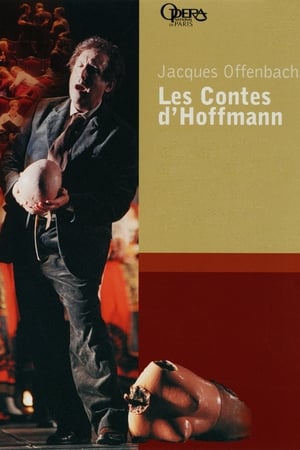
Live performance, Bayerische Staatsoper, 2011. The Tales of Hoffmann (French: LES CONTES D'HOFFMANN) is an opéra fantastique by Jacques Offenbach that combines three short stories by E.T.A. Hoffmann into a haunting whole: a melancholy poet reflects on three women he loved and lost in the past: a mechanical performing doll, a Venetian courtesan, and the consumptive daughter of a celebrated composer. One of the questions this opera poses for any director is how to link the 'tales' of Hoffmann's three lost loves together and knit them satisfactorily into the Prologue and Epilogue. In this production, Richard Jones solves the puzzle by turning it into an autobiographical journey which ends with a grand meet-up of all the characters Hoffmann has encountered: for once, Hoffmann is not presented as a rollicking kind of drunken story-spinner, but rather a sad-eyed, sobered-up depressive, who reaches for the bottle only because his disastrous love life has gone wrong yet again.
Part of Tutto Verdi series - Nabucco (2009) Parma. NABUCCO was Verdi’s third work for the stage and proved his first great success when performed in 1842. It deals with the Hebrew’s attempts to break free from the yoke of their Babylonian oppressors and is nowadays numbered among Verdi’s most popular works, not least on account of its famous Chorus of Hebrew Slaves, which has one of the best-loved melodies in the whole history of opera.
"Manon", wrote Puccini to his publisher Giulio Ricordi in 1889, "is a heroine I believe in and therefore she cannot fail to win the heart of the public." This turned out to be a truly prophetic statement since none of Puccinis other world successes were received on their first nights as rapturously as Manon Lescaut. The popularity of Puccinis great masterpiece has never waned and the highly acclaimed Götz Friedrich production at Covent Garden was hailed as an operatic milestone. Two of the worlds leading stars--Kiri Te Kanawa and Placido Domingo--head a strong cast conducted by the brilliant Italian conductor Giuseppe Sinopoli.
Fantasio
Captain's daughter Josephine and common sailor Ralph Rackstraw are in love. However, their relationship is complicated by her arranged marriage to the high-ranking Sir Joseph Porter. A secret about the characters' true identities revealed by Little Buttercup, which leads to a farcical resolution.