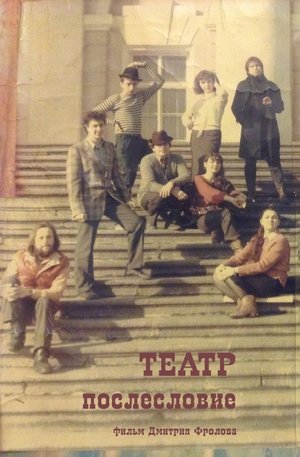
The film was shot as the final part of the play "Drink the sea, Xanthos" theatre-Studio "NEO" (St. Petersburg 1987-1989). As a result, the performance was changed and the film gained independence. He became an allegory of acting.
Episodic look at the life of a minister and his family as they move from one parish to another.
The film is based on The Governor, a play by Leonid Andreyev. V.I. Kachalov plays the governor of a small Russian province who tries to treat the people under his authority with kindness and equanimity. But when a local factory goes on strike, the governor buckles under to pressure from the Tzar and orders the wholesale slaughter of the strikers. He pays for this betrayal of his trust with his life -- at the hands of a courageous Bolshevik spy.
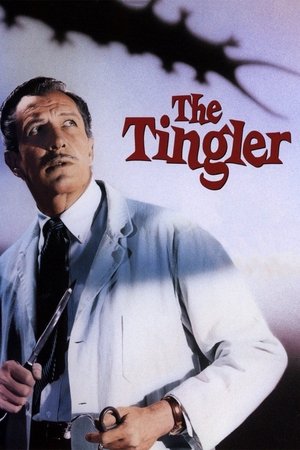
A pathologist experiments with a deaf-mute woman who is unable to scream to prove that humans die of fright due to an organism he names The Tingler that lives within each person on the spinal cord and is suppressed only when people scream when scared.
An epic silent space opera about a robot-based alien invasion, featuring unique visuals created by meticulously modifying and editing thousands of hours of silent and serial film footage. With an original story, musical score, and sound design, Time of the Robots creates a new experience highly reminiscent of early cinema.
High school students Chi-Hyun and Myung-Soo always takes care of their best friend Kyung-Sook, who is terminally ill with leukemia. Kyung-Sook's last wish is to kiss his first love before he dies, but he has never experienced falling in love. For Kyung-Sook, Chi-Hyun and Myung-Soo look for a girl who could become Kyung-Sook's first love. By chance, they meet Kook-Hwa and they succeed in connecting Kyung-Sook with Kook-Hwa. But, Chi-Hyun becomes heartbroken watching Kyung-Sook and Kook-Hwa falling in love.
Film directed by Jean-Louis Koula.
A former Fascist takes his son and escapes across the border into France, where he tries to avoid being recognized and having to pay for his wartime crimes.
Leyla and Tarik are trying to attain each other, but misfortune follows them.
Focuses on the Kwame Nkrumah era in Ghanaian history and paints a portrait of a female African government minister forced into exile after a coup d'état in 1966. Two decades later, she returns to confront the country she left behind.
Ali is the image of modern Africa. He happily returns from a football match on his motorbike but a nasty surprise is waiting for him at his parents' home: he finds Haoua, his bride-to-be, waiting for him. The wedding is celebrated shortly afterwards and the two begin living together under the same roof. They are strangers but cannot stand each other. Haoua is the classic traditional woman who has just arrived from the village, God-fearing and faithful to the laws of tradition. Ali's friends advise him to look for a second wife. He meets Henriette, an uninhibited and provocative city girl, the woman of his dreams. To meet Henriette's constant requests, Ali 'borrows' some money from the coffers of commander Soleymane, but he is discovered and ends up in prison. Henriette is furious and leaves him, whilst Haoua cries for him in despair.
The story of Quincy Bosomfield who is the product of colonial education and has risen to become the district commissioner. In the process, he abandons his African heritage and all that has real meaning to him.
Tourneur, a self-proclaimed cinéaste, feuds with Cinema and his gang, who are obsessed with foreign action movies.
To ease her homesickness Miriam recreates an aspect of home in her suburban British garden. Cultural memory exerts a healing power, combatting cultural appropriation, hostility towards migrants and the rift between Miriam and her Nigerian-British children.
An African mother will do just about anything to protect her child. Bilaly is a simple peasant who is blind. He wants to “know” a woman before he dies, but try as his mother might, she cannot find someone to oblige. She finally gets an idea – an idea that completely stuns the village.