Victor Hugo, un siècle en révolutions
Samuel Beckett has fascinated Adrian Dunbar since he was a young student. Now, 30 years after Beckett's death in Paris, Dunbar explores what made the man who made Waiting for Godot.
NIN E TEPUEIAN - MY CRY is a documentary tracks the journey of Innu poet, actress and activist, Natasha Kanapé Fontaine, at a pivotal time in her career as a committed artist. Santiago Bertolino's camera follows a young Innu poet over the course of a year. A voice rises, inspiration builds; another star finds its place amongst the constellation of contemporary Indigenous literature. A voice of prominent magnitude illuminates the road towards healing and renewal: Natasha Kanapé Fontaine.
Examines the career and literary output of Pablo Neruda, who makes his home at Isla Negra on the coast of Chile. Includes views of Mr. Neruda reading many of his poems in the locales which inspired them.
Short documentary on Chilean poet Jorge Teillier (1935-1996), who comes back to Lautaro, on the south of Chile, the place where he was born.
He is considered the greatest European poet of the Middle Ages and his work unfolds the whole panopticon of occidental education – theology, philosophy, sciences, politics and literature. But who has really read it, the “Divine Comedy”? Who knows more of its creator Dante Alighieri than that he had an eagle-like profile and was in love with a woman named Beatrice? 700 years after Dante’s death, the filmmaker Adolfo Conti travels through Italy with Dante’s words in mind and eyes to see the world as Dante did. As the film encounters the beauty of arts and the Tuscan landscape, the forces of nature, a dramatic life story is unfolded.
This film is dedicated to Mas-Félipe Delavouët, the poet discovered by Lawrence Durrell, who wrote 14,000 verses in Provençal over a period of thirty years, and who died on November 18, 1990. "The sky, history and Mediterranean and Provençal myths are the inexhaustable wellspring of this man rooted down there, near Salon-de-Provence" (J.-D. Pollet). "Mas-Félipe Delavouët wrote five books in Provençal, 14,000 verses. A sort of "Odyssey". Of myths. What is stunning in him is that he always talks of disappearances. Cities, works, men, writings, television, etc., everything has to disappear. In order to be reborn. No pain. A sort of hand-to-hand of man and nature. During the filming, I would simply throw out some words... For example, one time I said "creation" and he said: "creation doesn't exist..., creation is before me..., I can only read creation"; this sentence describes Delavouët perfectly (J.-D. Pollet, 1989 and 1993).
A chronicle of legendary Native American poet/activist John Trudell's travels, spoken word performances, and politics.
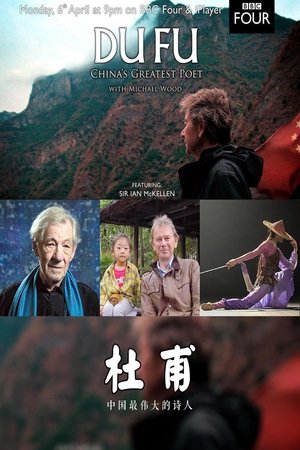
Sir Ian McKellen reads the poetry, Michael Wood traces the journey on the ground. Together they conjure up the extraordinary life, times and words of China’s greatest poet, Du Fu. In this film, the first to ever be made about Du Fu in the west, Michael follows his tracks by road, train and riverboat. Along the way, he meets ordinary people, dancers and musicians, who help to tell the amazing story of a poet whose words have resonated through the centuries, describing the experiences of ordinary people caught up in war, corruption, famine and natural disasters. "I am one of the privileged. If my life is so bitter, then how much worse is the life of the common people?"
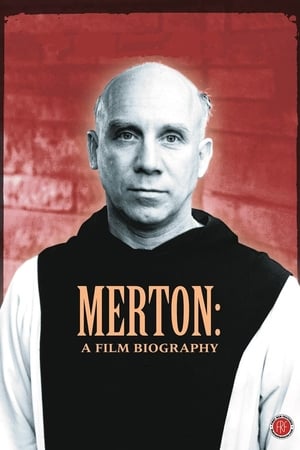
In his lifetime, Thomas Merton was hailed as a prophet and censured for his outspoken social criticism. For nearly 27 years he was a monk of the austere Trappist order, where he became an eloquent spiritual writer and mystic as well as an anti-war advocate and witness to peace. Merton: A Film Biography provides the first comprehensive look at this remarkable 20th century religious philosopher who wrote, in addition to his immensely popular autobiography The Seven Storey Mountain, over 60 books on some of the most pressing social issues of our time, some of which are excerpted here. Merton offers an engaging profile of a man whose presence in the world touched millions of people and whose words and thoughts continue to have a profound impact and relevance today.
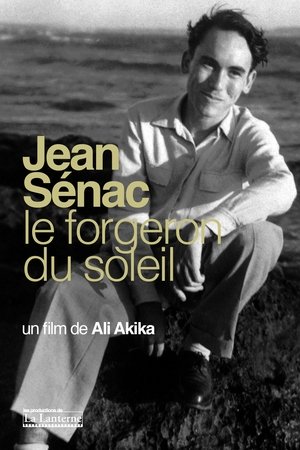
By ending the life of Jean Senac on August 30, 1973 in Algiers, his assassins believed they would silence him forever. They were wrong since his voice is a little louder every day. Witnesses to these craze: the publication of the complete works of this great poet, the countless conferences and radio broadcasts devoted to him and finally the production of films such as "Jean Sénac, the blacksmith of the sun". The moving and overwhelming testimonies of those who knew him, the unpublished film archives, the generous voice of the poet on the radio, the discovery of his travels in the territories of poetry and politics make this film a precious document on the life of Jean Senac.
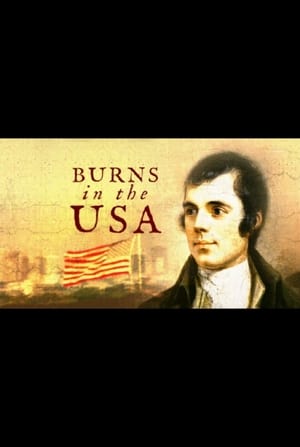
Robert Burns was well aware of the revolution taking place across the Atlantic as he grew up. The poet was inspired. And America was to be inspired by him. From Abraham Lincoln to Frederick Douglass, and Walt Whitman to Bob Dylan, some of the most significant figures in American politics and culture have cited Burns as an influence.
Documentary tracing the extreme life of outlaw writer, performance artist and punk icon, Kathy Acker. Through animation, archival footage, interviews and dramatic reenactments, director Barbara Caspar explores Acker's colorful history, from her well-heeled upbringing to her role as the scribe of society's fringe.
Documentary about the life and work of Flemish poet Karel Jonckheere looked at from four perspectives/professions: farmer, fisherman, sheepherder and hunter.
A documentary about Néstor Perlongher. His life, his poems, and his activism in Argentina's Frente de Liberación Homosexual (homosexual liberation front).
The life and work of Argentinian writer Jorge Luis Borges, a long interview, fragments of some of his most significant verses and dramatizations of some of his stories. Borges for everyone.
"Write Down, I am an Arab" tells the story of Mahmoud Darwish, the Palestinian national poet and one of the most influential writers of the Arab world. His writing shaped Palestinian identity and helped galvanize generations of Palestinians to their cause. Born in the Galilee, Darwish's family fled during the 1948 Arab-Israeli War and returned a few years later to a ruined homeland. These early experiences would provide the foundation for a writing career that would come to define an entire nation.
Tahirih Qurrat al-Ayn was first Iranian women right activist, Bab-i fighter ,theologian,poet. Tahirih was a woman of letters who lived in the nineteenth-century. Her name is synonymous with the emancipation of women and social justice and her life has inspired generations of women ever since, particularly Iranian women’s right movements.Since 1979, the Islamic Republic of Iran forbids any literature or discourse that portrays Tahirih in a positive light. Her name has been removed from the latest editions of history books published in Iran.
Docudrama that recounts the astonishing life story of a forgotten genius, English poet Alexander Pope, who lived from 1688 to 1744.
Dante Alighieri was a poet, philosopher and politician in 1300 Florence. The visionary author of "Inferno", the first book of the "Divine Comedy", he was both a direct witness and a narrator of his times and his poem is a remarkable geopolitical chronicle of a tumultuous period of the Middle Ages from 1300 to 1320, a time when Kings, Popes, rulers and warlords played a deadly chess game for the control of Europe. In this high end docudrama, some of the world's finest scholars will help provide historical context to the unfolding of events, making them accessible to a wide audience, and giving us a privileged viewpoint over one of the most eventful and funding chapters of European history.