British diplomat Robert Conway and a small group of civilians crash-land in the Himalayas, where they are rescued by the inhabitants of the hidden, idyllic valley of Shangri-La. Protected by the mountains from the world outside, where the clouds of World War II are gathering, Shangri-La provides a seductive escape for the world-weary Conway.
After the death of Lama Dorje, Tibetan Buddhist monks find three children — one American and two Nepalese — who may be the rebirth of their great teacher.
A distinguished military leader whose reign was touched by great scandal, shocking betrayals and rousing victories. A simple shepherd boy chosen to be king, under the watchful eyes of prophet Samuel.
A history of the French Revolution beginning from the decision of the king to convene the Etats-Generaux in 1789 in order to deal with France's debt problem. Part one spans the event until August 10, 1792 (when the King Louis XVI lost all authority and was imprisoned). Part two carries the story through the end of the terror in 1794.
The story of Salvador Puig Antich, one of the last political prisoners to be executed under Franco's Fascist State in 1974.
During the 13th century, a small village fights for freedom in the frontier landscape of the Carpathian Mountains against Mongolian invaders.
From double BAFTA nominated Writer and Director John Walsh. Monarch is part fact, part fiction and unfolds around one night when the injured ruler arrives at a manor house closed for the season.
A departing professor gathers his closest colleagues for an intimate farewell, but the night takes an unexpected turn when he shares a stunning secret about his past. As the conversation unfolds, skepticism and curiosity collide, challenging everything they thought they knew about history, science, and belief.
Beginning just after the bloody Sioux victory over General Custer at Little Big Horn, the story is told through two unique perspectives: Charles Eastman, a young, white-educated Sioux doctor held up as living proof of the alleged success of assimilation, and Sitting Bull the proud Lakota chief whose tribe won the American Indians’ last major victory at Little Big Horn.
The film Crustaceans treats itself like an impressionist picture or a Japanese Haiku. Crustaceans is a matter of reflection on an instance in life with the social-economical crisis as a landscape. The heartbreak in times of crisis. The film was filmed as demonstrations in the streets against crisis and social welfare cuts took place. For two years, it filmed street demonstrations and incorporated actors in the social landscape. The result, is a film in which the collective and the intimate come together. Both the characters and the people in the street, like identical crustaceans, take to the street to express their shame and rage for what is happening and try to find a solution. A time of anxiety, uncertainty and protest that conforms the landscape in which the characters, such as crustaceans hide their wounds under their hard shell is seen.
The "David and Goliath" legend is presented as credibly as possible, while David's later disastrous romance with Bathsheba is handled with taste and decorum. Also in the cast are Anthony Quayle as King Saul, and Terence Hardiman as Bathsheba's unfortunate warrior husband Uriah.
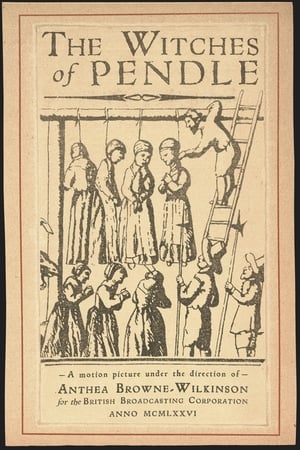
A BBC dramatization of the Pendle witch trials of Lancashire, England that occurred in 1616.
Set in ancient Tibet under the shadow of the Himalayas, the young prince Lhamoklodan learns of his father's mysterious death and returns to the Kingdom Jiaobo. Troubled by his mother's sudden remarriage to his uncle Kulo-ngam, he swears to find the truth of his father's death. His obsession of revenge overwhelms his spirit and shadows his love to Odsaluyang. When he points his sword at the new king, Queen Nanm finally tells her beloved son, Lhamoklodan, the true identity of his uncle. In the struggle to face his destiny and fight his demons, a new king is born
The true story of William Wilberforce and his courageous quest to end the British slave trade. Along the way, Wilberforce meets intense opposition, but his minister urges him to see the cause through.
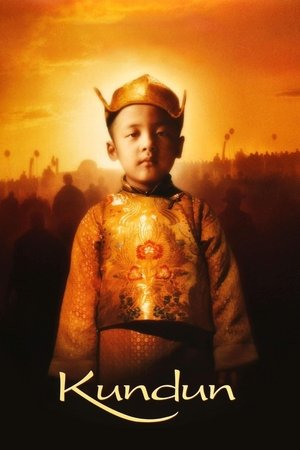
The Tibetans refer to the Dalai Lama as 'Kundun', which means 'The Presence'. He was forced to escape from his native home, Tibet, when communist China invaded and enforced an oppressive regime upon the peaceful nation. The Dalai Lama escaped to India in 1959 and has been living in exile in Dharamsala ever since.
The story of an unruly class of bright, funny history students at a Yorkshire grammar school in pursuit of an undergraduate place at Oxford or Cambridge. Bounced between their maverick English master, a young and shrewd teacher hired to up their test scores, a grossly out-numbered history teacher, and a headmaster obsessed with results, the boys attempt to pass.
The Prince of Guastalla falls in love with the young citizen Emilia Galotti, who is soon to marry Count Appiani. In order to win Emilia, the prince tries to send the count on an "honorable" journey on his behalf with the help of his chamberlain Marinelli. However, after the Count refuses this offer, Marinelli decides to have the wedding carriage robbed on his own initiative in order to have Emilia abducted to the Prince's nearby pleasure palace. But he has not thought of the prince's mistress, Countess Orsina, and Emilia's shaken father Odoardo, both of whom soon arrive at the castle, one to meet the prince, the other to look after his daughter...
In 208 A.D., in the final days of the Han Dynasty, shrewd Prime Minster Cao convinced the fickle Emperor Han the only way to unite all of China was to declare war on the kingdoms of Xu in the west and East Wu in the south. Thus began a military campaign of unprecedented scale. Left with no other hope for survival, the kingdoms of Xu and East Wu formed an unlikely alliance.
Fram is in a German POW camp where brutal, cold-hearted Gestapo officers like Weber or Von Steinhagen terrorize and execute their Polish prisoners. One day Fram sees a way to escape the camp and he takes it, heading out to find his fellow resistance fighters.
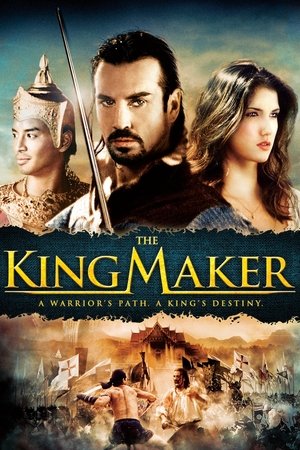
1547. Fernando de Gama, a young "Soldier of Fortune" from Portugal, set sail for the Orient in an effort to find a man who murdered his father and, with luck, like many of their compatriots, to make his fortune. A vicious storm in the Indian Ocean almost ended his plans when he was on the ship sank. The sole survivor, he was washed up on a tropical beach only to be captured by Arab slavers and taken to Ayutthaya in the kingdom of Siam, where he was offered for sale as a slave.