Ken Burns' portrait of Louisiana governor and U.S. senator Huey Long.
Chronicles the Mississippi voter registration drive from 1961-1964.
Following his four-month sabbatical in Cambodia, we find Johnny broke and couch-surfing in Brooklyn, musing on his experience in the Far East, where he gambled his money away and found himself stranded in Phnom Penh, forced to claim destitution at the U.S. Embassy, with suicidal visions of leaping off of a bridge into the Mekong River. NOTES FROM THE DUMPSTER is the continuing saga of this oddball's journey.
In 1979, Louis Malle films the thriving lives of a Minnesota farming community, but returns six years later to document its drastic economic decline, offering a poignant look at the impact of political changes.
Documentary about the history of the progressive Farmer-Labor movement in Minnesota from 1915 to 1944, when the party merged with the Democrats to form the DFL, the Democratic-Farmer-Labor Party.
HBO Documentary Films Presents the story of the effort to save the 895th surviving oiled pelican in Louisiana, showing how conservationists, government agencies and wildlife activists joined forces to preserve this one life.
The definitive film on the history of the toe-tapping, foot-stomping music of French Southwest Louisiana. Includes many Cajun and Zydeco greats, featuring Michael Doucet and Beausoleil, Clifton Chenier, Marc and Ann Savoy, D.L. Menard, and many others.
When gang leader Rob Brown is sentenced to prison for a fifth time, he must confront his role in bringing violent drug culture into his beloved American Indian community in northern Minnesota. As Rob reckons with his past, his seventeen-year-old protégé, Kevin, dreams of the future: becoming the most powerful and feared Native gangster on the reservation.
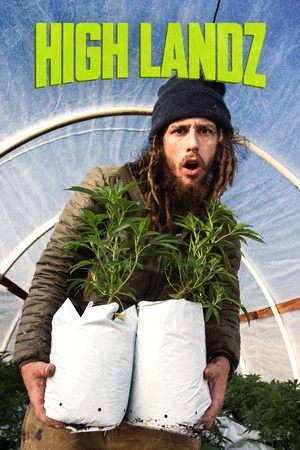
High up in the Northern California mountains there is a place, where not too many get to visit. Its called - The Emerald Triangle, real mecca of Americas cannabis game. Follow a ukrainian journalist Luka on a journey that explores lifes of real growers and hustlers and the dangers that come with it.
A musical portrait of Zydeco King Clifton Chenier, who combines the pulsating rhythms of Cajun dance music and black R&B with African overtones, belting out his irresistible music in the sweaty juke joints of South Louisiana.
This warm 90 minutes documentary shows us unknown blues musicians from Mississippi. They play everywhere : on the streets, in dirty little bars, in a barber shop, in big clubs. The film really captures the true faces of blues and shows us that this music had nothing to do with nostalgia or record company hypes. Documentary on the Delta blues.
A strange story from Somerset, England about a filmmaking farmer and the inspiring legacy of his long-lost home movies.
Take one look at award-winning songwriter / artist Allee Willis and you see someone unafraid to be themselves. Dressed in a cacophony of prints and colors, her signature asymmetrical haircut and famed parties at her real-life Pee-Wee’s Playhouse, Allee didn’t waste any opportunity to tell you what she was about. But privately, Allee struggled with not fitting established gender and sexual norms. She buried herself in her work, until true love manifested her ultimate masterpiece - self-acceptance.
The recession of the 1980s split the country into the haves and have-nots, from family farmers to factory workers and homeless people forced to live in decrepit welfare hotels. On the verge of losing everything, courageous Americans discover the power of community organizing to fight injustice.
A camera crew follows Edward Earl Johnson, a man falsely convicted of rape and murder, during his last 14 days on death row. Everyone involved is interviewed, Johnson himself, his family, the warden, prison guards and other inmates. We also witness the futile attempts by his attorney to save his life.
Discover the "character" of one of Missouri's oldest tie and lumber operations through this archival black-and-white film that documents one of the last railroad tie drives on the Black River made by the T.J. Moss Tie Company of St. Louis in the 1920s. Thanks to release of the film by the Kerr-McGee Chemical Corporation, the rare footage in "Stamp of Character" takes us through the entire process of making railroad ties, at a time when forests covered almost two-thirds of the state. The original silent motion picture was shown in movie theaters as an advertisement by the T.J. Moss Tie Company. Using digitally edited narration and realistic sound effects, this video makes the past live again.
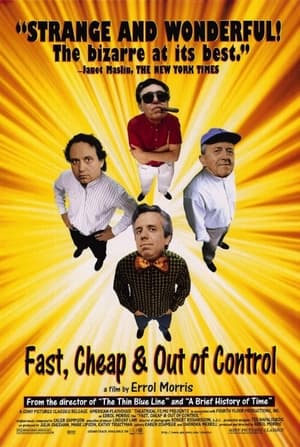
Errol Morris’s Fast, Cheap & Out of Control interweaves the stories of four men, each driven to create eccentric worlds from their unique obsessions, all of which involve animals. There’s a lion tamer who shares his theories on the mental processes of wild animals; a topiary gardener who has devoted a lifetime to shaping bears and giraffes out of hedges and trees; a man fascinated with hairless mole rats; and an MIT scientist who has designed complex, autonomous robots that can crawl like bugs.
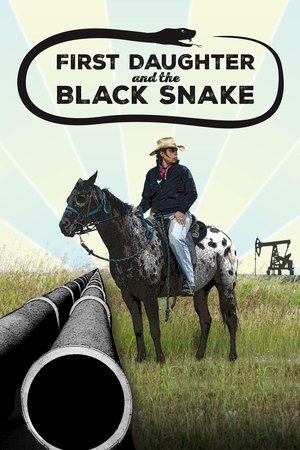
The “Prophecy of the 7th Fire” says a “black snake” will bring destruction to the earth. For Winona LaDuke, the “black snake” is oil trains and pipelines. When she learns that Canadian-owned Enbridge plans to route a new pipeline through her tribe’s 1855 Treaty land, she and her community spring into action to save the sacred wild rice lakes and preserve their traditional indigenous way of life. Launching an annual spiritual horse ride along the proposed pipeline route, speaking at community meetings and regulatory hearings. Winona testifies that the pipeline route follows one of historical and present-day trauma. The tribe participates in the pipeline permitting process, asserting their treaty rights to protect their natural resources. LaDuke joins with her tribe and others to demand that the pipelines’ impact on tribal people’s resources be considered in the permitting process.
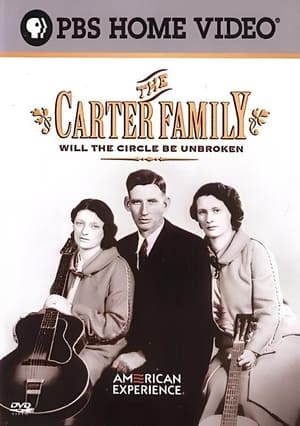
The life and times of The Carter Family, one of the earliest and most-influential group in American country and roots music.
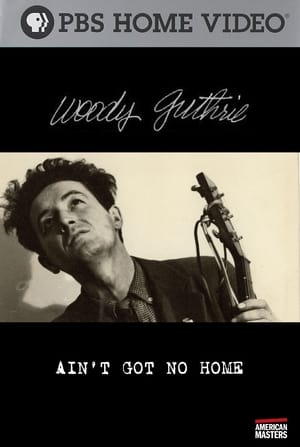
Every American who has listened to the radio knows Guthrie's "This Land Is Your Land." The music of the folk singer/songwriter has been recorded by everyone from the Mormon Tabernacle Choir to U2. Originally blowing out of the Dust Bowl in Depression-era America, he blended vernacular, rural music and populism to give voice to millions of downtrodden citizens. Guthrie's music was politically leftist, uniquely patriotic and always inspirational.