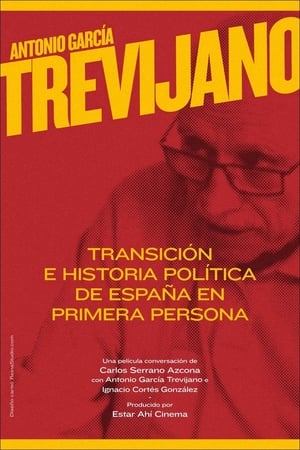
An attempt to create a bridge between the different political positions that coexist, sometimes violently, in the Basque Country, in northern Spain.
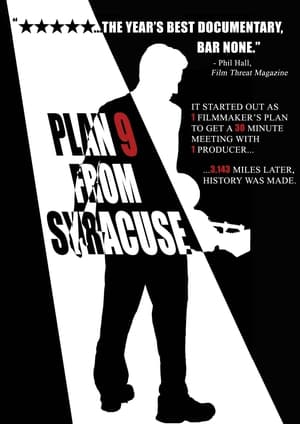
Since the early 1990s, Quentin Tarantino has been on a cinematic rollercoaster ride, that's never looked like slowing down, that has cemented himself as one of the worlds most influential filmmakers. Through his unique style, Tarantino carved out a place in Hollywood just for him, and even when others have tried to emulate him, his films stand-out amongst the crowd. And with one movie left before he supposedly retires, we take a look back at the ups and downs of his incredible life on film.
A free and intimate portrait behind the scenes of Valeria Bruni Tedeschi's creation. In front of the camera, she transmits to today’s young actors the memory of the 1980s.
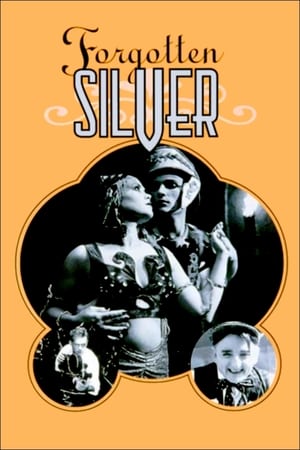
A bunch of British working class amateur filmmakers with nothing left to lose tackle one of Hollywood's greatest musicals in order to save their beloved Club. Britain’s oldest amateur filmmaking club struggles to survive, as its members grow old amid flickering memories and hardships. In the northern industrial town of Bradford, England, a handful of diehard amateur filmmakers desperately cling to their dreams, and to each other, in this warm and funny look at shared artistic folly that speaks to the delusional dreamer in us all.
An account of the life and work of Spanish actress Penélope Cruz: a long journey that began in the working-class neighborhoods of Madrid and ended in the hills of Hollywood.
Austrian actress Romy Schneider (1938) and French actor Alain Delon (1935), once fervent lovers in the early sixties, maintained a close friendship and a certain working relationship after their breakup until her death in 1984: a universal and eternal love.
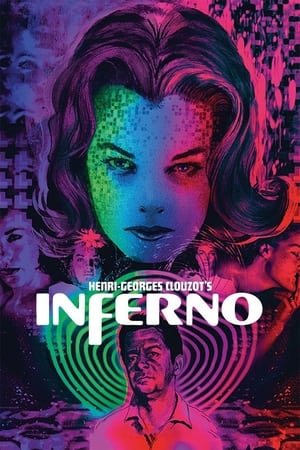
The incredible story of Bruno Lüdke (1908-44), the alleged worst mass murderer in German criminal history; or actually, a story of forged files and fake news that takes place during the darkest years of the Third Reich, when the principles of criminal justice, subjected to the yoke of a totalitarian system that is beginning to collapse, mean absolutely nothing.
Four lives that could not be more different and a single passion that unites them: the unconditional love for their cinemas, somewhere at the end of the world. Comrades in Dreams brings together six cinema makers from North Korea, America, India and Africa and follows their efforts to make their audiences dream every night.
Recalling his childhood and relationship with his mother, a film student tries to understand the origin of his love for cinema and tragedies.
In the summer of 1961, a group of young Italian anthropologists made a clandestine journey through Spain, in order to record popular songs that supported anti-Franco resistance. As a result of their work, they were prosecuted and their recordings were censored. Sixty years later, and guided by Emilio Jona, aged 92, the last living member of that group of travellers, we recover the unpublished recordings and reconstruct the journey, today, across an emotional and political landscape, regaining historical memories through these songs, as relevant today as they were then.
"A young filmmaker studying at the Alexandria Higher Institute of Cinema (AHIC) struggles with an internal conflict; torn between his deep loyalty to his hometown of Alexandria and his burning desire to immerse himself in the vibrant film scene of Cairo, the bustling capital. He discusses the matter with a fellow AHIC student, where they share their thoughts and questions about the meaning of success and their personal aspirations. This shared exploration becomes a search for a guiding light, a clue that reveals whether their chosen paths will lead them to their desired futures.
As artificial intelligence becomes ever more sophisticated, the film industry is split between enthusiasm at what the technology can achieve and concern over the future for human workers in the industry. Will actors and actresses be replaced by machines? An overview on the coming wave of AI in cinema.
In the late sixties, Spanish cinema began to produce a huge amount of horror genre films: international markets were opened, the production was continuous, a small star-system was created, as well as a solid group of specialized directors. Although foreign trends were imitated, Spanish horror offered a particular approach to sex, blood and violence. It was an extremely unusual artistic movement in Franco's Spain.
A look at the life and work of Spanish filmmaker and film critic Fernando Méndez-Leite, as he writes his memoirs and a novel with autobiographical resonances.
Documentary showing one day of work of over 90 actors and filmmakers from French cinema on the same day. On 27 March 2002, 27 teams filmed actors, directors, producers and technicians at work, from Hawaii to Paris and from New York to Lisbon.
Homo Cinematographicus is a human species whose unit of measurement and point of reference is the cinema and its derivative, television. Filmed at the 1998 Cannes Film Festival, the film offers an unspecified number of statements, talking about memories and a thousand fragments of stories, titles and film scenes, the warp of a gigantic collective Chanson de geste.
As Hong Kong's foremost filmmaker, Johnnie To himself becomes the protagonist of this painstaking documentary exploring him and his Boundless world of film. A film student from Beijing and avid Johnnie To fan, Ferris Lin boldly approached To with a proposal to document the master director for his graduation thesis. To agreed immediately and Lin's camera closely followed him for over two years, capturing the man behind the movies and the myths. The result is Boundless, a candid profile of one of Hong Kong's greatest directors and a heartfelt love letter to Hong Kong cinema.
An exploration of the cinematic history of the folk horror, from its beginnings in the UK in the late sixties; through its proliferation on British television in the seventies and its many manifestations, culturally specific, in other countries; to its resurgence in the last decade.
A documentary showcasing a family as they pack up their home of twelve years and begin looking towards the future.
When Canada entered World War II, the National Film Board suddenly had an urgent new mission—and hundreds of women stepped forward, helping to create Canadian cinema as we now know it.