This 1969 BBC production is about as close as we can get to a definitive version of Benjamin Britten's PETER GRIMES, one of the greatest 20th Century operas. The story of the individualistic fisherman hounded by his neighbors who believe he murdered his young apprentice packs tremendous emotional power. The compelling narrative is richly enhanced by its subtexts: the lone outsider versus the conformist mob; the dreamer of improbable dreams that lead to tragedy; the artist (dreamer) versus the Philistines, and the homosexual overtones of Grimes' abuse of his child apprentices. Britten is conductor of his work and tenor Peter Pears is Grimes, 25 years after he created the title role at the opera's premiere. As the widow Ellen Orford, soprano Heather Harper is magnificent. Best of all, the sea is an ever-present actor here. When we don't see it in the background it exerts its presence in the abundant visual references to nets, barrels, and other paraphernalia of a seaside fishing village.
Georgian mezzo-soprano Anita Rachvelishvili gives a dynamic performance as Bizet’s iconic gypsy, the woman who lives by her own rules. Aleksandrs Antonenko is Don José, the soldier who falls under her spell, and Ildar Abdrazakov plays Escamillo, the swaggering bullfighter who takes Carmen away from Don José—an action that seals Carmen’s tragic fate. Anita Hartig is Micaëla, and Pablo Heras-Casado conducts Richard Eyre’s hit production, set in 1930s Spain.
TANNHÄUSER UND DER SÄNGERKRIEG AUF WARTBURG is a grand opera by Richard Wagner in three acts. After experiencing boundless sensuality and freedom with the fun-loving Venus (soprano), the singer Tannhäuser (Tenor) finds it impossible to conform to the cultured setting of his betrothed Elizabeth (soprano), who loves him. During a singing contest, Tannhäuser describes the affair with Venus as the ultimate love experience and because of that, he is cast out from the established society. Thanks to Elizabeth's intervention, he is allowed to undertake a pilgrimage to the Pope to ask for the Holy Father's pardon. If the Pope accepts to forgive him, he would be allowed to take back his place in society. Tannhäuser accepts. But fate will not allow him to meet with his beloved Elizabeth again in this life. This is a recording of the legendary staging by Götz Friedrich for the 1978 Bayreuth Festival conducted by Sir Colin Davis.
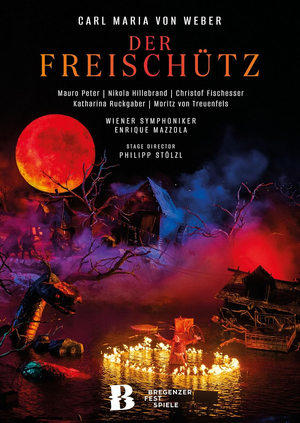
The legendary director Ruth Berghaus created this staging of Carl Maria von Weber’s Der Freischütz as a gripping theatrical experience for the Zurich Opera in 1993. Its revival in 1999 was a roaring success. With sets by Hartmut Meyer and costumes by Marie-Louise Strandt, Berghaus’ staging avoids the local peasant colour conventionally associated with Weber’s opera. Chorus and orchestra of the Zurich Opera House are conducted by Nikolaus Harnoncourt, universally celebrated for the structural transparency of his interpretations, his intellectual penetration and his emotional understanding of both music and opera plot. And last but not least an all-star cast made this production a highly memorable event: the dramatic soprano Inga Nielsen as Agathe, one of her best roles, the Swedish soprano Malin Hartelius as Ännchen, the sought-after Heldentenor Peter Seiffert, who gives a convincing passionate Max, and many others.
Every woman wants him, every man wants to be him: Mozart’s version of the irresistible rogue who brings excitement with him and leaves destruction it his wake has always attracted top singing actors, as in this performance brilliantly led by James Levine. Samuel Ramey is Don Giovanni, pursued by the incandescent Karita Mattila (Donna Elvira) in her Met debut season and role, and by the white-hot avenging fury of Carol Vaness (Donna Anna.) Ferruccio Furlanetto delivers a masterful comic turn as the Don’s servant, Leporello.
NORMA tells the tragic story of a supposedly chaste druidic priestess, who is driven to murderous jealousy by her lover's inconstancy. But she forgoes vengeance, protects innocence, and sees to it that the guilty atone for their crimes. Fiorenza Cedolins, Sonia Ganassi, Vincenzo La Scola, and Andrea Papi star in this 2007 Gran Theatre Del Liceu/Grand Theatre de Geneve co-production of the Bellini opera.
Ten short pieces directed by ten different directors, including Ken Russell, Jean-Luc Godard, Robert Altman, Bruce Beresford, and Nicolas Roeg. Each short uses an aria as soundtrack/sound, and is an interpretation of the particular aria.
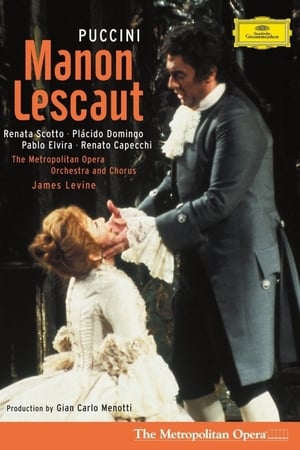
Live Metropolitan Opera performance March, 1985.
Fierrabras of 1823 is the last of Franz Schubert’s stage works. Rarely performed to this day, this heroic-romantic opera has now been staged for the first time ever at the Salzburg Festival by famous director Peter Stein. Based on an old French 12th-century epic, the plot depicts the military conflict between Christians and Moors at the time of Charlemagne – as a backdrop to stories of love and friendship that prove to be stronger than war and hatred of otherness. The strong cast includes the “marvellously expressive miracle Dorothea Röschmann” (Die Zeit) and “Michael Schade, who exudes his exceptional tenor in Fierrabras’s heroic arias” (Der neue Merker). Under the energetic baton of lngo Metzmacher, the Vienna Philharmonic unfold “the melos, the poetry, the sweetness and the dramatic force of Schubert’s highly refined and atmospheric sound worlds” (Kleine Zeitung) in highly romantic fashion.
Attila
“Let us assume that Switzerland is truly a paradise. The music hereto was written long ago. We have merely forgotten it.” (Daniel Schmid) This is the material from which the most Swiss of all operas is made: the legendary Wilhelm Tell – a Swiss hero: straightforward, a primus inter pares of the indomitable freedom fighters, a good shot, surefire. A myth that becomes a poetic playground: nature in turmoil, the struggle for freedom and forbidden love. A legendary overture at a gallop with an iconic post horn motif – all this and much more in the thirty-seventh and last opera by Rossini.
Imagine a window into the past. Imagine finally connecting singers' bodies to the voices you have always treasured on record, watching footage of performances from another era. All of singers featured here have something in common (with one exception, Sutherland): they sang and performed on stage before the advent of filmed opera. . And it shows, for the first time, a few tantalizing minutes of recently recovered footage from Callas' legendary Lisbon Traviata, featuring Addio dal Passato and Parigi oh cara with Alfredo Kraus. This DVD will leave you asking for more.
The life and career of Italian opera singer Farinelli, considered one of the greatest castrato singers of all time.
A sudden gunshot shatters the dream of two lovers on their wedding day. The fate of Orpheus and Eurydice is cruel: on the very day they sought to seal their love, EurydiceΆs soul embarks on its journey to the underworld. Heartbroken, Orpheus embarks on a perilous journey to bring his beloved back from Hades. A journey that will lead the fearless hero to confront the depths of his emotions and face his greatest fears. This journey will take him through strange worlds and into encounters with some of the greatest musical pieces and arias in the history of music. Will love triumph over death?
Inspired by one of the twentieth century's greatest novels, composer Lorin Maazel evokes Orwell's totalitarian nightmare, where "Big Brother" is always watching, and those guilty of "thoughtcrime" are condemned to face their worst fears in the infamous "Room 101". Filmed during world premiere performances of Robert Lepage's spectacular and psychologically gripping Royal Opera production and conducted by the composer, an international cast brings George Orwell's dark vision to shattering operatic life.
Handel's 1724 opera Tamerlano followed the success of his previous year's Giulio Cesare with another colourful historical costume drama. This time the setting is the court of "Timur the Tartar", who has just defeated the Turkish Sultan Bajazet at the battle of Angora. There are, naturally enough, romantic complications when both Tamerlano and his ally, the Greek Prince Andronico, fall in love with Bajazet's daughter Asteria. She, however, has plans to revenge her father's defeat. This production was directed by Jonathan Miller and staged in the intimate surroundings of the Goethe Theatre of Bad Lauchstadt as part of the 2001 Halle Handel Festival.
Live performance from Cologne Opera. Conlon conducts a skittishly dynamic performance of Don Giovanni. He relies on Thomas Allen’s tough Don to give the work much of its dark menace and on Holle’s terrifying Commendatore to provide the moral outrage – his job is to keep things moving, and he does. The exteriors – blank city spaces reminiscent of the paintings of Giorgio De Chirico – and moodily claustrophobic interiors mirror effectively the anguish of the orphaned Anna and the abandoned Elvira; this is a performance in which the two women victims of the Don function effectively as correctives to his libertine charm. Andrea Rost as Zerlina brings real delicacy to her role, reminding us that “La ci darem la mano” is a duet about her flirtation with Don Giovanni and not just a famous stand-alone moment. This is an admirable presentation of a fine performance.
A production of Mozart's opera recorded live at Zurich Opera House in 2000. Cecilia Bartoli leads an all-star cast including Roberto Saccà, Liliana Nikiteanu, and Agnes Baltsa. The conductor is Nikolaus Harnoncourt. Filmed live at the Zurich Opera House in February 2000 on a set which visualises the subtitle "The School for Lovers", the plot revolves around two army officers arguing about the fidelity of their brides, then setting out to test their chastity. Despite the often playful humour, this is not only psychologically telling music-making, but reveals Mozart exploring the structure of opera, discarding convention to mix large ensemble sections with arias for as many different combinations of singers as possible. With Liliana Nikiteanu attractively contrasted with Bartoli, and thoroughly convincing performances by Roberto Sacca (Ferrando) and Oliver Widmer (Guilelmo), this Così has a freshness and flow which, coupled with the timeless romantic themes, feels very contemporary.
Performed live at the Royal Opera House, Covent Garden, Gluck's opera in three acts is conducted by Hartmut Haenchen. Performers include Jochen Kowalski, Gillian Webster and Jeremy Budd, alongside the Royal Opera Chorus and Orchestra. When Orpheus mourns for his late wife Eurydice, the god Cupid offers him the chance to descend into the underworld and lead her back to the land of the living, on the condition that he does not look at her face. He sets out on his journey, but his path to the Elysian Fields is blocked by the fierce Furies.
Gustav Von Aschenbach, a passionate composer, arrives in Venice as a result of wanderlust and there meets a young man by whose beauty he becomes obsessed.