RHYTHM IS IT! records the first big educational project of the Berlin Philharmonic Orchestra under Sir Simon Rattle. The orchestra ventured out of the ivory tower of high culture into boroughs of low life for the sake of 250 youngsters. They had been strangers to classical music, but after arduous but thrilling preparation they danced to Stravinsky's 'Le Sacre du Printemps' ('The Rite of Spring'). Recorded with a breathtaking fidelity of sound, this film from Thomas Grube and Enrique Sánchez Lansch documents the stages of the Sacre project and offers deep insights into the rehearsals of the Berlin Philharmonic Orchestra.
Although he is a highly regarded classical pianist, Francesco Tristano closes his concerts with a remarkable DJ set. With these unique performances, part classical music and part electronic, the Luxembourg-based artist proves he can stimulate both mind and body.
A washed-up '80s pop star gets a chance at a comeback when reigning pop diva Cora Corman invites him to write & record a duet with her, but there's a problem--Alex hasn't written a song in years; he's never written lyrics and he has to come up with a hit in a matter of days.
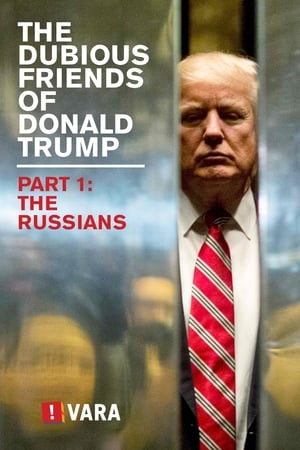
For months, the FBI have been investigating Russian interference in the American presidential elections. ZEMBLA is investigating another explosive dossier concerning Trump’s involvement with the Russians: Trump’s business and personal ties to oligarchs from the former Soviet Union. Powerful billionaires suspected of money laundering and fraud, and of having contacts in Moscow and with the mafia. What do these relationships say about Trump and why does he deny them? How compromising are these dubious business relationships for the 45th president of the United States? And are there connections with the Netherlands? ZEMBLA meets with one of Trump’s controversial cronies and speaks with a former CIA agent, fraud investigators, attorneys, and an American senator among others.
PAEZ4030
Only women, children and old people live in this Armenian village, while the men work in Russia. A life with a rhythm of its own, an independent daily life marked nonetheless by exile.
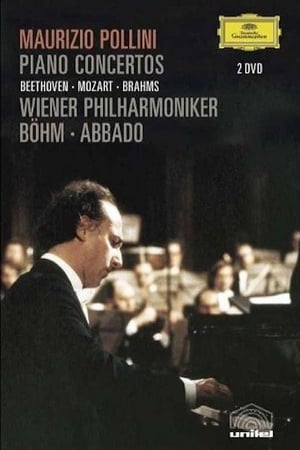
Pollini plays flawlessly, with the greatest finesse and sensitivity, very much in tune with each composer's personal style. His performances are exemplary in every respect. The video and audio are quite acceptable, given their 1970s vintage. Böhm and Abbado are at home in this repertoire, and the Wiener Philharmoniker in excellent form, notwithstanding a few strange noises coming from the horns.
The Third Part of the Third Measure creates an encounter with the militant minimalism of black avant-garde queer composer, pianist and vocalist Julius Eastman. The film focuses on what The Otolith Group describe as ‘an experience of watching in the key of listening’, invoking political feelings of defiance and the collective practice of movement building that participates in the global struggles against neoreactionary authoritarianism. The Third Part of the Third Measure invites viewers to attend to exemplary ecstatic aesthetics of black radicalism that Eastman himself once described as ‘full of honour, integrity and boundless courage’.
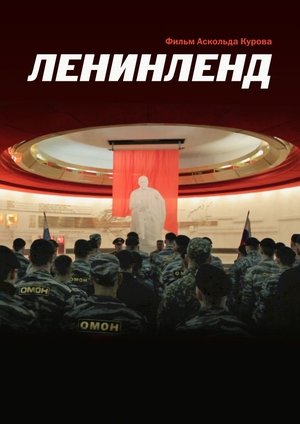
At the peak of Perestroika, in 1987, in the village of Gorki, where Lenin spent his last years, after a long construction, the last and most grandiose museum of the Leader was opened. Soon after the opening, the ideology changed, and the flow of pilgrims gradually dried up. Despite this, the museum still works and the management is looking for ways to attract visitors. Faithful to the Lenin keepers of the museum as they can resist the onset of commercialization. The film tells about the modern life of this amazing museum-reserve and its employees.
Acclaimed pianist Víkingur Ólafsson shares his deep connection with music, from Icelandic songs to the works of Bach, Mozart, Rameau, and Philip Glass. He explores how these pieces shaped him and how his feelings differ when performing works like the Goldberg Variations or Bartok’s Folk Song. Ólafsson invites us into his world where musical knowledge, Nordic roots, and creativity merge in his interpretations.
Vladimir Ilyich Ulyanov, better known as Lenin, is remembered as the instigator of the October Revolution of 1917 and, therefore, as one of the men who changed the shape of the world at that time and forever, but perhaps the actual events happened in a way different from that narrated in the history books…
Under the guidance of famed American composer and conductor Leonard Bernstein, Polish classical pianist Krystian Zimerman and the Vienna Philharmonic deliver a rousing performance of Ludwig van Beethoven's Piano Concertos nos. 3, 4 and 5. Premiered in 1808, Beethoven's fourth concerto marked the last time the composer would take the stage as a soloist with an orchestra.
The fifth project of the Living Architectures series, Inside Piano is composed of three films on three symbolic buildings of Renzo Piano's career. A visit throughout the prototype-building of the Centre Pompidou. An immersion in the soundproof world of a submarine floating in the depths of the Parisian underground. A journey aboard a luminous magic carpet of a highly sophisticated architectural machine. A humorous, caustic and quirky point of view.
Jenny is young. Her life is over. She killed someone. And she would do it again. When an 80-year-old piano teacher discovers the girl’s secret, her brutality and her dreams, she decides to transform her pupil into the musical wunderkind she once was.
Multi-platinum recording artists release their first-ever live DVD. Recorded in April 2005, the shows were filmed in the band's hometown of Atlanta during two special sold-out performances featuring the Atlanta Symphony Youth Orchestra. The 20-song collection spans ninety minutes and encompasses hits from Collective Soul's seven studio albums, including their latest release, "Youth".
In 2012 two members of anarchistic female band Pussy Riot were sentenced to two years in a Mordovian labor camp for "hooliganism motivated by religious hatred". Russian film collective Gogol’s Wives follow each step of the feminist punk band’s battle against Putin including their first disruptive performances on a trolley bus, shooting a video about transparent elections, a controversial performance in a Red Square cathedral, and footage shot in a jail cell. Support comes from many corners including Madonna who painted the words "Pussy Riot" on her back and wore a balaclava during her Moscow show. The documentary portrays the grim state of present-day Russia, a country starkly divided between conservatism and anarchy. Pussy Riot believes that art has to be free and they're willing to take it to extremes. "Pussycat made a mess in the house," they say, and the house is Russia. The filmmakers do not seek to moralize, they simply edit events and leave viewers to draw their own conclusions.
Filmmaker Binevsa Bêrîvan travels to Armenia to capture the daily life, customs, and history of the country's Yazidi Kurdish community.
This profile of homeless young people in St. Petersburg, Russia, uses subtitles and narration to tell their tales, many of which focus on drugs, neglect and abuse.
Documentary film about the first St. Petersburg music club TaMtAm. It existed since 1991 upon 1996 and was held by Vsevolod Gakkel, ex-cellist of "Аквариум". The concept was modelled on cult NY club CBGB-OMFUG. Despite its controversial history this is the place where a new generation of Russian punk music was discovered.
Set in 1980s Melbourne, a disgraced jazz pianist attempts to get back into his former band by sabotaging his replacement.