Formula 1 driver Charles Leclerc is part of a 48-hour French Air Force training mission aboard the Rafale, France's supersonic fighter jet! The Ferrari driver joined the members of a squadron of the French Air and Space Force, to take part in their preparation. It was an opportunity for Charles Leclerc to put his physical stamina to the test and experience the extreme sensations of a fighter pilot. A unique opportunity for him to draw parallels between the world of Formula 1 and that of the Rafale.
An on-the-scene documentary following the events of September 11, 2001 from an insider's view, through the lens of two French filmmakers who simply set out to make a movie about a rookie NYC fireman and ended up filming the tragic event that changed our lives forever.
Takes us to locations all around the US and shows us the heavy toll that modern technology is having on humans and the earth. The visual tone poem contains neither dialogue nor a vocalized narration: its tone is set by the juxtaposition of images and the exceptional music by Philip Glass.
Oceanographer Sylvia Earle and a cast of marine scientists tell the story of the incredible work being done to protect our oceans fragile ecosystem.
In this spectacular exploration you'll take a journey through the 4,000-year history of mankind's relationship with the Grand Canyon. Discover the earliest inhabitants of the Canyon whose lives are still shrouded in mystery. Travel with Spanish explorers as they become the first Europeans to uncover the Canyon's awesome beauty. Ride along in the re-enactment of US explorer John Wesley Powell's expedition down the raging Colorado River, when nine crew members risk their lives to become the first to travel the length of the Canyon by boat. Grand Canyon: The Hidden Secrets will take you into the rarely visited side canyons filled with hidden waterfalls and unusual wildlife. Experience the Canyon as never before: soaring over the rim and flying through some of the most inspiring scenery on Earth.
Lost Worlds looks at untouched aspects of nature in parts of the world where humans rarely tread. From plants, to animals, to geology, this artfully photographed documentary presents facets of the biological world that you are not likely to see anywhere else.
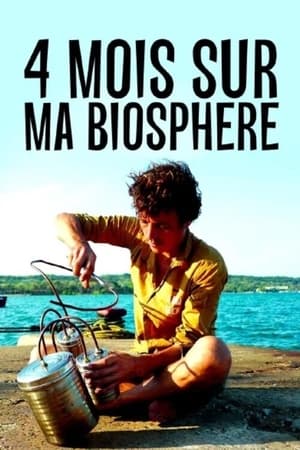
Since the year 2000, there have been several waves of suicides among the indigenous population of the Colombian Amazon. I discovered that the men commit suicide because of love sorrow. Their wives leave them for white men. The latter think that the Indian feels nothing because they do not express themselves in the same way and, in their language, there are no words to describe feelings. Is it possible that a whole people, the Cácuas Indians, do not feel anything?
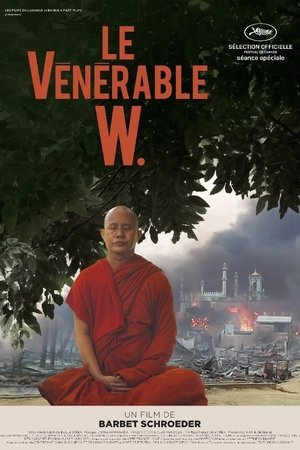
A view of the religious tensions between Muslims and Buddhist through the portrait of the Buddhist monk Ashin Wirathu, leader of anti-Muslim movement in Myanmar.
Larry Towell is a photographer with the prestigious Magnum agency. For 40 years, he has travelled our troubled planet, capturing the unspeakable. In this cinematic diary, he looks back on his profession, his doubts, the need for images, the absurdity of borders, the danger of “getting used to war” and the essence of his quest, which is also that of the film: humanity. Yet another impressive work by Matthieu Rytz, talented filmmaker born in Nyon!
Haida Gwaii, an archipelago off the west coast of Canada, is home to Skil Jaadee and her family. They live in harmony with nature and have made it their mission to save their language and preserve their history.
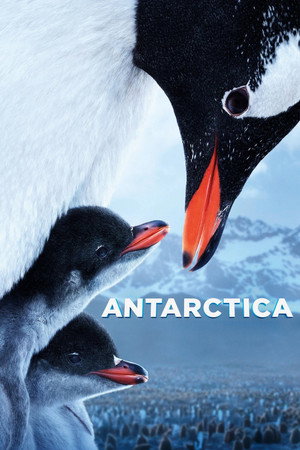
Antarctica is the most extreme continent on our planet—higher, colder, and even drier than any other on Earth, and although it is thousands of miles away, what happens here affects every single one of us.
Today, hundreds of kilometers above our heads, millions of pieces of trash are orbiting randomly at breakneck speed. Scientists are now warning that, if nothing is done, the exploration outside our planet, and communications systems within, will be almost impossible within 30 years. How can we collect the space trash and avoid future disasters?
Portrait of Andy Goldsworthy, an artist whose specialty is ephemeral sculptures made from elements of nature.
This documentary records the journey undertaken by Jacques Cousteau, his 24-member team, and an NFB film crew to explore the Grand Banks of Newfoundland, one of the world's richest fishing areas. They discover shipwrecks, film icebergs and observe beluga whales, humpback whales and harp seals. The film also includes a fascinating sequence showing Calypso divers freeing a calf whale entrapped in a fishing net.
In 1966, John Harlin II died while attempting Europe's most difficult climb, the North Face of the Eiger in Switzerland. 40 years later, his son John Harlin III, an expert mountaineer and the editor of the American Alpine Journal, returns to attempt the same climb.
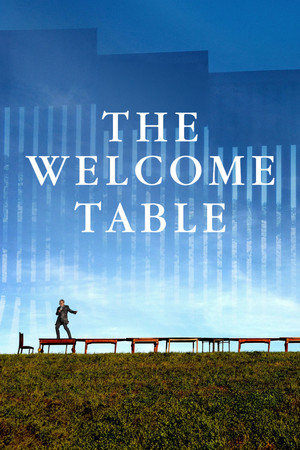
A journey into four classical elements through the four main characters of the film. The main characters in the movie represent each of their own elements.
In this spectacular feature-length documentary, oceanographer Jacques Cousteau and an NFB crew sail up the St. Lawrence River to the Great Lakes on board the specially equipped vessel, the Calypso. They explore the countryside from their helicopter and plumb the depths of the waters in their diving saucer. They encounter shipwrecks, the Manicouagan power dam, Niagara Falls, the locks of the St. Lawrence Seaway and an underwater chase with caribou.
Averroès and Rosa Parks: two units of the Esquirol Hospital, which - like the Adamant - are part of the Paris Central Psychiatric Group. From individual interviews to «carer-patient» meetings, the filmmaker focuses on showing a form of psychiatry that continually strives to make room for and rehabilitate the patients’ words. Little by little, each one eases open the door to their world. Within an increasingly worn-out health system, how can the forsaken be given a place among others.
Jellyfish blooms are making headlines around the world. This is due to the damage they cause to tourism, fishing and our health. How can these creatures, which are over 98% water and have no shell, skeleton or brain, expand so rapidly? Although this is a normal stage in the life cycle of these gelatinous animals, we have to admit that blooms have become much more frequent and massive in recent decades. We're even witnessing jellyfish populations appearing in more and more regions where fish have been replaced by them, such as off the coast of Namibia, in the Black Sea, in the Sea of Japan and in certain areas of the Baltic Sea. What causes this? Why has the role of jellyfish in the ocean been underestimated, even though they outlived the dinosaurs? Are jellyfish on their way to dominating the oceans as they once did? What if they were to be the only ones left?
Shot on the Great Barrier Reef in Australia and in the Bahamas, Ocean Wonderland brings to you the amazing beauty of the many varieties of coral and the immense diversity of the marine life thriving there.