Thanks to new excavations in Mauritius and Madagascar, as well as archival and museum research in France, Spain, England and Canada, a group of international scholars paint a new portrait of the world of piracy in the Indian Ocean.
Bruce Brown's The Endless Summer is one of the first and most influential surf movies of all time. The film documents American surfers Mike Hynson and Robert August as they travel the world during California’s winter (which, back in 1965 was off-season for surfing) in search of the perfect wave and ultimately, an endless summer.
A woman narrates the thoughts of a world traveler, meditations on time and memory expressed in words and images from places as far-flung as Japan, Guinea-Bissau, Iceland, and San Francisco.
On March 29, 1947, peasants armed with sticks and knives attacked the French garrisons in Madagascar. The revolt would end twenty months later with the death of the last insurgents, shot down by the expeditionary force. France, accustomed to memory lapses, knew nothing of this insurrection and its trail of torture and abuses. In Madagascar, well after independence, the events of 1947 were never discussed. For more than a generation, parents refused to speak of them to their children. It wasn't until the 1980s that the silence was broken.
David Lloyd George tours Germany, escorted by Nazi government officials, while his chauffeurs lark about with an SS Officer. Lloyd George was pro-German from the mid-1920s, and met Adolf Hitler in 1936. However, by 1938 he had become a leading opponent of appeasement with Germany. This film is believed to have been shot by George Ryder, Lloyd George's chauffeur.
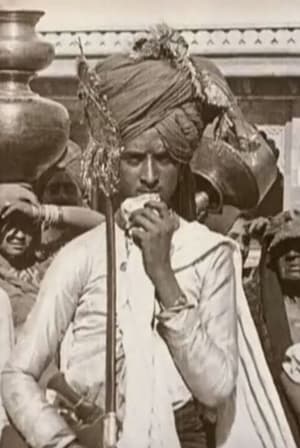
Botanical gardens in Bombay plus the highly decorative Jain Temple in Calcutta.
Pure tranquillity in rural Somerset, a world away from the war raging on the continent.
Whistlestop tour of Dartmouth in Devon, taking in the 17th century Butterwalk arcade and medieval castle.
Bruce Lee expert John Little tracks down the actual locations of some of Bruce Lee's most iconic action scenes. Many of these sites remain largely unchanged nearly half a century later. At monasteries, ice factories, and on urban streets, Little explores the real life settings of Lee's legendary career. This film builds on Little's earlier film, Pursuit of the Dragon, to present a comprehensive view of Lee's work that will change the way you see the films.
This Traveltalk series short visits Papua and Kalabahai.
An exploration of Rodez Cathedral and its stained glass windows: praying figures and scientific imagery. A study on color, repetition and flickering consisting of 292 photographs.
In 1962 Joris Ivens was invited to Chile for teaching and filmmaking. Together with students he made …A Valparaíso, one of his most poetic films. Contrasting the prestigious history of the seaport with the present the film sketches a portrait of the city, built on 42 hills, with its wealth and poverty, its daily life on the streets, the stairs, the rack railways and in the bars. Although the port has lost its importance, the rich past is still present in the impoverished city. The film echoes this ambiguous situation in its dialectical poetic style, interweaving the daily life reality (of 1963) with the history of the city and changing from black and white to colour, finally leaving us with hopeful perspective for the children who are playing on the stairs and hills of this beautiful town.
Documentary about the photo session for the photobook "Castella", filmed in Portugal.
WILD MADAGASCAR spotlights the many strange and unique species of Madagascar and the impact that one species, the lemur, has had on the island's culture.
James A. FitzPatrick takes a tour of the Fiji Islands. The short depicts the different types of natives that inhabit the islands, and shows villages that have not been changed in architecture for centuries. There are ceremonial dances, and FitzPatrick politically-correctly describes the rule of the islands under the British government.
A faux travelogue that mixes documentary and mockumentary footage. The camera looks through a one-way glass into the women's dressing room at a lingerie shop, visits a Kyoto massage parlor, goes inside the mailroom at Frederick's of Hollywood, watches an Australian who sticks nails through his skin and eats glass, checks out the art and peace scene in Los Angeles, takes in Easter week with vacationing college students on Balboa Island, observes a German audience enjoying a play about Nazi sadism, and, with the help of powerful military lenses, spies on a Lebanese white-slavery auction.
A “hidden camera” takes the viewer on a worldwide tour of sexual practices and rituals, including Tijuana strippers, Asian sex shows, British prostitutes, New York devil worshipers and a Mexican slave market.
This Traveltalk series short visits the rural agricultural areas of Hungary.
An 1897 travelogue of a bullock turning a cog to work a water pump in Egypt. Director/Cinematographer - Henry Short. Made as part of a follow-up series of travelogue films following a collection made for R.W. Paul in 1896.
Spalding Gray sits behind a desk throughout the entire film and recounts his exploits and chance encounters while playing a minor role in the film 'The Killing Fields'. At the same time, he gives a background to the events occurring in Cambodia at the time the film was set.