Music is an integral part of most films, adding emotion and nuance while often remaining invisible to audiences. Matt Schrader shines a spotlight on the overlooked craft of film composing, gathering many of the art form’s most influential practitioners, from Hans Zimmer and Danny Elfman to Quincy Jones and Randy Newman, to uncover their creative process. Tracing key developments in the evolution of music in film, and exploring some of cinema’s most iconic soundtracks, 'Score' is an aural valentine for film lovers.
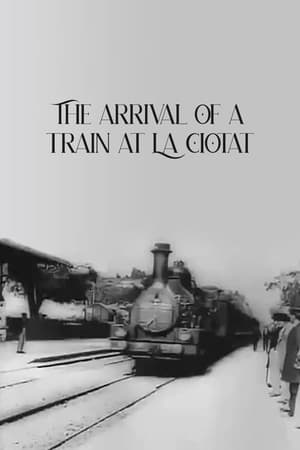
A group of people are standing along the platform of a railway station in La Ciotat, waiting for a train. One is seen coming, at some distance, and eventually stops at the platform. Doors of the railway-cars open and attendants help passengers off and on. Popular legend has it that, when this film was shown, the first-night audience fled the café in terror, fearing being run over by the "approaching" train. This legend has since been identified as promotional embellishment, though there is evidence to suggest that people were astounded at the capabilities of the Lumières' cinématographe.
This film explains what James Ensor (1860-1949) meant for the development of art and makes palpable where he got his inspiration from.
Documentary on Les Charlots, known as The Crazy Boys in the English-speaking world, a group of French musicians, singers, comedians and film actors who were popular in the 1960s, 1970s, and early 1980s.
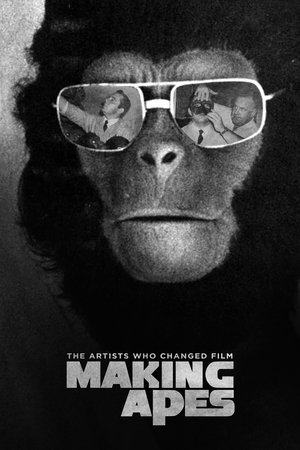
A nostalgic journey through ’80s Sci-Fi-films, exploring their impact and relevance today, told by the artists who made them and by those who were inspired to turn their visions into reality.
The incredible story of Bruno Lüdke (1908-44), the alleged worst mass murderer in German criminal history; or actually, a story of forged files and fake news that takes place during the darkest years of the Third Reich, when the principles of criminal justice, subjected to the yoke of a totalitarian system that is beginning to collapse, mean absolutely nothing.
The extraordinary story of Swedish writer Selma Lagerlöf (1858-1940), creator of Nils Holgersson, a memorable and legendary literary character, and the first female storyteller to win the Nobel Prize for Literature (1909); a woman as pioneering in her life as in her remarkable work.
A childhood in boarding school, volunteered at 17 for the war and dismissed for indiscipline, thug in Marseille turned gigolo in Paris, he became actor thanks to some inspired women. Then flying high, fast and far, thanks to his director masters René Clément, Luchino Visconti & Jean-Pierre Melville.
A gentle portrait of the mythical Spanish actor Arturo Fernández (1929-2019) in the hour of his passing, in his own words, through his latest interviews, not previously broadcast, and the words of those who knew him thorough decades of charming and good performance on stage, his true home, as well as in cinema and television.
Anne'ye
In 1945, two young American soldiers, brothers Budd and Stuart Schulberg, are commissioned to collect filmed and recorded evidence of the horrors committed by the infamous Third Reich in order to prove Nazi war crimes during the Nuremberg trials (1945-46). The story of the making of Nuremberg: Its Lesson for Today, a paramount historic documentary, released in 1948.
The story of the abandoned production of 'Day of the Champion', a movie about Formula 1 which was set to film in 1966.
An hour-long discussion between Fritz Lang and Jean-Luc Godard in which they discuss a variety of art forms, the role of the cinema, their collaboration together, and much more. (Filmed in 1964 but released for TV in 1967.)
In July 2022, a forest fire broke out on Monte Gambarogno in Ticino, Switzerland. Wound Edges is my emotional response to this landscape, filmed on 16mm and hand-developed with the forest’s ashes. Each frame carries physical traces of the land’s memory, blending destruction with resilience. The soundscape—field recordings, burned wood, contact microphones on trees, and the presence of fire—echoes the forest’s wounds. A reflection on human impact, impermanence, and the haunting beauty of transformation.
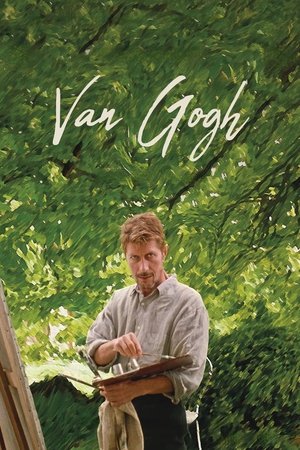
After leaving the asylum, Vincent van Gogh settles in the home of Doctor Gachet, where he keeps painting amidst the torments of his failing mental health. He begins an affair with his host’s daughter, however, she soon realizes that he doesn’t love her and that his heart beats only for art.
He is considered to be one of the greatest German film stars, Hans Albers, known as "Der blonde Hans", a man made for the cinema. He was an actor, singer, idol of the Germans - and darling of the Nazis. Nevertheless, he could not protect his great love, the Jewess Hansi Burg. In 1938 she had to flee to London from anti-Semitism in Germany. But Albers himself stayed in Germany and continued to film, driven by a desire for a career and the call of money. In 1946, one year after the end of the Second World War, they meet again: Hansi Burg returns to the land of the murderers of her parents in the uniform of the British Army and visits Hans Albers in his villa on Lake Starnberg. He lives there with another woman. The rival has to go, then there is a tense debate. For a day and a night, the blonde Hans has to face uncomfortable questions and even more uncomfortable truths.
In 1982, Wim Wenders asked 16 of his fellow directors to speak on the future of cinema, resulting in the film Room 666. Now, 40 years later, in Cannes, director Lubna Playoust asks Wim Wenders himself and a new generation of filmmakers (James Gray, Rebecca Zlotowski, Claire Denis, Olivier Assayas, Nadav Lapid, Asghar Farhadi, Alice Rohrwacher and more) the same question: “is cinema a language about to get lost, an art about to die?”
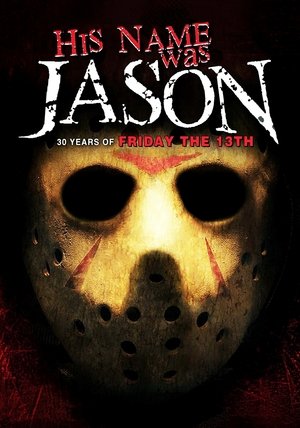
A retrospective documentary about the groundbreaking horror series, Friday the 13th, featuring interviews with cast and crew from the twelve films spanning 3 decades.
How could the Cannes Film Festival become the biggest cinema event in the world? For 75 years, Cannes has succeeded in this prodigy of placing cinema, its sometimes paltry splendors but also its requirements of great modern art, at the center of everything, as if, for ten days in May, nothing was more important than it. This film tells how Cannes has become the largest film festival in the world by opening up to cinematic modernity while never forgetting that cinema remains a performing art, a popular art.
Film journalist and critic Rüdiger Suchsland examines German cinema from 1933, when the Nazis came into power, until 1945, when the Third Reich collapsed. (A sequel to From Caligari to Hitler, 2015.)