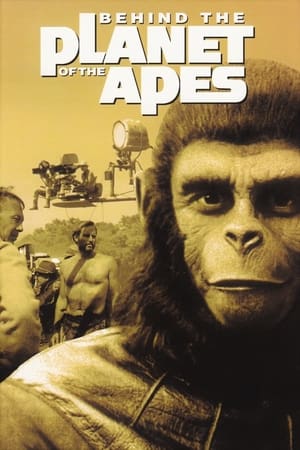
Roddy McDowall takes you, film by film, from production meetings to make-up sessions, then right onto the movie set to see the actual filming of the science fiction masterpiece. The most comprehensive history of Planet of the Apes ever created, this fascinating 127-minute documentary explores one of the most imaginative and influential series in movie history.
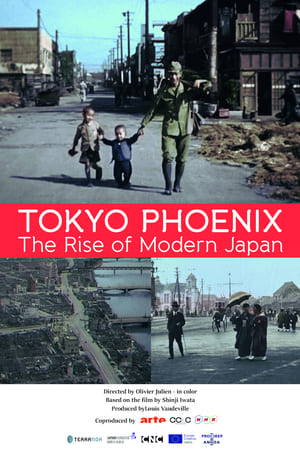
In 150 years, twice marked by total destruction —a terrible earthquake in 1923 and incendiary bombings in 1945— followed by a spectacular rebirth, Tokyo, the old city of Edo, has become the largest and most futuristic capital in the world in a transformation process fueled by the exceptional resilience of its inhabitants, and nourished by a unique phenomenon of cultural hybridization.
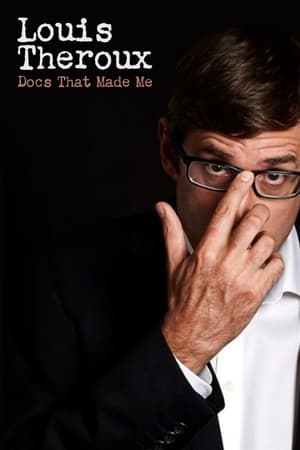
Renowned documentarian Louis Theroux dived into the BBC Archives and selected his favourite documentaries. Each of them had an impact on Louis and explains why he chose the documentaries and how they have inspired his work.. Covering a range of styles - some vérité-driven, others told more through interview - but in all of them you see life at its most raw, its most strange and therefore its most human.
To produce speech, a set of mechanisms must be brought together. What is the normal articulation for speech? How to produce the sounds that make it up in the correct way? A physiological analysis of the aspects of speech shows us how: the jaw must move in a certain way; the air must be expelled from the lungs in another. Based on the concepts stated in the film "Normal Speech Articulation" (1965), produced by the University of Iowa (USA), we intend to reflect on the way women have been represented, and consequently educated, over the years, both in film and in the media. Largely composed of archival footage, this film intends to make evident, through a montage inspired by Structuralist movements, the violence of this education.
It arises from the nostalgia for a place that witnessed the growth of two generations, but is now abandoned, awaiting its prompt demolition.
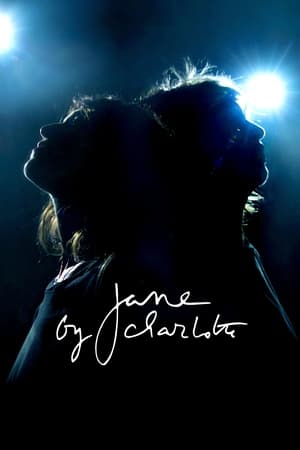
Charlotte Gainsbourg looks at her mother Jane Birkin in a way she never did, overcoming a sense of reserve. Using a camera lens, they expose themselves to each other, begin to step back, leaving space for a mother-daughter relationship.
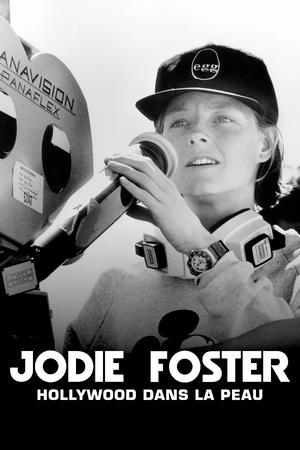
From her precocious status as a sex symbol to her consecration as a filmmaker, Jodie Foster's story is about a feminist struggle, albeit atypical, fought on and off the screen. This film sets out to retrace her remarkable journey within the Hollywood industry.
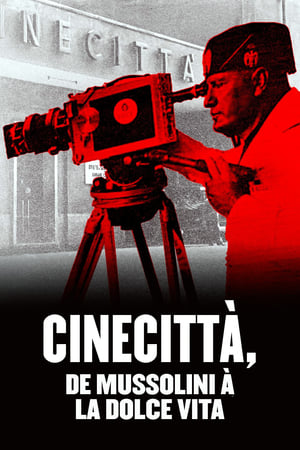
Cinecitta is today known as the center of the Italian film industry. But there is a dark past. The film city was solemnly inaugurated in 1937 by Mussolini. Here, propaganda films would be produced to strengthen the dictator's position.
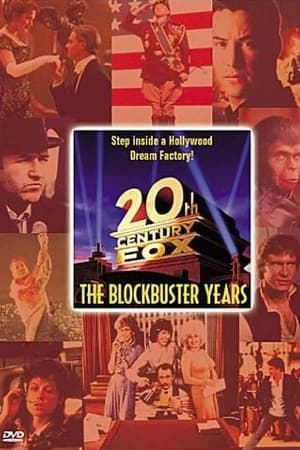
Behind-the-scenes footage, rare screen tests and insightful interviews highlight this engrossing two-hour look at one of Hollywood's greatest dream factories. Such film luminaries as Tom Hanks, William Friedkin, George Lucas, Oliver Stone and Robert Altman discuss their work at the studio. Clips include scenes from Butch Cassidy and the Sundance Kid, Patton, Young Frankenstein, Star Wars, Alien, Big, Home Alone, Die Hard and dozens more.
Introduction to an extensive training program for everyone professionally involved in the process of film conservation and film restoration. The realization of this training program was initiated and coordinated by ECIPAR (Bologna-Italy) and the Cineteca del Comune di Bologna. It was produced in co-operation with eleven European film archives and film laboratories and co-financed by the FILM project - FORCE program of the European Community.
On the eve of the publication of a biography of Claude Jutra, one of the most famous and celebrated filmmakers in Quebec and Canada, a leak leaked to the press reveals that the book contains anonymous allegations of pedophile acts committed by the filmmaker. The rumor spread like lightning, suddenly igniting the entirety of Quebec society. By finding today some of the main witnesses propelled overnight into the heart of an unparalleled media tornado, the documentary reconstructs with archive images and other previously unpublished images, the sequence of events which led to a rewriting of the story.
Le temps du voyage
Quebec, on the cusp of the 1960s. The province is on the brink of momentous change. Deftly selecting clips from nearly 200 films from the National Film Board of Canada archives, director Luc Bourdon reinterprets the historical record, offering us a new and distinctive perspective on the Quiet Revolution.
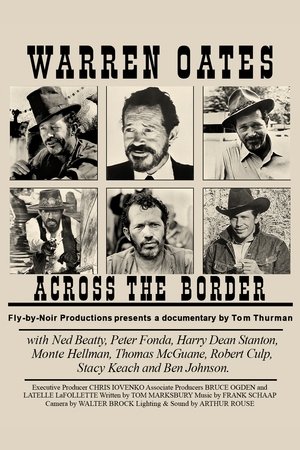
A retrospective of the work of the late actor Warren Oates, with clips from his films and interviews with cast and crew members who worked with him.
Documentary about the lost 1914 film "Sperduti nel buio". Film historian Denis Lotto journeys across Europe following the trail of the lost movie.
Using archival iPhone footage of both the places my father and I call home and our childhood photos, this work collages time and space, traveling from 1975 to 2022 and from Havana, Cuba to Pittsburgh, Pennsylvania and in between. His home is my home, and my home is his.
Narrated by Bill Mumy (Will Robinson from TV's "Lost in Space"), this documentary spotlights some of the most thrilling scenes the disaster genre has ever produced. From 1970s classics such as Airport and The Towering Inferno to James Cameron's Oscar-winning epic Titanic, no celluloid disaster flick is omitted. Interviews with directors and actors (including Will Smith) and newsreels of real historical disasters are also included.
Why are we still able, today, to view images that were captured over 125 years ago? As we enter the digital age, audiovisual heritage seems to be a sure and obvious fact. However, much of cinema and our filmed history has been lost forever. Archivists, technicians and filmmakers from different parts of the world explain what audiovisual preservation is and why it is necessary. The documentary is a tribute to all these professionals and their important work.
Negev Desert, Israel, 1987. Bashir Abu Rabi'a works as a pyrotechnics and special effects assistant on the film Rambo III, starring Sylvester Stallone, a shoot that will have far-reaching consequences for the local Bedouin population.
By the mid-1980s, the fabled animation studios of Walt Disney had fallen on hard times. The artists were polarized between newcomers hungry to innovate and old timers not yet ready to relinquish control. These conditions produced a series of box-office flops and pessimistic forecasts: maybe the best days of animation were over. Maybe the public didn't care. Only a miracle or a magic spell could produce a happy ending. Waking Sleeping Beauty is no fairy tale. It's the true story of how Disney regained its magic with a staggering output of hits - "Little Mermaid," "Beauty and the Beast ," "Aladdin," "The Lion King," and more - over a 10-year period.