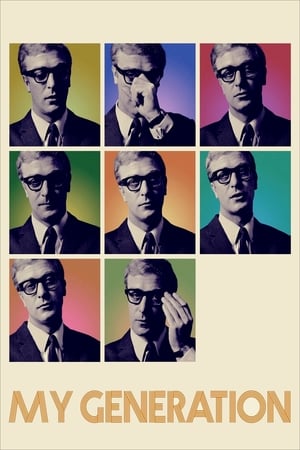
The vivid and inspiring story of British film icon Michael Caine's personal journey through 1960s swinging London.
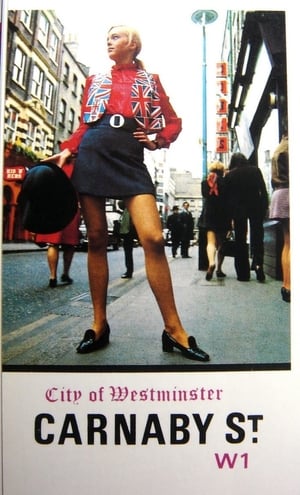
Join the cool kids on the Kings Road and Carnaby Street as youth fashion brings a welcome splash of colour to Britain. “Don't take it too seriously, or you'll be missing the point!”
Swinging London - a phenomenon which emphasized the young, the new and the modern. Fashion, music, art, media, life style and attitude. An era of optimism, and hedonism. A cultural revolution.
Carnaby Street Undressed is a story of fashion, music and eye opening insights into London's Carnaby Street in its 1960s heyday, told by the owners of the fashion shops that defined the iconic Street, and the popular musicians who were part of the “the scene”. This includes The Who lead sing Roger Daltrey, Donovan, Frank Allen from the Searchers, Gary Leeds from The Walker Brothers, and Peter Noone from Herman’s Hermits. The film is the story of a generation that rebelled against the grey conformity of the 1950s with a cultural revolution emanating from Carnaby Street from where it spread across the globe changing fashion and music forever.
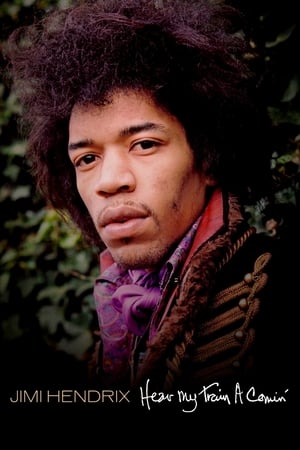
An account of the short life of genius musician Jimi Hendrix (1942-70), probably the most talented and influential guitarist of the twentieth century: his humble beginnings in Seattle, his time in New York, his rise to fame in swinging London… Live fast, love hard, die young.
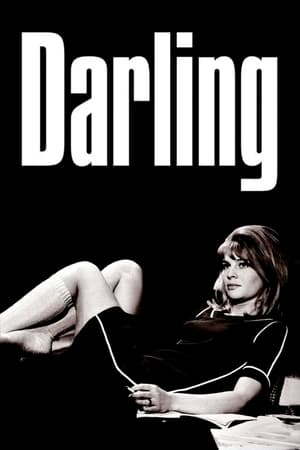
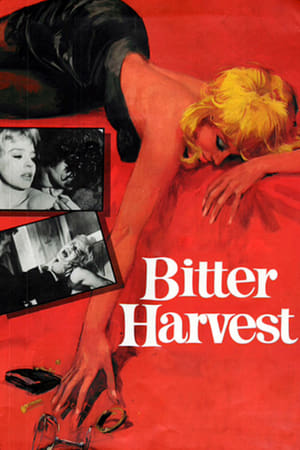
Diana, a beautiful but shallow and easily distracted model and failed actress, toys with the affections of several men while attempting to gain fame and fortune in Swinging London.
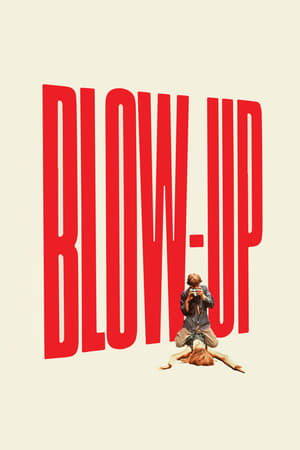
A successful mod photographer in London whose world is bounded by fashion, pop music, marijuana, and easy sex, feels his life is boring and despairing. But in the course of a single day he unknowingly captures a death on film.
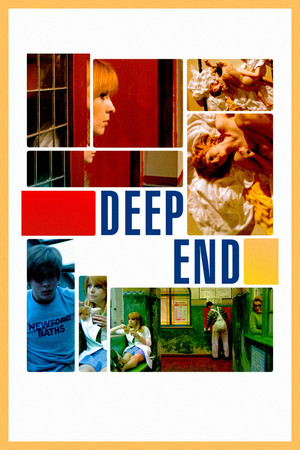
London, England. Mike, a fifteen-year-old boy, gets a job in a bathhouse, where he meets Susan, an attractive young woman who works there as an attendant.
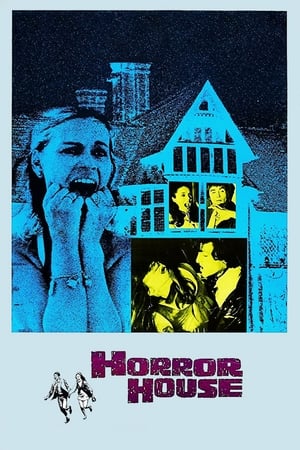
Teenagers in an old mansion are being murdered one by one. The survivors must discover who among them is the killer before they're all finished off.
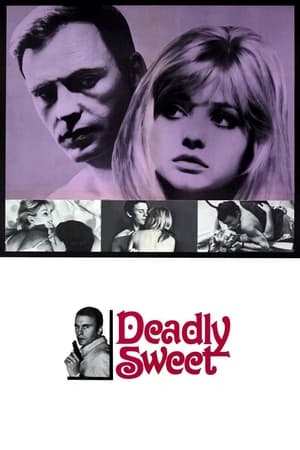
Bernard meets Jane in a Night Club, in London, and he likes her. Her father was killed in a car accident, but Jane thinks he has been killed because he was blackmailed for a picture of his second wife, Jane's mother in law. In the same Night Club Bernard finds the blackmailer corpse and Jane near him, but he believes she is innocent. So Bernard and Jane run away followed by a dwarf, the blackmailer's men, who believe Bernard killed their boss and of course, the Police. They believe that Jerome, Jane's brother, can help them to solve the case. But Jane doesn't know where he is, or so she says. Corpse after corpse, Bernard will find out the truth. But will the truth help him?
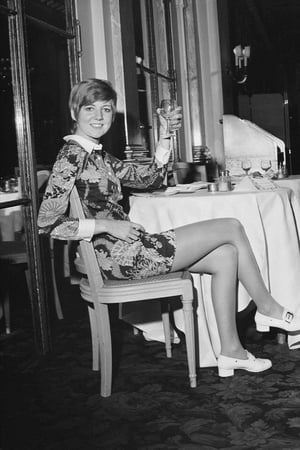
In April 1966, Cilla opened in a 3-week cabaret season at London’s Savoy Hotel. On her final Sunday, she starred in her own television special produced by her manager Brian Epstein’s film company, Subafilms. It was the first colour television show of its kind to be made by an independent producer in Britain. The show was broadcast in the UK in black & white but aired in colour in The Netherlands and the USA. ‘Cilla at the Savoy’ was one of the most watched television specials of the 1960s.
A pretty young woman will do anything to escape her deadly dull existence in the backlots of Wales. But when she reaches the bright lights of London is the price too high?
A dreamy Australian singer comes to London to seek his fortune and falls for a down-to-earth lass and a high-strung debutante at the same time.
"Frank Gehry: An Architecture of Joy" illustrates the unique intertwining of art and architecture throughout Gehry's spectacularly eclectic career. In this portrait, Gehry explores his work of the 1990's including The Guggenheim Museum in Bilbao and the Frederick R. Weisman Museum in Minneapolis, as well as his first European commission, the EMR Communication and Technology Center in Bad Oeynhausen, Germany. Seeing himself as an artist first, Gehry discusses his early relationships in the art world and how sculpture, painting and small scale work has influenced his architectural style. Like Rauschenberg, Johns, and Warhol, he has introduced "bad taste" into his concepts, while keeping himself outside of the contemporary dialogue between modernism and post-modernism. He has translated the vocabulary of contemporary art into an architectural language of his own, disobeying the rules of his profession and questioning its historic conventions.
Explores the life both on and off the track of one of NASCAR racing's greatest and most beloved icons. The fast-paced documentary creates an in-depth look behind the man by spending one 24-hr-period with Jeff Gordon, as well as a documentary-style retrospective of his career and lifestyle. Get to know Jeff the driver, the family man, the adventurer, the entrepreneur, and the philanthropist.
The New Modernists: Folds, Blobs and Boxes, Architecture in the Digital Era approaches the topic of artistic technological advances, and the modern architects who were educated with this new influx of electronic techniques. In this detailed portrait we visit the exhibition entitled Folds, Blobs + Boxes at the Carnegie Museum of Art where ten architect/designers discuss their approaches to digital architecture with curator of the exhibition, Joseph Rosa. By abandoning the traditional notions of aesthetic beauty, scale and proportion, a new freedom has formed amongst these contemporary creators.
This film documents the efforts of a group of Canadians and Americans to save the whooping crane from extinction. They display great determination in their dealings with this independent, pre-Ice Age creature. The issues of wild animals imprinting on people and the preservation of wild animals in captivity are examined in this film. Produced in cooperation with the Canadian Wildlife Service and the United States Fish and Wildlife Service.
Produced in 1967, this black and white film is an inmate's view of Daytop, a drug treatment centre on Staten Island, New York, where addicts learn to get along without drugs. Uncompromising, often brutal group therapy sessions are designed to shake loose the excuses a victim makes for himself. The people and situations shown are authentic; only one actor was employed. The results obtained at Daytop are regarded by some psychiatrists as a breakthrough.
An iconic Ukrainian play of the same name meets TV.