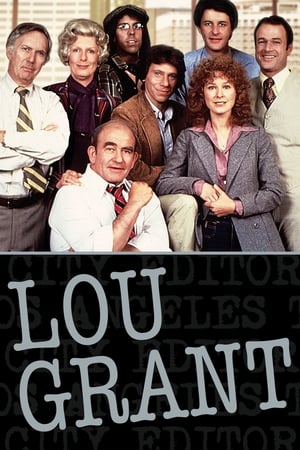
Beat cop Joe Forrester walks the mean streets of Los Angeles.
Justice is an American legal drama produced by Jerry Bruckheimer that aired on Fox in the USA and CTV in Canada. The series also aired on Warner Channel in Latin America, Nine Network in Australia, and on TV2 In New Zealand. It first was broadcast on Wednesdays at 9:00 but, due to low ratings, it was rescheduled to Mondays at 9:00, in the hope viewers of the hit series Prison Break would stay tuned. On November 13, 2006, the show was put on hiatus, but two days later the network announced it was shifting it to Fridays at 8:00 to replace the canceled Vanished. Fourteen episodes of the series were ordered, of which 13 episodes were produced. Twelve of the episodes of Justice have aired in the United States with the final episode airing in Mexico, the UK and Germany.
Looking down on her friends and family isn't a way of life for Mary Alice Young... it's a way of death. One day, in her perfect house, in the loveliest of suburbs, Mary Alice ended it all. Now she's taking us into the lives of her family, friends and neighbors, commenting from her elevated P.O.V.
Each episode of this series, set in contemporary Los Angeles, examines one crime from many different viewpoints - uniformed cops, detectives, witnesses, the media, the fire department and rescue squad, even the criminals themselves.
L.A. Law is an American television legal drama series that ran for eight seasons on NBC from September 15, 1986, to May 19, 1994. Created by Steven Bochco and Terry Louise Fisher, it contained many of Bochco's trademark features including a large number of parallel storylines, social drama and off-the-wall humor. It reflected the social and cultural ideologies of the 1980s and early 1990s, and many of the cases featured on the show dealt with hot-topic issues such as abortion, racism, gay rights, homophobia, sexual harassment, AIDS, and domestic violence. The series often also reflected social tensions between the wealthy senior lawyer protagonists and their less well-paid junior staff. The show was popular with audiences and critics, and won 15 Emmy Awards throughout its run, four of which were for Outstanding Drama Series.
CON ĐƯỜNG TÌNH YÊU
Join King as he journeys through the highly traditional town of Marahuyo, meeting new friends and finding love along the way as he lobbies to create the first LGBTQIA+ org in their campus.
After his death, Met is a ghost that is consumed by loneliness. That is until he meets a strange boy that can see him. The two bond in a state of happiness and joy as they develop into friends. But what happens when Met falls for the boy who is alive?
A wealthy individual's life is upended by family bankruptcy. Their childhood friend, Wanwiwa, becomes a source of comfort. Years later, they reunite, reigniting old memories and feelings amidst changed circumstances.
Cranky but likable L.A. PI Jim Rockford pulls no punches (but takes plenty of them). An ex-con sent to the slammer for a crime he didn't commit, Rockford takes on cases others don't want, aided by his tough old man, his lawyer girlfriend and some shady associates from his past.
United States is a short-lived half-hour comedy-drama that NBC added to its Tuesday primetime schedule in March 1980. Larry Gelbart, the show's executive producer and chief writer, said the name United States was not a reference to the country but rather to "the state of being united in a relationship". Gelbart envisioned a series that would be "a situation comedy based on the real things that happen in my marriage and in the marriages of my friends". Episodes tackled such topics as marital infidelity, household debt, friends who drink too much, death within the family, and sexual misunderstandings. United States focused on Richard and Libby Chapin, an upwardly mobile couple who lived in a Los Angeles suburb. Beau Bridges played Richard, and Helen Shaver played Libby. Gelbart reverted to black-and-white script for the show's titles. He said that was to convey the mood of "a sophisticated '30s film." Gelbart also avoided use of background music and a laugh track. Scripts featured dialogue such as, "Just for once I'd like to be treated like a friend instead of a husband," and "Maybe you and Bob can go out and get yourselves one redhead with two straws." United States premiered at 10:30 p.m. on March 11, 1980. NBC pulled it from the schedule within two months, after only six of 13 episodes had aired. The remaining episodes were not broadcast until 1986, when the A&E cable channel aired United States.
"Never lose that strength or nobility, even when you grow up." When Utena was just a child and in the depths of sorrow, she found salvation in those words. They were the words of a prince, who bestowed upon her both a ring and the promise that it would lead her to him again. She never forgot the encounter. Now a teenager, Utena attends the prestigious Ohtori Academy; however, her strong sense of chivalry soon places her at odds with the student council and thrusts her into a series of mysterious and dangerous duels against its members.
Go behind the scenes of a notorious NBA owner's racist remarks, captured on a tape heard around the world, charting a collision between a dysfunctional basketball organization and even less functional marriage, and the precipitating tape's impact on an ensemble of characters striving to win against the backdrop of the most cursed team in the league.
Mary Ann returns to present-day San Francisco and is reunited with her daughter and ex-husband, twenty years after leaving them behind to pursue her career. Fleeing the midlife crisis that her picture-perfect Connecticut life created, Mary Ann is quickly drawn back into the orbit of Anna Madrigal, her chosen family and a new generation of queer young residents living at 28 Barbary Lane.
In a 1950s orphanage, a young girl reveals an astonishing talent for chess and begins an unlikely journey to stardom while grappling with addiction.
Kate & Allie is an American television situation comedy which ran from March 19, 1984, to May 22, 1989. Kate & Allie first aired on CBS as a midseason replacement series and only six episodes were initially commissioned, but the favorable response from critics and viewers alike easily convinced CBS to commit to a full season in the fall of 1984. The series was created by Sherry Coben.
After giving up on love and declaring he’ll “let love come naturally,” Yubin ends up spending a night with a woman he met on a blind date—only to find out she’s his new boss?! As unfamiliar feelings grow in an awkward workplace relationship, Yubin and Hanna begin clumsily moving forward, caught between work and emotions.
In a moment of despair, Ryu Narutaki finds himself saved by Korean boxer Johan Hwang. As their wounded souls draw closer, their fates cruelly intertwine.
Poon, struggling to support his brother, gets a job as a chef at Tian's hotel, where tension turns to love as Tian helps Poon grow his career.
Taiwan's first explicitly lesbian-led drama.