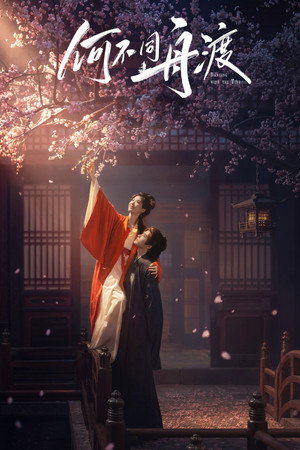
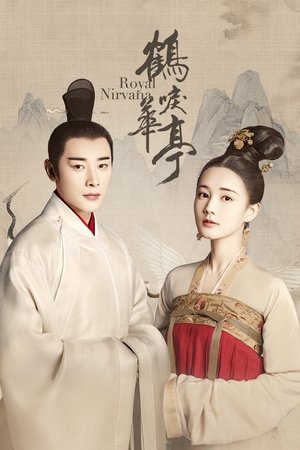
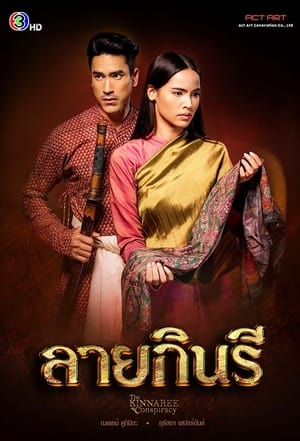
A love story revolves around the 9th Princess of Western Liang as she journeys to the Central Plains to fulfill a marriage alliance with the Crown Prince. Having received overwhelming love and admiration as the 9th Princess, Xiao Feng is forced to leave the life that she has known in order to become the Crown Princess. Her husband, the black-bellied Crown Prince, holds the highest position second only to one, the Emperor. However, the Eastern Palace is the most dangerous place to be. For political reasons, the Prince has no choice but to marry the Princess from a foreign land. He has his own favored concubine while she has her own life. Two parallel lines begin to intersect in a place fraught with danger and deadly power play and buried somewhere deep inside are memories that have yet to resurface.
A Total War is all encompassing, a war without boundary or limitation. It is a war of material and morale. A war that mobilizes, destroys and displaces civilian populations. The Second World War was a war in which massive armies advanced, confronting whole populations with impossible choices. The manufacture of weapons transformed industry and the workforce; area bombing campaigns reduced cities to rubble; sieges doomed populations to starvation; racial policies sponsored campaigns of genocide. Told through archive footage and expert interviews, we learn how WWII shattered the boundaries between home-front and battlefield.
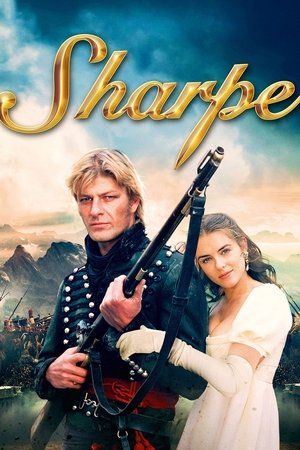
Sharpe is a British series of television dramas starring Sean Bean as Richard Sharpe, a fictional British soldier in the Napoleonic Wars. Sharpe is the hero of a number of novels by Bernard Cornwell; most, though not all, of the episodes are based on the books. Produced by Celtic Films and Picture Palace Films for the ITV network, the series was shot mainly in Turkey and the Crimea, although some filming was also done in England, Spain and Portugal. The series originally ran from 1993 to 1997. In 2004, as part of ITV's new set of drama, ITV announced that it intended to produce new episodes of Sharpe, in co-production with BBC America, loosely based on his time in India, with Sean Bean continuing his role as Sharpe. Sharpe's Challenge is a two-part adventure; part one premiered on ITV on 23 April 2006, with part two being shown the following night. With more gore than earlier episodes, the show was broadcast by BBC America in September 2006.
Set during the 18th century Napoleonic Wars, Horatio Hornblower, a young and shy midshipman, rises through the ranks to become an admiral.
1937 Warsaw, Poland. The Jewish mafia rules the city. Head honcho is gangster socialist, Buddy Kaplica. His right-hand man, boxer, Jakub Szapiro who dreams of taking over Buddy's top spot as King of Warsaw.
For a thousand years, the Vikings have made quite a name and reputation for themselves as the strongest families with a thirst for violence. Thorfinn, the son of one of the Vikings' greatest warriors, spends his boyhood in a battlefield enhancing his skills in his adventure to redeem his most-desired revenge after his father was murdered.
The series tells about the three occupations and mass exterminations that took place in the middle of the last century, the Holocaust, the terror, the attempt to physically and spiritually crush Lithuania.
Feng Ming was only 19 when he lost his life saving a child from death without hesitation. The grateful father of the rescued child grants Feng Ming a second chance at life. Unknown to Feng Ming, his soul is whisked away to a faraway ancient land. Upon waking up, he finds himself inhabiting the frail body of Thunder Kingdom’s crowned prince who is also graced with the title of the most beautiful man across all the lands. However, his beauty has a price as he attracts the unwanted attention of the minister of affairs, Rong Tian who finds every reason to torment the prince mentally and physically. As Feng Ming starts to get a hold of the conspiracies surrounding him, what will happen when the prince’s true identity is revealed? And what happened to the ‘real’ prince?
During the darkest days of the Third Reich, the most dreaded sound was a knock at the door after dark. Everyone who lived under Nazi rule lived in fear of the secretive agents known colloquially as "V-Men". Hitler called them his "deadliest weapon", and without them the Fuhrer's ambition could never have been realized.
After Japan’s invasion of China, a Chinese professor in Boston returns to Beijing to translate a document exposing Japanese war crimes for the UN, but becomes a target of the Japanese army, who will stop at nothing, including kidnapping his brother, to silence him.
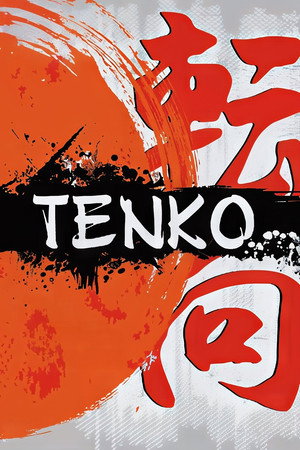
Based on real-life experiences, Tenko remains one of the most fondly remembered and acclaimed BBC dramas of the early 1980s. It follows a group of women, formerly comfortably well-off ex-pats living in Singapore, as they are captured by the Japanese during World War II.
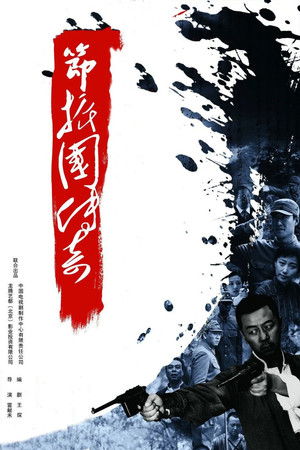
In the early 1940s, the war of resistance against Japan was in full swing, and it had reached a critical juncture. Crazy Japanese imperialism wreak havoc on the living power of the CCP's underground party and many revolutionary comrades sacrificed vigorously. Underground party member Xia Jia He was assigned by the organization to prepare to take the radio to Dalian. He was hunted and blocked by Japanese Police Officer Junji Aoki on the way. When there was nowhere to go, Xia actually met his first love, Wang Da Hua. Taking this as an opportunity, Da Hua and current husband Tang Quan Li were involved in this series of events. Da Hua Qing broke her family and wanted to save her husband, but could not change her husband's fate. Da Hua thus hated Xia Jia He, who had harmed her and lost her happy life, so she seized the radio station and did not return it to the other party.
Drawn from interviews with survivors of Easy Company, as well as their journals and letters, Band of Brothers chronicles the experiences of these men from paratrooper training in Georgia through the end of the war. As an elite rifle company parachuting into Normandy early on D-Day morning, participants in the Battle of the Bulge, and witness to the horrors of war, the men of Easy knew extraordinary bravery and extraordinary fear - and became the stuff of legend. Based on Stephen E. Ambrose's acclaimed book of the same name.
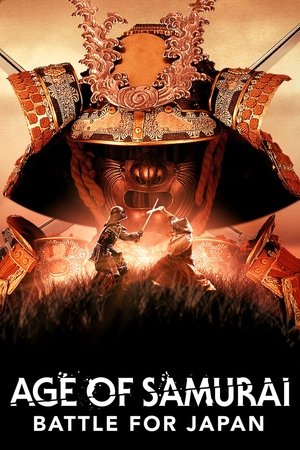
Dynamic reenactments and expert commentaries bring to life the tumultuous history and power struggles of a warring 16th-century feudal Japan.
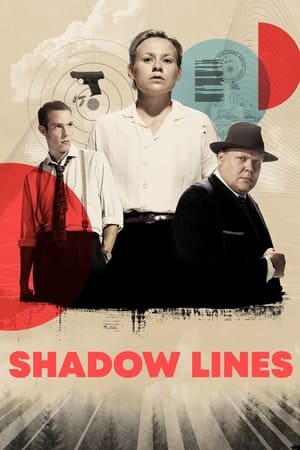
During the 1950s, Helsinki was the focal point of the Cold War, as global powers and their intelligence agencies coalesced in the small neutral country that stood between the East and the West. Shadow Lines is an international spy thriller that follows a secret intelligence team whose mission is to defend the independence of Finland no matter the cost.
Amid a royal and political power struggle, a king entangles with an intriguing woman — whose hidden desire for revenge transforms into unintended love.
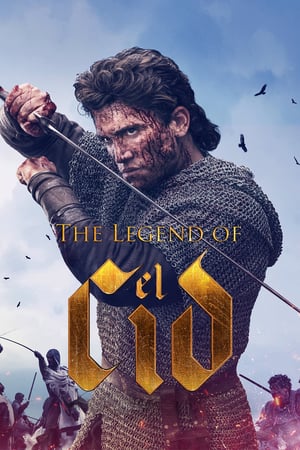
The story of Rodrigo Díaz de Vivar, a Castilian nobleman and war hero in medieval Spain.
The series follows the life of Yeon Gaesomun, a powerful military dictator in the waning days of the Goguryeo kingdom.
After the Onin War, the world is plunged into chaos. Amid this situation, heroes of the warring states begin to emerge in an attempt to unify the country and rule in these turbulent times. In the mid-1540s, there is a young wandering samurai in Mino which is strategically located between the East and West. His name is Akechi Mitsuhide. At this time, there is plenty of internal strife within the Toki clan which rules Mino. Surrounded by the Oda of Owari, the Imagawa of Suruga and the Asakura of Echizen, Mino has constantly faced the risk of invasion. Mitsuhide is pulled into battle and destroys the enemy. His bravery as well as stratagem catches the attention of Saito Toshimasa, the chief retainer of the Toki clan, and he is singled out. This man who is also known as Saito Dosan will go on to takeover the Toki and make Mino his own.
Oshin is a Japanese serialized morning television drama, which aired on broadcaster NHK from April 4, 1983 to March 31, 1984. The series follows the life of Shin Tanokura during the Meiji period up to the early 1980s. Shin was called "Oshin", which is an archaic Japanese cognomen.