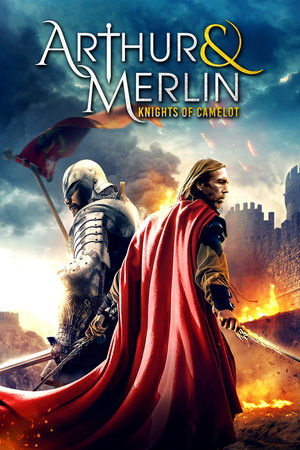
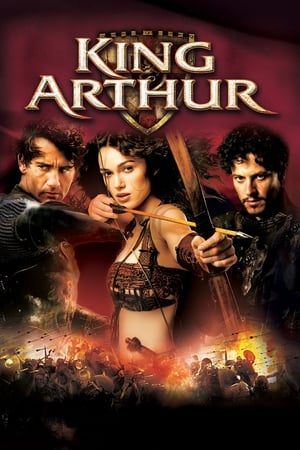
The story of the Arthurian legend, based on the 'Sarmatian hypothesis' which contends that the legend has a historical nucleus in the Sarmatian heavy cavalry troops stationed in Britain, and that the Roman-British military commander, Lucius Artorius Castus is the historical person behind the legend.
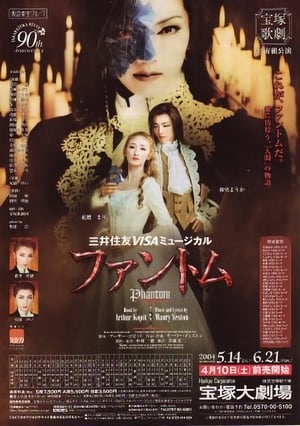
Takarazuka Revue's Phantom based on the play by Maury Yeston and Arthur Kopit.
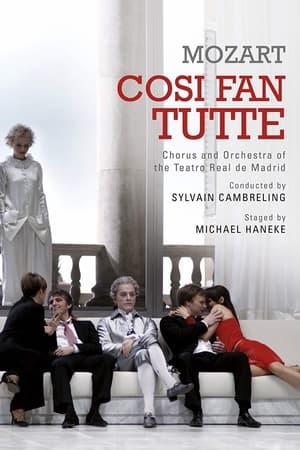
Who loves whom in Così fan tutte, Mozart’s and Da Ponte’s cruelly comic reflection on desire, fidelity and betrayal? Or have the confusions to which the main characters subject one another ensured that in spite of the heartfelt love duets and superficially fleetfooted comedy nothing will work any longer and that a sense of emotional erosion has replaced true feelings? Così fan tutte is a timeless work full of questions that affect us all. The Academy Award-winning director Michael Haneke once said that he was merely being precise and did not want to distort reality. In only his second opera production after Don Giovanni in 2006, he presents what ARTE described as a “disillusioned vision of love in an ice-cold, realistic interpretation”.
Disciplined Italian composer Antonio Salieri becomes consumed by jealousy and resentment towards the hedonistic and remarkably talented young Salzburger composer Wolfgang Amadeus Mozart.
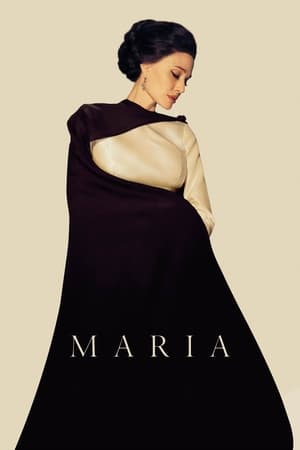
Maria Callas, the world's greatest opera singer, lives the last days of her life in 1970s Paris, as she confronts her identity and life.
German composer Richard Wagner wrote Parsifal, which is a three-act opera that tells the story of the title character's quest to save the Knights of the Holy Grail by returning the Holy Spear, healing King Amfortas, and carrying out the sacred ceremony of uncovering the Holy Grail.
This revealing documentary from director Philippe Kohly examines the storied life of renowned soprano Maria Callas, from her troubled childhood in New York City to her scandal-laden but triumphant international career in opera. Featuring archival interviews with Callas herself and footage of contemporaries such as her lover Aristotle Onassis, this celebration of "La Divina" pays tribute to her enduring legacy some three decades after her death.
Miller’s daughter Zuzanka Vojířová, betrothed to Ondřej Zachar, hesitates before marriage when Lord Peter Vok of Rožmberk invites her to his castle. There she bears his son Petříček, but his wife hides the child. After Vok’s death in battle, Zuzanka is expelled and lives as a beggar, reunited with her son and former fiancé, finding solace in the continuation of the Rožmberk lineage.
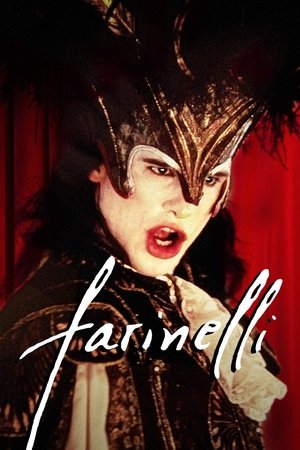
The life and career of Italian opera singer Farinelli, considered one of the greatest castrato singers of all time.
Siegfried, son of King Siegmund of Xanten, travels to Worms, capital of the Burgundian kingdom, to ask King Gunther for the hand of his sister, the beautiful Kriemhild.
In the 50's, in Paris, the neighbors Rodolfo and Mimi meet each other when Mimi's candle blows out in a cold and dark night. They immediately fall in love for each other, in times of financial difficulties in the post-war. Rodolfo introduces Mimi to his close friends Marcello and his beloved Musetta; Colline; and Schaunard and together they have a good-time in Café Momus. Some time later, Mimi tells Marcello that she can not support the jealousy of Rodolfo any longer and when Marcello discuss with Rodolfo, Mimi overhears the real reason for the behavior of her beloved Rodolfo.
Berlioz’s colossal masterpiece requires stupendous forces—dozens of soloists, enormous chorus, orchestra and ballet, a superb conductor who understands the uniqueness of the score—plus a production that does visual justice to the work. “A stupendous achievement” was one critic’s assessment of Peter Wexler’s inventive production. And with James Levine’s wizardry galvanizing the marvelous all-star cast, this is truly a gem. Plácido Domingo is the legendary hero Aeneas, Jessye Norman the obsessed prophetess Cassandra, and Tatiana Troyanos is Queen Dido, who commits suicide when Aeneas leaves her.
The historic, original, live airing of what would become an annual Christmas tradition throughout the 1950s, this opera tells the story of Amahl, a crippled shepherd boy, and his destitute mother, who provide temporary shelter to three men who are following a star to the newly-born Christ child.
Friends of Spartacus achieve revenge on the plotter who tries to make political capital out of the rumor that he is still alive. It was shot back to back with Seven Slaves Against the World.
In the fifth century, constant civil war scars western China. To escape death, Ti, a young scout, jumps through a crevice in the Zu mountains where he gets entangled in a great battle against the Blood Demon, a supernatural entity seeking to wreak havoc upon the world.
During the Turkish artistic revolution of the 1930s, a group of pioneers staged Özsoy Opera, the first opera in the history of Turkish Republic.
Set in 16th-century France and Spain, Don Carlos tells of the political and amorous rivalry between King Philip II and his son, Don Carlos, over Elisabeth de Valois. Krzysztof Warlikowski strips down a tragedy haunted by ghosts, and places the intimate at the heart of an imaginary fresco truer than history itself. Along with Philippe Jordan, he reveals to the public the very first version of this great five-act opera: the version modified by Verdi himself for the work’s first performance in 1867.
Bedřich Smetana: Libuše
A historical drama set in Roman Egypt, concerning philosopher Hypatia of Alexandria and her relationship with her slave Davus, who is torn between his love for her and the possibility of gaining his freedom by joining the rising tide of Christianity.
“Let us assume that Switzerland is truly a paradise. The music hereto was written long ago. We have merely forgotten it.” (Daniel Schmid) This is the material from which the most Swiss of all operas is made: the legendary Wilhelm Tell – a Swiss hero: straightforward, a primus inter pares of the indomitable freedom fighters, a good shot, surefire. A myth that becomes a poetic playground: nature in turmoil, the struggle for freedom and forbidden love. A legendary overture at a gallop with an iconic post horn motif – all this and much more in the thirty-seventh and last opera by Rossini.