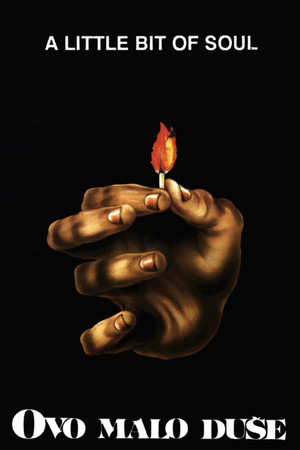
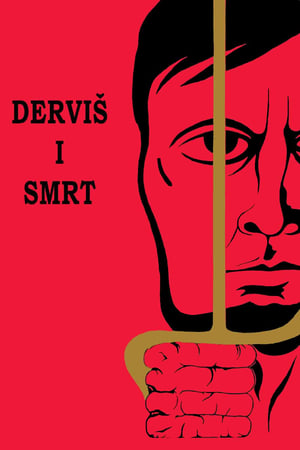
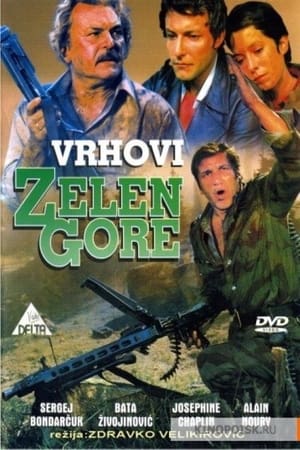
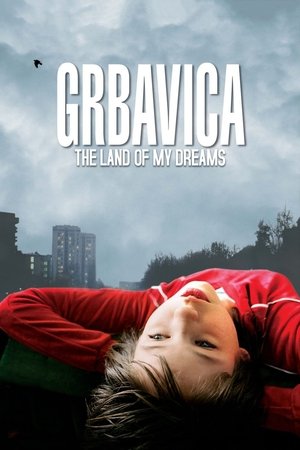
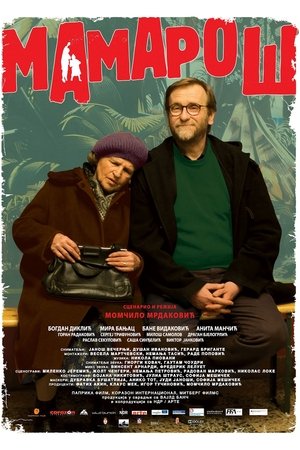
Family Susic lives everyday Bosnian story. Father Muhamed (63) is employed in a reputable company; mother Marija (60) is retired. Son Sasa (35), who spent the war in Army of Bosnia and Herzegovina, lives with his parents, while their daughter Senada (40) lives in Slovenia. Their life begins to fall apart because of father's dissatisfaction after his company is sold on the stock exchange, Sasa's negligent attitude towards work and family, Marija's breast cancer diagnose. When problems begin to line up Muhamed and Sasa realize that actually only family is important, that it is man's last oasis
Full-throttle melodrama about an ill-starred romance set against the backdrop of the siege of Sarajevo. A mother brings her teenage son to Sarajevo, where his father died in the Bosnian conflict years ago.
The film tells of devastating earthquake in Banja Luka in 1969 and follows a group of prisoners in prison during devastating earthquake and people and residents of Banja Luka. Fate of prisoners,the fate of the city and residents of Banja Luka, are light motive of this movie.
Moved by his love for his girlfriend Senka, Senad leaves his job at the hospital and comes to the besieged city. Avoiding the armed groups roaming the city, he finally finds Senka at her brother Zan's home. Zan happens to be Senad's best friend and is working in the theater as a clown in the production, "Flying Tours of Duty." His girlfriend Senka is working in a hospital but has no time for love. Dejected Senad returns to his flat, only to find it has been demolished by the war. Zan invites Senad to live together with him, his wife and Senka. The rest of the film recounts the tragic events that befall the group and how they face up to them.
After her mother's death, a former drug addict Merima is forced to move in with her grandparents to the nearby village. Her city girl attitude and spoiled personality clash with their rural lifestyle. Everything goes wrong when Merima's father Fazil gets out of prison.
A couple of morticians entertain themselves by betting on how many cold customers will come in that day. But one of the corpses refuses to cooperate...
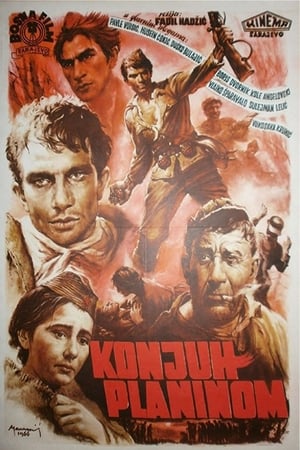
Silent Gunpowder (Serbo-Croatian: Gluvi barut) is a Yugoslavian war film Based on a novel by Branko Ćopić and set during World War II, the film tells the story of a Serbian village in the mountains of Bosnia and its villagers who found themselves divided along two opposing ideological lines, represented by the Chetniks and the Partisans. These two opposing sides are personified in the Partisan commander Španac and a former Royal Army officer Radekić. Španac sees Radekić as the cause of villagers' resistance to the new, Communist, ideology and so the main plot axis is the conflict between them. At the 1990 Pula Film Festival, the film won the Big Golden Arena for Best Film, as well as the awards for Best Actor in a Leading Role (Branislav Lečić), Best Film Score (Goran Bregović). The film was also shown at the 1991 Moscow International Film Festival, where both Branislav Lečić and Mustafa Nadarević won the Silver St. George Award for their performances.
It's cold up on Mount Manjaca. "In the winter it snows, there's nowhere to go," says the central figure in Celebration. "We have to wait until someone comes to clear the road. Sometimes they come, and sometimes they don't." He diligently ploughs the knee-high snowdrifts as the wind howls at his ears.
The war has ended. Villages of Bosnian Croats have been destroyed, and they are living in the homes of the Croatian Serbs. An old man, a Bosnian Croat, disappears. A policeman Filip, himself living in a Serbian home, investigates the case uninterestedly. Through the relationship with his father, Filip tries to understand the motives of the missing old man. As the film moves towards the end, Filip’s investigation becomes more and more personal.
Six months after the genocide in Srebrenica and after the Peace Treaty was signed, the women still don’t know the whereabouts of their sons. Out of desperation, they organize protests and private investigations. Despite being emotionally fragile, often under-informed and lacking education, these women embody an incredible strength that overcomes all political and bureaucratic barriers. They demand their sons, the truth, and justice, and nothing can stand in their way.
A man, a child, two wars, a river, a tree. A man and a child meet under a tree on a river bank, sharing the same memory and a secret. They find in each other the serenity, the silence and the time they lost in the flowing water of the river.
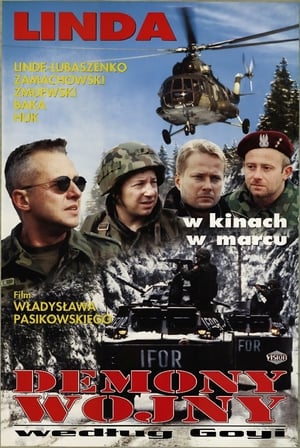
Somewhere in the Balkans, 1995. A team of aid workers must solve an apparently simple problem in an almost completely pacified territory that has been devastated by a cruel war, but some of the local inhabitants, the retreating combatants, the UN forces, many cows and an absurd bureaucracy will not cease to put obstacles in their way.
Sfaira (1971-1984) dedicated to Pythagoras and Plato is a homage to two of his favourite spheroids: the Earth and the Sun.
A group of 19 young women, led by a partizan man, are the only people available to escort a number of partisan wounded in the struggle for freedom, in the mountain ranges invaded by the Nazi army. The crossing of difficult tracks, and a few encounters with enemy patrols provide danger, and death for some heroines. Two girls are in love with the column's commander, but love for the motherland and freedom will prove stronger.
When Gavrilo Princip killed Franz Ferdinand, Austrian future king , the World War I began. What will Gavrilo Princip do? He has to choose, hard jail untill death, or hanging. There are so much things happening in Bosnia.
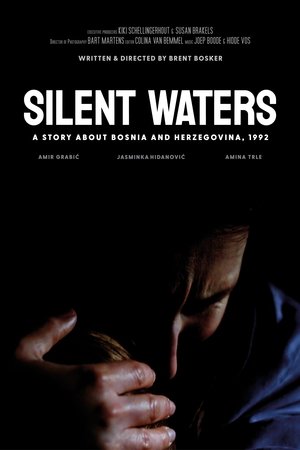
Silent Waters
A young journalist is sent to a small Bosnian town to interview people on happiness. He mixes up with local affair and has a romance with a student. He gets a shock when he finds out that he is going to be important due to childhood mumps.
The story of a boy from the orphanage for abandoned children who tried to find out the truth about his origins. Through the story of a boy Alen, it describes the consequences of war casualties and immense injustice that war brought most helpless, the children.
1893, city of Mostar, Herzegovina, Austro-Hungarian Empire. Stoyan, a poor country boy comes to town and starts to work for a rich but crooked and greedy store owner.
The abolishment of a railway station in a remote Bosnian village affects the lives of the local railwaymen.