An elderly woman recounts the horrific events she endured during the invasion of her village in Famagusta, Cyprus, in August 1974.
Grief is an inheritance. Perhaps the sorrow you feel today once belonged to a woman who, a thousand years ago, watched a mountain of books burn in the fire of an invasion.
After growing up in an orphanage, Abolfazl embarks on a journey to find his real mother. His path leads him through friendship, love, loss, and war—until he discovers where he truly belongs.
Within the confines of a massive wall, a group of children plays as if there were no tomorrow
All birds in the sky in human wars.
The life of Moses as told through the Book of Exodus, the imagination of a dying boy, and the ballads of his father.
In 1609, Henry IV sent Inquisition judge Pierre de Lancre to the French Basque Country to investigate witchcraft. In the trials, 80 people were sentenced to death at the stake. Between the 15th and 17th centuries, a total of between 40,000 and 60,000 people fell victim to such waves of persecution in Europe. How can this phenomenon be explained?
Out of time
Hirayama Jirou has lost his mother in the Great Kanto Earthquake and now runs a soba stall with his father. He decides to join the crew of the famous ocean liner Hikawa Maru and finds work cooking in the ship's galley. Through his eyes, the film explores the ship's 85-year history.
Maja and Janne move to the barren and remote island of Stormskerry, where survival is a daily struggle. Growing up in a world of old values, Maja becomes aware of a new era: a woman can be an equal partner instead of a mere bystander. The couple have children, and life is good until trouble sets in: war arrives on the island, Janne is forced to flee from the English troops, and Maja and the children are imprisoned. The family also faces many financial difficulties and death. Years pass, but Maja remains strong and stays in Stormskerry despite all the hardships and difficulties.
Survival and paranoia will be the forces that destroy a bond between two recruits when their camp's only source of water runs out.
"The Return" deals with rural exodus, the return to the land, the antagonism between two worlds: that of urban dwellers and of the rural areas deeply rooted in tradition. Ranaivo lives in Antananarivo. To make ends meet, he sells ice lollies. his father, Ratovo, comes to the capital to ask for his son’s help. he needs money to organize the turning of the dead ceremony. After the village celebration, Ranaivo decides to leave the capital and emigrates to the highlands where everything is open to those who want to get back to the land.
1795, Holland. The French vanguard is pushing towards the north, through a strong blizzard, beyond the enemy lines. At the head of the cavalry, Major Lahure learns that a British fleet, seeking to escape to England, is trapped by the ice off the coast, and prepares one of the boldest ventures of its time.
Anne Frank's world famous diary came to an abrupt end shortly before she and her family were discovered hiding from the Nazis in a secret annex at the top of Otto Frank's office building, on August 4, 1944. While her diary tells the story of Anne's life, the story of her death reveals the atrocities encountered by millions of Jews during the Holocaust. In a solemn remembrance of the horrors that Anne Frank and these millions of others suffered during the dark days of World War II, National Geographic Channel (NGC) takes viewers inside the concentration camps in a two-hour special. In keeping with NGC's tradition of unparalleled storytelling, Anne Frank's Holocaust incorporates new findings and rarely seen photographs to reintroduce the story of the massacre of Jews in one of the most comprehensive documentaries on the subject to date.
Marie is an adolescent woman who lives in Prussia in 1813 with her mother, a countess. They live in a palace watching the path of history from a far point of view.
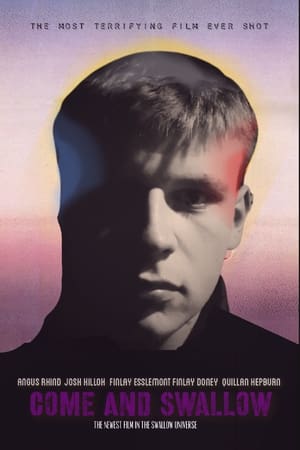
Come and Swallow is the newest film in the big swallow universe. Being a piss take on the original “The Big Swallow (1901)” and “Come and See (1985)”. When the young boy (Josh Killoh) has his village burned down and destroyed by an army of troops, a few soldiers (Angus Rhind, Finlay Doney and Quillan Hepburn) pose to take a photo with the boy. As the camera man (Finlay Esslemont) prepares to take the photo, the boy suddenly decides that he has had enough of this tyranny and swallows all the soldiers.
The Philippines, 1902. The land is raw, wounded, occupied. Smoke clings to the trees. Blood soaks the soil. The war is over – but the violence lingers. Widows fill the villages. Mothers vanish into silence. Among them walks Sisa (Hilda Koronel), barefoot and broken, dismissed as mad by those who fear what they don't understand. But madness is only the surface.
Tatiana is forty-two years old and she is a stylist for one of Kyiv’s women’s magazines. She is ironic, self-confident, Tatiana lives in a large house on the suburbs of the Ukrainian capital and she enjoys the freedom that her recent divorce gave her. Her quite successful life is interrupted by the outbreak of the war. Friends and acquaintances come to her house, including her ex-husband and colleague who has a crush on her. Together, they watch how Russia destroys their city. After a few days, almost everyone tries to get out of Kyiv and persuades Tatiana to follow. But she can’t make up her mind.
A 5-year-old girl embarks on a harrowing quest for survival amid the sudden rise and terrifying reign of the Khmer Rouge in Cambodia.
14-year-old Zain, a Palestinian swimming champion, faces war and man-made famine. He becomes the sole caregiver to his little brother. When aid drops into the sea, desperate for food, Zain is forced to swim - not for passion, but for survival.