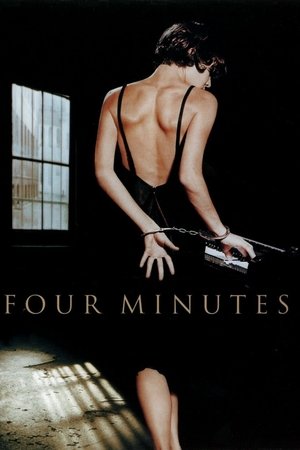
Jenny is young. Her life is over. She killed someone. And she would do it again. When an 80-year-old piano teacher discovers the girl’s secret, her brutality and her dreams, she decides to transform her pupil into the musical wunderkind she once was.
When actress Nikki Grace gets the lead role in a cursed film, her world becomes more and more surreal, blending realities and ideas of infidelity, reincarnation, and supernatural forces.
In the autumn of 1945, Petty Officer Tadashi Yamaji is among the numerous war crimes suspects facing death on the gallows for maltreatment of Allied women and children interned in camp Kampili. Kampili is located some ten kilometers outside Macassar on the island of Celebes. Eighteen-hundred Allied women and children were interned for the duration of the war. Yamaji's iron rule for camp administration is : No violence; hands off internees; He also endeavors to establish self-administration by internees while aiming at a self-supporting camp economy within six months. His ingenuity gains the camp numerous pigs to enrich their diet, and sewing machines with to make fatigue uniforms for the military. The internees are grateful for what little aid he can give them. As the tides of war changes, Allied planes bomb the camp in error. But the surrender of Japan changes everything, and the internees join forces to save their former camp commander from the gallows.
Abortionist Vera Drake finds her beliefs and practices clash with the mores of 1950s Britain – a conflict that leads to tragedy for her family.
A New York press agent must scramble when his major client becomes embroiled in a huge scandal.
In 1482 Paris, Frollo, Chief Justice of benevolent King Louis XI, becomes infatuated by the beauty of Esmeralda, a young Romani girl. The hunchback Quasimodo, Frollo's protégé and bell-ringer of Notre Dame, lives in peace among the bells in the heights of the immense cathedral until he's involved by the twisted magistrate in his malicious plans to free himself from Esmeralda's alleged spell, which he believes to be the Devil's work.
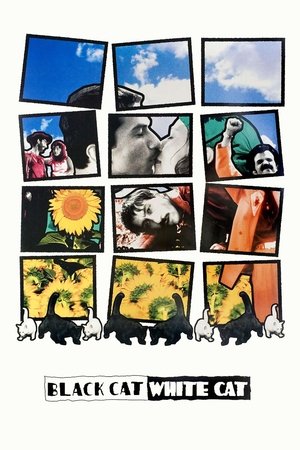
A small-time hustler makes a deal with a notorious gangster to whom he owes money: marry his teenage son to the latter's daughter. However, the young lovers are not as agreeable.
After her release from prison Alex, who has lost her faith in love, tries to reclaim her psychic balance through a retreat into loneliness. A man and a child interrupt her plan and force her to reengage. Alex dares to emerge from her shell and learns again how thin the ice is and how fragile happiness is, small though it may be.
A portrait of Rita, who claims that her mother was never a mother for her. Rita gives birth to her own five children and forces her mother to take the role of a mother.
Martina lives in the Rome's zoo, because her father is the guardian. She becomes friend with a young Slavic escaped from a gypsy camp. When the police arrives searching for the kid, they run away riding an elephant!
Narcisus and Psyche is based on a novel by Sandor Weores which was adapted by Vilmos Csaplar and director Gabor Body for a feature-length film. Borrowing the character of Psyche from mythology and placing her in Europe in the 19th century, the authors give her a "modern" life. She is an attractive young woman - and remains so throughout the film, in spite of one hardship after another. Psyche is libidinous, and her prurient interests shock her staid contemporaries.
After graduation, a young woman gets his first job in the women's prison in the province. The story follows her struggle to survive in a small town with her small child, alcohol addiction, and the battle with the prisoners and prison brutality and other schemers who wanted to remove her from working spot.
The story of Michael Berg, a German lawyer who, as a teenager in the late 1950s, had an affair with an older woman, Hanna, who then disappeared only to resurface years later as one of the defendants in a war crimes trial stemming from her actions as a concentration camp guard late in the war. He alone realizes that Hanna is illiterate and may be concealing that fact at the expense of her freedom.
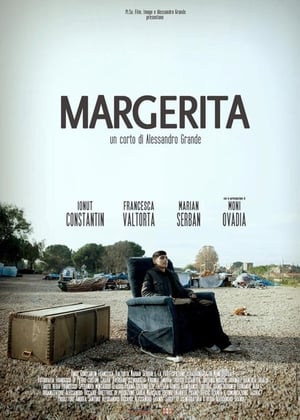
Pio Amato, a 14 year-old member of a small Romani community in southern Italian town of Gioia Tauro in Calabria, is in a hurry to grow up. Pio follows his older brother Cosimo everywhere and from him he learns how to hustle and how to navigate the streets of his hometown. One night Pio sets out to prove to his brother that he is as good or better than him but, when things go wrong, a series of events will forever change the way he sees the world.
Lubo Moser is a jenisch, a gypsy. Mirana, who tried to oppose him, was killed. But how could this have happened? Why? Because Switzerland considers nomadism a social scourge, and, to eradicate it, it takes the children of the jenisch. Thus, without children, the Jenisch will be without a future. The mastermind is a state-run humanitarian institution, Pro Juventute, the arm the Street Children's Work: everything is perfectly legal and there is no opposition to the law. Lubo feels himself dying. And something about him really does die, on that night of wind and snow: it will be a new Lubo, tough and impenetrable, who will set up a project with unexpected implications to avenge his family and his people... and it will lead us to rethink the sense of justice, in the blurred boundaries between good and evil.
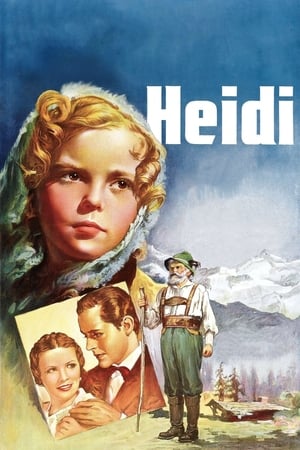
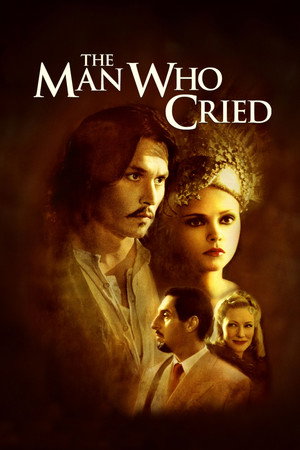
The story deals with the gaieties and frolics of Gypsies led by Ricardo, shown here dancing with Ramona.
Danielle, a vibrant young woman, was forced into servitude after the death of her father when she was a young girl. Danielle's stepmother, Rodmilla, is a heartless woman who forces Danielle to do the cooking and cleaning, while she tries to marry off the eldest of her two daughters to the prince. But Danielle's life takes a wonderful turn when, under the guise of a visiting royal, she meets the charming Prince Henry.
Zorika's father has arranged for her to marry a wealthy acquaintance. Before the engagement, she goes for a walk along a mountain stream, and there meets a handsome gypsy; but will her affection go unrequited? GYPSY LOVE is an operetta by Austro-Hungarian composer Franz Lehár (1870–1948). This 1974 production is a cinematic version with a star cast.
The gypsy Azucena (Fiorenza Cossotto) takes revenge for her mother who was accused of putting a curse on one of the old Count di Luna's two sons: she decides to abduct the younger child and throw it in the flames. But when she is about to carry out this fatal act, the gypsy sacrifices her own child and keeps the old Count’s son, whom she names Manrico (IL TROVATORE, Plácido Domingo). Later, as adults, the troubadour Manrico and the Count di Luna’s elder son (Piero Cappucilli) do not know each other, but become rivals for the beautiful Leonora (Raina Kabaivanska). Manrico succeeds in winning the young woman’s heart, and she sacrifices herself for him, deceiving the Count’s son. Mad with jealousy, the latter orders the execution of the troubadour in front of his mother. Azucena reveals to him that Manrico was his brother. This legendary performance of Giuseppe Verdi's most successful opera was recorded at the Vienna State Opera under the baton of Herbert von Karajan.
Somewhere in England, in the Autumn of 1955, a widowed father and his son live an idyllic life together. Only their gas station happens to sit on a piece of land that a local developer wants to buy. And when he won't take no for an answer, and sets government inspectors and social works onto Danny and his father, Danny and his father decide to get even with Hazell and his pheasant- shooting friends in a manner in keeping with their own family tradition.