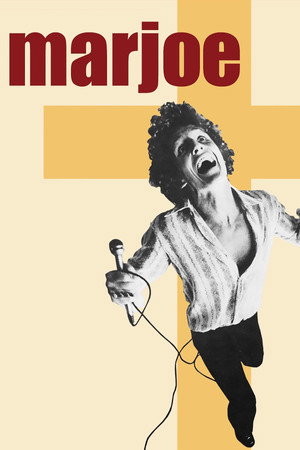
Interview with Jason Holliday aka Aaron Payne. House-boy, would-be cabaret performer, and self-proclaimed hustler giving one man's gin-soaked, pill-popped view of what it was like to be black and gay in 1960s United States. Preserved by the Academy Film Archive in partnership with Milestone Films in 2013.
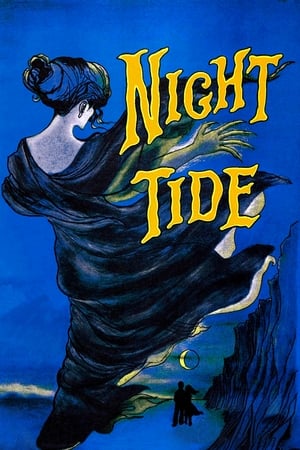
The story revolves around a woman, who stays in a large mansion with her husband. She develops an obsession for her ornaments and refrains giving them to her husband as they face financial crisis. Preserved by the Academy Film Archive in partnership with Arsenal - Institut für Film und Videokunst e.V. in 2007.
A reflection between nature and man in Los Angeles about the city's surroundings' desertification due to enormous water consumption.
During World War I, two American soldiers fight to escape the Germans while squabbling over a beautiful harem girl. Preserved by the Academy Film Archive in partnership with University of Nevada, Las Vegas Foundation in 2016.
The heroine, Peggy Cameron, is a high-society debutante with a mind of her own. After making a public spectacle of herself once too often, Peggy is bundled off to Scotland, where she is to be looked after by her no-nonsense uncle Andrew Cameron (William H. Thompson). If Peggy's family had hoped that she would straighten up and behave herself in Scotland, they were sorely mistaken. Restored in 2018 by the Academy Film Archive with restoration funding provided by the Louis B. Mayer Foundation.
A propaganda short about the 1944 United States presidential election, produced by the Office of War information, for overseas distribution. It is meant to explain how the democratic process in America works. Preserved by the Academy Film Archive in 2007.
A World War I veteran takes on the Ku Klux Klan when he loses his wife to a womanizing Klansman. Preserved by the Academy Film Archive in partnership with University of Nevada, Las Vegas Foundation.
Oscar winner William Wyler directed this 1944 "newsdrama," narrated by Lieut. Robert Taylor, USNR (Bataan), and photographed in zones of combat by the U.S. Navy. The film follows one of the many new aircraft carriers built since Pearl Harbor, known as THE FIGHTING LADY in honor of all American carriers, as it goes into action against the Japanese in the Pacific Ocean in 1943. See the ship and its pilots undergo their baptism of fire, attacking the Japanese base on Marcus Island. Preserved by the Academy Film Archive in partnership with The Film Foundation.
The 1945 atomic-bomb explosion at Bikini Atoll becomes a thing of terrible beauty and haunting visual poetry when shown in extreme slow motion, shown from 27 different angles, and accompanied by avant-garde Western classical music composed for electric organ by Terry Riley. Preserved by the Academy Film Archive in partnership with Pacific Film Archive in 1995.
A feisty little girl, the daughter of a beat cop, faces the challenges of growing up in a tough city neighborhood.
Inspired by a real-life history comes the feat of a small group, led by their manager, Cesar Faz, that achieved what no other Mexican team in Little League World Series had achieved before. This film recreates the miracle of the small Monterrey sports baseball team, champions of 1957, which were no longer unknown, facing adversity, the climate, the socio-economic differnces and internationally renowned rivals to finish conquering the unimaginable: the White House. Preserved by the Academy Film Archive in 2007.
Documentary short detailing the American soldier's part in preserving the fundamental ideals of this nation. Preserved by the Academy Film Archive in 2012.
On a winter's day, a woman stretches near a window then sits in a bathtub of water. She's happy. Her lover is nearby; there are close ups of her face, her pregnant belly, and his hands caressing her. She gives birth: we see the crowning of the baby's head, then the birth itself; we watch a pair of hands tie off and cut the umbilical cord. With the help of the attending hands, the mother expels the placenta. The infant, a baby girl, nurses. We return from time to time to the bath scene. By the end, dad's excited; mother and daughter rest. Preserved by the Academy Film Archive in 2013.
After the title, a white screen gives way to a series of frames suggestive of abstract art, usually with one or two colors dominating and rapid change in the images. Two figures emerge from this jungle of color: the first, a shirtless man, appears twice, coming into focus, then disappearing behind the bursts and patterns of color, then reappearing; the second figure appears later, in the right foreground. This figure suggests someone older, someone of substance. The myth? Preserved by the Academy Film Archive in 2012.
“CINDERELLA is a musical treatment of the fairy tale. I have broken apart the story and set it as a mechanical game with a series of repetitions where CINDERELLA is projected back and forth like a ping-pong ball between the hearth and the castle. She never succeeds in satisfying the requirements of the ‘Cinderella Game’. The film was shot MOS, the dialogue is lip-synched, and along with the out-front score and effects track magnifies the film’s sense of alienation.” — E.B. 1984 - Preserved by the Academy Film Archive in 2017.
Documentary about the XIX Olympic Games in Mexico City in 1968. Preserved by the Academy Film Archive in partnership with Sony Pictures Entertainment in 1999.
A musical portrait of New Orleans' street celebrations and unique cultural gumbo in 1977: second-line parades, Mardi Gras, Jazz Fest. Features live music from Professor Longhair, the Wild Tchoupitoulas, the Neville Brothers and more. This glorious, soul-satisfying film is among Blank's special masterworks. Preserved by the Academy Film Archive in 1999.
A zesty paean of praise to the greater glories of garlic. This lip-smacking foray into the history, consumption, cultivation and culinary/curative powers of the stinking rose features chef Alice Waters of Chez Panisse, and a flavorful musical soundtrack. Preserved by the Academy Film Archive in 1999.
Fascinating underwater documentary filmed with hand-held cameras by frogmen and mostly filmed in deep-water seas from within a special designed batiscaff, by the Cousteau family of sea explorers. Preserved by the Academy Film Archive in 2010.
A beautiful expression of two differing cultures brought together by the warmth and dedication of a great musician and humanitarian. In 1979, as China re-opened its doors to the West, virtuoso Isaac Stern received an unprecedented government invitation to tour the country.