Spoiled Jessie Montgomery, whose wild behavior and spending excesses cause her well-meaning but exasperated millionaire father Charles to wish he never had her, is visited by fairy godmother Stella. In an effort to save Jessie, Stella casts a spell which causes Charles to no longer have a daughter. Jessie, now penniless and without a friend, must take a maid's job to earn a living, and hopefully to learn her lesson.
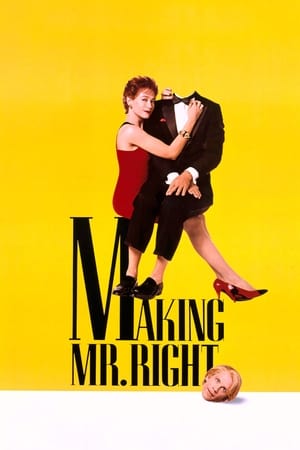
It took a lot of cajoling to get Bob, a recently widowed architect, to go on a blind date at a quirky Irish-Italian eatery. Once there, he's smitten instantly not with his date but with the sharp-witted waitress. Everything seems to be going great until an unbelievable truth is revealed, one that could easily break both of their hearts for good.
A father and his terminally ill daughter embark on a cross-country trip to find the boy she loves. Along the way, the two are forced to confront their shared grief and redefine what it means to hold on and let go.
Set within the fluidity of time, touch, realism and reverie. Some may call this magic realism. Based within Indigenous knowledge and way of life, this story allows two people to heal, through touch, calm, love and patience in a fantastical space that leaves the audience dreamlike and yet it is dangerous and violent, there is love.
Mirrored Measure features two women separated by a generation. The older woman ceremoniously lays a table – she repeatedly spreads a cloth and smoothes it out. The table is set and glasses and jug filled with water. A balanced and controlled ritual follows in which the jug is passed round and water is repeatedly sipped. Water becomes the lens through which we see and the medium through which the protagonists connect. The sense of connectivity is abruptly severed when the first glass tumbles.
Swollen Stigma nourishes the fantasy of its protagonist’s inner life and proposes a lesbian imaginary which takes leap into risk and displacement. The film opens with an entranced seated woman working her fingers through a single strand of hair and proceeds to explore her lived imaginary in which desire and fear interlace. She re-visions different moments in time which are haunted by an absent lover. Like a playful fairy princess, this lover appears upside down in an armchair, hanging legs-down from the ceiling, playing dead on the floor, or eating roses; her body continuously permeates the woman’s reality. The film’s shifting points of view jump between the protagonist, fantasy spaces and her lover, making an internal world leak into what is external with the fluidity of blood into water.
Cast creates a claustrophobic and haunting space where people and things invade worlds in which they do not normally belong. Lifeless dolls are heaped inside drawers, dolled-up life size figures lie motionless on a windy beach at the water’s edge; a chair rocks in an empty room, a mirror reflects and observes, and a chest of drawers is caressed by the sea. The film has a dramatic sensibility that sets up a false promise of narrative. Its structure, instead, is akin to that of dreams where different scenic spaces collapse and the inanimate and animate interchange. Wide-angled perspectives, shifting points of view and juxtapositions of sound and silence force inner and outer realities to collide, creating an unsettling psychic world.
Ritualised through performance to camera, Stages of Mourning is Pucill’s journey of bereavement. In as much as this is a meditation on coming to terms with loss, the film is an exploration of how our relationship with the dead is made different through film. The artist orders image fragments of her late lover and collaborator, Sandra Lahire. By trying to physically immerse herself into photographs and film footage or by restaging these, Pucill forms a continuous stream of a life of two lovers. Through this doubling and layering, illusions accumulate as if these were a product of a machine that didn’t stop.
I’m not aware of you taking my skin’, says the artist’s mother to the camera as it zooms in on her eye as close as the lens will allow. Taking My Skin tracks a dialogue between the artist and her mother. Their exchange ranges from narrating the filming process ‘in the moment’ to relations in an earlier time – ‘how long do you think it takes for a child to become separate?’ Throughout the journey film spaces continuously dissolve and collapse only to separate again. Sometimes the artist is behind the camera, sometimes the mother, sometimes both simultaneously behind and in front, or neither. Both perform, film, and alternately instruct, position and direct the other. Formally and thematically, the film is an exploration of closeness, of synching, and the threat this poses to the self.
Blind Light is filmed in the artist’s London loft. The presence of camera, studio and artist/performer are registered through image and sound, the loss of the former filling out the presence of the latter. In this way the physicality of object, space and subject as well as their inferiority is fleshed out, mapping out a space that is at once material and psychical. Controlling the light she allows into the frame, the artist lifts the blinds or pulls them shut, applies or removes lens filters, opens wide the aperture or closes it. Each performance or action threatens the image as it shifts in and out of ‘proper’ exposure until it disappears completely. Focusing either on the window or the sky, the artist narrates her camera operation whilst also describing what she sees; intermixing receptive and projective vision.
In Fall in Frame the materiality of the filmmaking process is explored within a constrained performance that blurs the split between the physical and consciousness. The film ends where it starts with the sheet around the camera, shutting out the image.
Distinctive in its stark use of black and white and reminiscent of early silent cinema, this film is composed of a series of theatrical side-show ‘magic’ acts. Three women stage tricks of appearance and disappearance, punctuated by trumpet, cello and drums.Interchanging between the roles of magician, nude and filmmaker, they perform the preparation of an image and the prepared or completed image, drawing on iconic paintings
Magic Mirror combines a re-staging of the French Surrealist artist Claude Cahun’s black and white photographs with selected extracts from her book Aveux Non Avenus (Confessions Denied). In Surrealist kaleidoscopic fashion the film creates a weave between image and word, exploring the links between Cahun’s photographs and writing as well as between those of the films of Sarah Pucill, as both artists share similar iconography and concerns.
Claire and Robert spend most of their time in a house they own in the beautiful and remote countryside in Italy. Their life seems to be perfect. But when Claire's sister gets murdered in the very same house, the traumatic event shakes up their relationship. Disappointment, fear and resentment they swept under the rug for years, resurface. Revealing the dark side of a blissful love - a dream that turns into a nightmare. It is the story of two people trapped in a dark secret.
The documentary is about the uniqueness of childhood and the exploration of the human mind. In an outdoor nursery based in the woods, children create their own individually constructed worlds and can test out the boundaries of reality.
George and The Man In The Yellow Hat are having a merry time counting down to Christmas. But neither can decide what to give each other. Will they find the answers before Christmas morning?
In a dystopian world where touch is forbidden, Matta and Matto offer refuge to the lonely at Hotel Vaip. In the deceptive labyrinth of mind-bending rooms at their transient hotel, deepest desires are fulfilled and surpassed, but this comes at a price.
A documentary exploring the aftermath of the Berlin Wall's fall, the film features interviews in English and German with long-time residents and foreign visitors/residents from both sides of the former divide.
Scénarios sur la drogue
A troubled teen is sent to live with his estranged father, a park ranger. During his time there, he develops an unusual affinity with and passion for the wolves in a local pack.