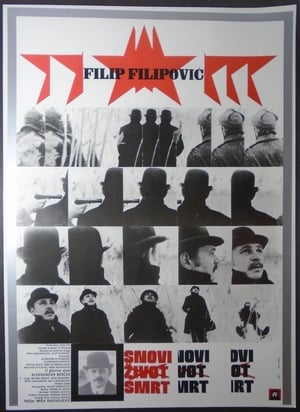
The life and death of an educated communist activist who brought Bolshevik ideas to his native Serbia upon his arrival from Russia at the beginning of the 20th century.
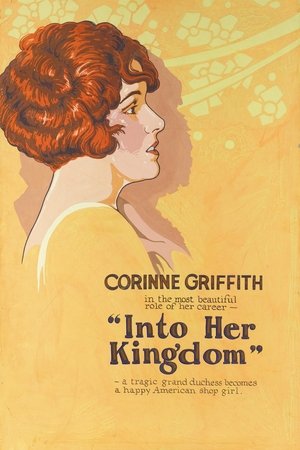
In Czarist Russia, a young peasant boy is sent to Siberia for insulting the Grand Duchess. Released years later, he joins the fighting to overthrow the royal family. The entire royal family is condemned to death when fighting ceases.
Based on the novel of the same name by Mikhail Sholokhov, about the fate of people broken by the First World War, the October Revolution of 1917 and the Civil War in Russia (1917-1922), about the collapse of the foundations and ideals of the Don Cossacks of Russia at the beginning of the XX century, about the personal tragedy of the protagonist — Grigoriy Melekhov.
A former Imperial Russian general and cousin of the Czar ends up in Hollywood as an extra in a movie directed by a former revolutionary.
Local healer embarks on the path of revenge against the Russian Bolsheviks who captured his native village, establishing their own rules there.
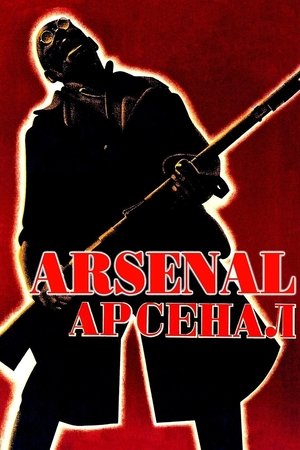
A soldier returns to Kyiv after surviving a train crash and encounters clashes between nationalists and collectivists. The story of the suppression of the Bolshevik uprising at the Arsenal factory in Kyiv by the Central Council troops.
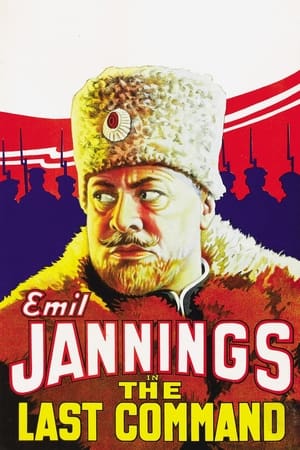
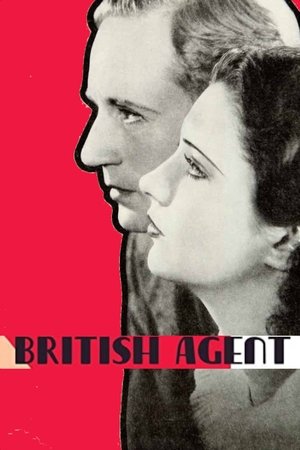
In the last days of Czarist Russia, Russian-speaking Briton A.J. Fothergill is enlisted by his government to go undercover as Bolshevik radical Peter Ouranoff in an attempt to gain access to the revolutionaries' inner circle. Tasked with accompanying lovely aristocrat Alexandra Vladinoff from Moscow to Petrograd to be tried for crimes against the proletariat, Peter attempts to spirit her out of the war-torn country.
The film recreates the events of 1905. In the center of the picture is the struggle of the proletariat, led by the Bolshevik party, against tsarism. The demonstration of labor unrest is replaced by episodes of the Russo-Japanese war, Black-Hundred demonstrations, accompanied by a pogrom of Jews, and beating of the intelligentsia. The film paints the attitude of the Mensheviks towards armed insurrection, reproduces the picture of barricade battles, the arrest of the Council of Workers' Deputies and the brutal reprisals of the tsarist autocracy with revolutionaries.
The film follows Lya, a woman seeking refuge from Cossack soldiers, who finds herself at the palace of Prince Nicholas. She becomes his majordomo and they fall in love, but their relationship is disrupted when Nicholas learns of her past with a Bolshevik leader. Lya is expelled, becomes a terrorist, and later encounters Nicholas again, now disguised as a servant. When Nicholas is sentenced to death, she rescues him and they escape together.
In the days leading up to the Russian Revolution, Stephen Locke, a minor British diplomat in St Petersburg, falls in love with a Russian spy.
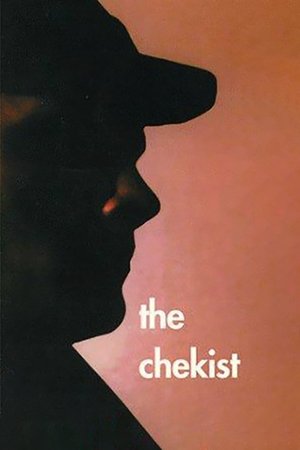
Srubov is a part of CHEKA, the secret police Lenin established after the Bolshevik Revolution. They arrest, interview for a minute, try in ten seconds, and execute intellectuals, aristocrats, Jews, clergy, and their families. In the building basement, five people at a time are shot as they stand naked facing wooden doors. No one to remember their last words; no martyrs, just anonymous bodies. Daily, the kangaroo court, the executions, the loading of bodies onto wagons. Srubov is cold, distant, sexually dysfunctional, and a deep thinker, hated by former friends and his family. As he tries to reason the nature of revolution and the purpose of CHEKA, he slowly goes mad.
A mad doctor is determined to take revenge on the family he believes is responsible for his daughter's death.
Young and active nationalist Aleksander Kesküla makes up his mind to use Lenin, the Bolsheviks' leader, in order to start a revolution in Russia with German money and create a new national state of Estonia in the north-east of Russia. For security reasons, five doubles will be found and trained for Lenin. All of them are finally sent to Russia to instigate the revolution. How will the real Lenin put up with all this?
Jerry Flannigan and Mr. Givney encounter some bellicose mosquitoes.
Leon Trotsky is considered one of the most controversial revolutionary figures of his time. Was he a practical revolutionary or a naive idealist? On the practical side, he was the mastermind behind the Bolshevik seizure of power in 1917, and was totally ruthless during the ensuing Civil War. As an idealist, he was committed to the pursuit of international revolution, but created many political enemies. After Lenin's death, Trotsky lost in a power struggle with Stalin, and later was expelled from the Communist Party. Trotsky was exiled from the Soviet Union, eventually finding refuge in Mexico. In 1940, Stalin ordered his assassination, and Trotsky died after being struck in the head with an ice-pick. History records that Trotsky was a master theoretician, a skillful propagandist and a brilliant orator.
In the city of Cajamar, in the middle of ruined nature, lonely characters deal with the police, rodeos and mysterious fires.
Laxmi is half of a famous singing couple when both her relationship and career are destroyed by the jealous plotting of her husband , Vijay. Years later, Laxmi is widowed and raising a stepdaughter, Lalita, when Vijay returns to the scene to meddle in her new family's affairs and once again threaten her domestic happiness.
Kedar Babu is a freedom fighter since the days of Mahatma Gandhi's call for a Civil Disobedience Movement. Kedar Babu lost his wife at an early stage of his marriage. Since then, he has brought up his only son Sangram with all paternal affection. In town, Sangram stays in the house of a landlord, Bahadur Suryakant Singh, where there is a gradual moral decline. This puts him in a state of dilemma and delusion. In the last encounter with his father. Sangram experiences a new perception of life, illuminated with anxiety.
Ranjit is an educated and unemployed young man, desperately looking for a job. He is taught to use a gun by people who promise to show him a new way of life and lead him to a better future.
In a small, tribal district town of Central India in 1929, Francis Massey is the 'English Type Babu' at the Deputy Commissioner's office. Massey believes that because he is Christian and can speak English, he is a cut above other Indians and not very different from the white sahibs he serves. For a man of lowly birth, Massey has risen to a dizzying height. On the other hand, he acknowledges no realistic limits to his own free spirit. Whenever the real world fails him, he improvises - boldly, imaginatively. Alas, the unsmiling, implacable machinery of the Raj has no room for Massey Sahib, the travelling salesman, road foreman and entertainer. Right up to the bitter end, Massey believes that Deputy Commissioner Adam Sahib will step in and save him.