A thought-provoking documentary on the current and historical causes of the Israeli-Palestinian conflict and U.S. political involvement.
Unpublished testimonies from freed hostages, survivors, and members of first responders regarding the attacks perpetrated on Israeli territory on October 7, 2023, by the terrorist gang Hamas reveal the repugnant extent of the crimes committed by the so-called Palestinian freedom fighters.
14 years after his first visit, Louis Theroux meets some of the growing community of religious-nationalist Israelis who have settled in the occupied West Bank.
A film essay by Asher de Bentolila Tlalim, an Israeli filmmaker living in London, GALOOT ("Exile" in Hebrew) is an extended meditation on the Israeli-Palestinian conflict through the eyes of those living at a distance. Through international visits (London, Israel, Morocco and Poland) and dialogue-with Palestinian refugees, the new immigrants to Israel who now occupy their homes, the current occupants of his family's former house in Tangiers, the residents of the former village of his wife's family in Lisensk, a scientist, a jazz musician, and others-the filmmaker explores the position of exile, with its unique pain and perspective on what others may be too close to perceive.
A chronicle which provides a rare window into the international perception of the Iraq War, courtesy of Al Jazeera, the Arab world's most popular news outlet. Roundly criticized by Cabinet members and Pentagon officials for reporting with a pro-Iraqi bias, and strongly condemned for frequently airing civilian causalities as well as footage of American POWs, the station has revealed (and continues to show the world) everything about the Iraq War that the Bush administration did not want it to see.
An Israeli film director interviews fellow veterans of the 1982 invasion of Lebanon to reconstruct his own memories of his term of service in that conflict.
An Iranian filmmaker participates in a series of video calls with a young Palestinian photojournalist who describes her life confined in Gaza during the current regional conflict.
In the fall of 2002, it was announced that Benjamin Netanyahu would deliver a speech at Concordia University in Montreal, and reaction from the student body was swift and sudden.
In Breaking Bread, exotic cuisine and a side of politics are on the menu. Dr. Nof Atamna-Ismaeel - the first Muslim Arab to win Israel's MasterChef - is on a quest to make a social change through food. And so, she founded the A-sham Arabic Food Festival in Haifa. There, pairs of Arab and Jewish chefs collaborate on mouthwatering dishes like kishek (a Syrian yogurt soup), and qatayef (a dessert typically served during Ramadan), as we savor the taste of hope and discover the food of their region free from political and religious boundaries.
When two young American Jews raised to unconditionally love Israel witness the mistreatment of Palestinians, they battle the old guard to create a new movement opposing Israel’s occupation, and recentering Judaism itself.
Gaza Ghetto: Portrait of a Family, 1948 – 1984 is a documentary film about the life of a Palestinian family living in the Jabalia refugee camp. The film, created by Joan Mandell, Pea Holmquist, and Pierre Bjorklund in 1984 is believed to be the first documentary ever made in Gaza. The film features Ariel Sharon, Binyamin Ben-Eliezer and soldiers on patrol "candidly discuss[ing] their responsibilities." The film follows a refugee family from the Gaza Strip who visit the site of their former village, now a Jewish town in Israel. As the grandfather and great-grandfather point out an orchard and sycamore fig that belonged to Muhammed Ayyub and Uncle Khalil, an Israeli resident appears and tells them to leave, claiming they need a permit to be there. The mother tells him that, "We work in Jaffa and Tel Aviv and that's not forbidden," to which he replies, "Here it's forbidden."
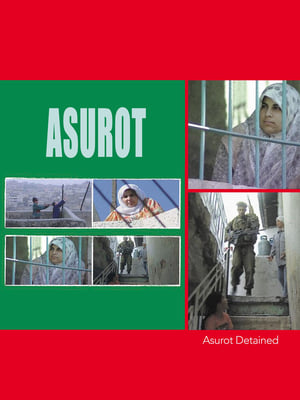
Najwa, Nawal, and Siham, three Palestinian widows, live with their 11 children in a house on Shuhada Street in Hebron. Their house lies on the border; the façade is under Israeli occupation, the Palestinian Authority controls the back. At the entrance to the house is a military post; on the roof the Israeli army has placed a watch point over Palestinian Hebron. The three women, trapped in the middle and constantly surrounded by Israeli soldiers, carry on their difficult lives in a perverse situation: the occupation becomes a routine, the absurd becomes a given. This is the story of an occupation that extends to the staircase and the roof of the house, where it encounters poverty, loneliness, pain, but also the small joys of everyday life. This is an internal prison, the external one is the ongoing occupation.
The last 31 years, PeÅ Holmquist has filmed in Gaza, depicting the fate of its people in this often cruel world. Now Holmquist makes a personal reflection based on his many visits to Gaza, most recently after the three-week intense war with Israel during 2008-2009.
Documentarians Justine Shapiro and B.Z. Goldberg traveled to Israel to interview Palestinian and Israeli kids ages 11 to 13, assembling their views on living in a society afflicted with violence, separatism and religious and political extremism. This 2002 Oscar nominee for Best Feature Documentary culminates in an astonishing day in which two Israeli children meet Palestinian youngsters at a refugee camp.
Pour l'honneur de Gaza, des déplacés sous les tentes
While much of the world struggles to keep the planet going, a frighteningly large group of American fundamentalist Christians are working to promote the apocalypse. The evangelical movement is convinced that they will be saved when Jesus appears in the state of Israel on horseback and, with a sword raised to heaven, kills the infidels so that the blood reaches the horses’ bridles. Natural fires, corona, wars and crises are evidence that the time is nigh. But for the prophecies to be realized, the state of Israel has to grow stronger, so they provide huge financial support and are so far inside the White House that they help influence US foreign policy.
Follows the repercussions of the Israeli Security Wall and Settlement expansion in the engulfed/annexed Palestinian farming communities of the West Bank and the Gaza Strip, examining the grassroots resistance movement that sprang up against it. An interminable road trip across hard and liquid borders, across a terrain that is being erased as it is being traversed.
Filmed between 1973 and 1975, L’Olivier was produced by the Vincennes Cinema Group. This activist collective of teachers and filmmakers, formed on the occasion of this film, attempts to explain the Palestinian problem through interviews. The Olivier was one of the first films to attempt to give substance to what was still largely ignored in the West: the existence of the Palestinian people and their fight to recover their rights. L'Olivier responds to a concern: the already weak support of French public opinion for the Palestinian cause diminished following the Munich operation of 1972. Structured in such a way as to tell the Palestinian story and explain the state of the struggle at the time, the film appeals to global militant solidarity and, in particular, to European political commitments.
Five broken cameras – and each one has a powerful tale to tell. Embedded in the bullet-ridden remains of digital technology is the story of Emad Burnat, a farmer from the Palestinian village of Bil’in, which famously chose nonviolent resistance when the Israeli army encroached upon its land to make room for Jewish colonists. Emad buys his first camera in 2005 to document the birth of his fourth son, Gibreel. Over the course of the film, he becomes the peaceful archivist of an escalating struggle as olive trees are bulldozed, lives are lost, and a wall is built to segregate burgeoning Israeli settlements.
Millions of American Evangelicals are praying for the State of Israel. This film traces this unusual relationship, from rural Kentucky to the halls of government in Washington, through the moving of the American Embassy in Jerusalem and to the annexation plan of the West Bank.