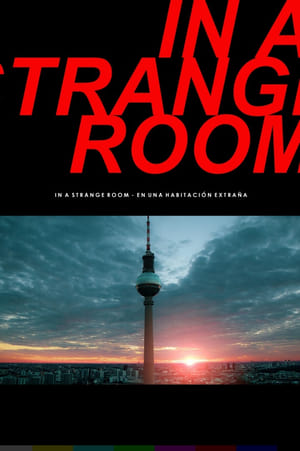
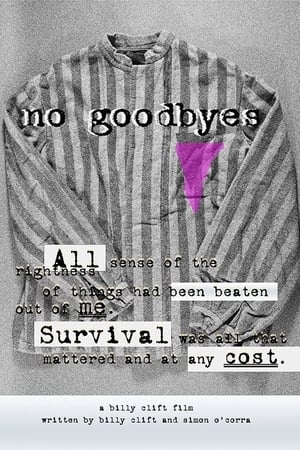
The life story of Charlotte von Mahlsdorf, who survived the Nazi reign as a trans woman and helped start the German gay liberation movement. Documentary with some dramatized scenes. Two actors play the young and middle aged Charlotte and she plays herself in the later years.
Violeta leads a normal life in a well-off family, with loving parents, surrounded by everything the heart of an eleven-year-old girl might wish for. But she hasn’t always been the pretty girl she is today; she was born a boy. At age 6, she baffled her parents (the famous adult movie stars Nacho Vidal and Franceska Jaimes) when she told them she wanted to be called and dress as a girl. After the initial shock, they decided to give her all their support on the long and tough road that will lead to her becoming a woman someday. Violeta faces many challenges, medical (such as deciding whether or not to take hormone-blockers to stop the development of masculine features as soon as puberty kicks in) and legal (obtaining an ID card with her new name and gender). Later, she may consider getting a sex reassignment procedure, or the possibility of becoming a mother through adoption.
Películas is the name of a poetry book by Luís Miguel Nava, a homosexual poet, born in Viseu, who died in Brussels and whose magnificent poetic work remains widely unknown. Drawn from the filmmaker’s family super8 film archive, and excerpts from the film Un chant d'amour, by Jean Genet, the film builds a “body” marked by memories, by various skins, by Nava's films, by his poems and by its landscapes.
2015 was a momentous year for novelist Marlon James. He became the first Jamaican writer to win the Man Booker prize for his magisterial novel A Brief History of Seven Killings, about the events surrounding the attempted assassination of Bob Marley and their aftermath. He also chose to come out as gay in an article for the New York Times - a brave move for a man born in what has been called the world's most homophobic country. Alan Yentob accompanies the charismatic and provocative James back to Jamaica and finds in his three highly praised novels a complex portrait of the turbulent history of his native country.
It is late 2004, and 34-year-old Englishman Alistair Appleton is about to fly from London to the Brazilian coast, where he will drink ayahuasca for the first time. With wit, insight, and sensitivity, Alistair shares this experience with us, and chats with some fellow participants before and after the ayahuasca ceremonies. For the past few years, Alistair had been working as a television presenter. In 2000, he started making trips to the Centre for World Peace and Health in Scotland to learn how to meditate. When clinical psychologist Silvia Polivoy opened an ayahuasca healing center in Bahia in 2004, Alistair faced his fears and seized the opportunity to attend.
A behind-the-scenes look inside the case to overturn California's ban on same-sex marriage. Shot over five years, the film follows the unlikely team that took the first federal marriage equality lawsuit to the U.S. Supreme Court.
Desperate, broken men chase their dreams and run from their demons in the North Dakota oil fields. A local Pastor's decision to help them has extraordinary and unexpected consequences.
This short film reveals the inspiration, motivation and political challenges at San Francisco City Hall during the frantic days leading up to the first government-sanctioned same-sex marriage.
Spotlighting the art of drag, and centered on the New York staple Wigstock, this documentary showcases the personalities and performances that inform the ways we understand queerness, art and identity today.
In southern Carinthia, about ninety percent of all inhabitants spoke Slovenian before 1910. Today it is on average a single digit percentage. In this very personal essay documentary, Andrina Mračnikar formulates a political urgency: What happens when one's mother tongue is taken away in everyday life. What must politicians do to counteract the disappearance of a language whose protection is enshrined in the Austrian constitution.
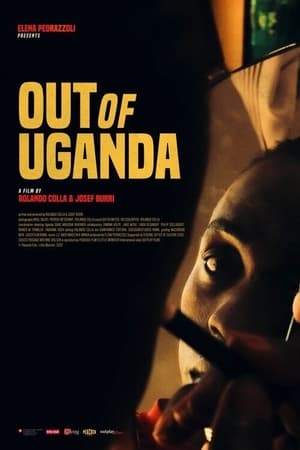
Equatorial Guinea became independent 51 years ago from Spain. This African country lives under one of the longest-lived dictatorships in the world, Teodoro Obiang, a military man trained in Zaragoza. His regime strongly represses all freedoms, including sexual ones. Franco Spanish laws are still in force in the country, such as the «public scandal». It is not possible to protest on the street and the only LGTB organization in the country has not been able to legalize itself. In addition, the country’s Parliament is studying hardening the current penal code. To denounce the situation, the group «We are part of the world» has collected the voices of the community in a documentary that pays tribute to Fidel Lemoy, one of its best-known faces, who disappeared last year.
Bernhard, an actress-comedienne whose brassy humor attracts a cult-like following, here offers a semiconfessional view of her life's landscape. Childhood memories of her father, a doctor, and her mother, an artist, are warmly rendered in scenes of the Jewish family amiably accommodating itself to the Christmas season, and of the obligatory communal vacations joined by colorful relatives. The abrupt transition to a flamboyant denizen of "downtowns," Los Angeles or New York, to an existence as a character in the lives of marginal people, is evoked in sharply satirical terms, in a melange of humorous fact and fiction, monologues akin to those that make Bernhard an icon of pop culture.
This is a documentary produced by Richard Freeman. This part contains the now famous 1992 protest in which the Henry Administration Building was taken over by students. University Police, Champaign Police and Urbana Police are called in to remove students. Led by Latino/a students due to growing issues facing their community on the Illinois campus.
A rare look inside Cuba’s LGBT community, this compelling film follows the efforts of Mariela Castro, daughter of President Raúl Castro, as she champions LGBT social reforms and acceptance of diversity.
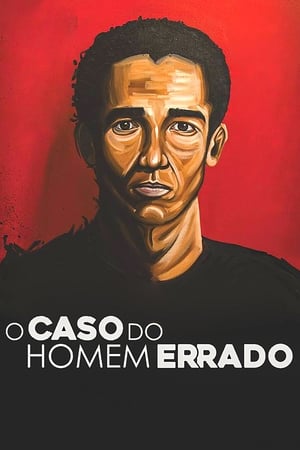
The story puts İlhan Çomak at the center, even though he is not physically present in the film. It focuses on the 21 years that İlhan spent in prison and his family’s experience of those years without him. The narrative is constructed through the letters İlhan wrote and aims to describe his life, his emotions and longings. The film constructs İlhan’s history through a chronology in the prison but refrains from restricting it only to a “prisoner’s quest for justice”, and rather tells a story of the situations he finds himself in over the years and his emotions and their equivalents in life.
Fred Martinez was a Navajo youth slain at the age of 16 by a man who bragged to his friends that he 'bug-smashed a fag'. But Fred was part of an honored Navajo tradition - the 'nadleeh', or 'two-spirit', who possesses a balance of masculine and feminine traits.
A journey into the interior of garbage, contemplated as a phenomenon of the human spirit, and not only as a product of human action. This essay-documentary, inspired by modern chaos theory, transits between the reality of statements and the surrealism of poetic images, seeking to integrate the conscious and unconscious life of the human mind. Apparently simple phenomena hide very complex behaviors. Maybe garbage is all that we don't want to see
Follow the emotional journey of Hiba Noor, a talented artist forced to flee her home country, as she navigates a new life in London while awaiting her asylum fate. This film takes you on a journey into the production of MATAR, a short film about a fellow asylum seeker facing similar problems.
This documentary portrays the way in which attacks against a twisted concept of “gender ideology” in four countries are being used to gain political power by right-wing conservative politicians supported by conservatives in the Catholic and evangelical churches.
A documentary about the atrocities committed against the Hmong people by the Laos government. Shot by Hmong people with cameras provided to them in 2006, this film provides a unique look into one of the worst, and silent, human rights tragedies of the 21st century.