We follow Dusk & Dawn, two exes who rekindle their love on the night of their high school graduation. As they navigate the night with their friends, they get pulled into a love triangle that leaves Dawn desperate to decide: stay home and give this another shot, or move away for good and start university.
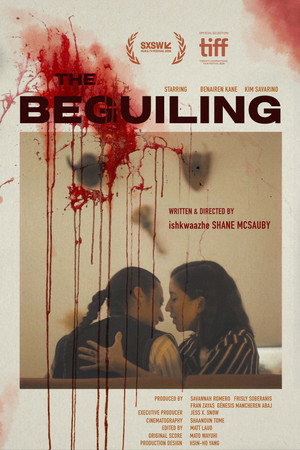
Still working through the grief of losing her only child, Thelma, a young Blackfeet woman in Browning, MT, is taken advantage of by friends who use her as de facto child care while they continue to live the freewheeling lifestyles they had before becoming parents.
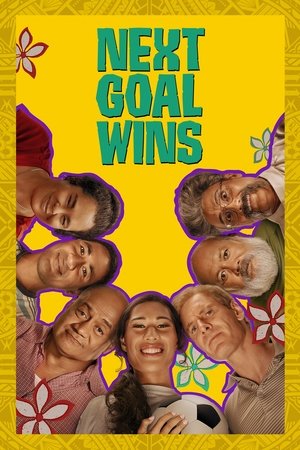
Dutch coach Thomas Rongen attempts the nearly impossible task of turning the American Samoa soccer team from perennial losers into winners.
An Indigenous teenage boy fights through distorting realities as a family secret unravels.
This film explores the traditional crafts of Native American tribes, specifically the Hopi, Navajo, and Iroquois. It highlights the craftsmanship of Hopi basket weaving and pottery, showcasing their techniques and cultural significance. The Navajo's weaving of wool blankets and rugs, as well as their silver jewelry making process, is also detailed. Additionally, the film discusses the Iroquois tradition of carving ceremonial masks from basswood trees. Each craft reflects the unique heritage and artistic expressions of these tribes.
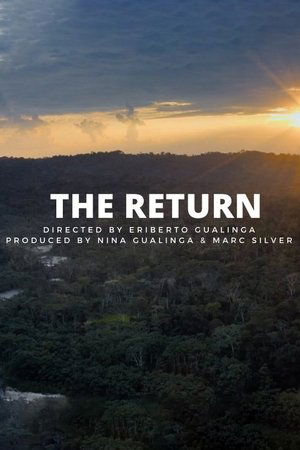
The Shipibo-Konibo people of Peruvian Amazon decorate their pottery, jewelry, textiles, and body art with complex geometric patterns called kené. These patterns also have corresponding songs, called icaros, which are integral to the Shipibo way of life. This documentary explores these unique art forms, and one Shipibo family's efforts to safeguard the tradition.
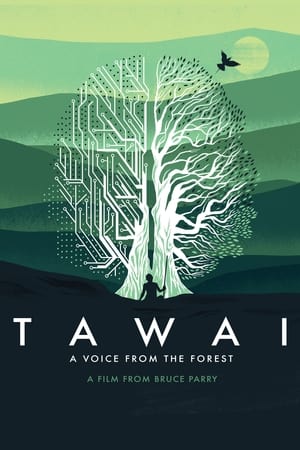
Explorer Bruce Parry visits nomadic tribes in Borneo and the Amazon in hope to better understand humanity's changing relationship with the world around us.
Indigenous chief Juma Xipaia fights to protect tribal lands despite assassination attempts. Her struggle intensifies after learning she's pregnant, while her husband, Special Forces ranger Hugo Loss, stands by her side.
In an isolated community, a young indigenous woman fights for her freedom after enduring sexual assaults. Confronted with a life-altering decision, she stands at a crossroads between resisting or forging a path away from the shackles of violence.
A searing examination of the contamination that sparked an international catastrophe and the decades’ long battle with some of the world’s largest chemical companies for justice and compensation.
Barry Barclay was a New Zealand/Aotearoa director of documentaries and feature films. He is regarded as one of the world's first, and very influential, Indigenous film makers. The film The Camera on The Shore is a feature length introduction to Barry, and to his film making.
When a rare Lakota Ghost Shirt falls into the black market in a small town in South Dakota, the lives of local outsiders and outcasts violently intertwine.
An undercover documentary film produced and directed by British filmmaker Dominic Brown, about the struggle of the indigenous Sahrawi people of Western Sahara. The documentary covers the current human rights and political situation of the Sahrawi. There are several interviews recorded with human rights victims including an elderly lady who had been attacked in her home the previous day by Moroccan security forces. There is also a focus given to the alleged vested interests of countries in the region, particularly France. The film states that the French Government's close relationship with Morocco, their trade deals and their use of veto over the terms of the UN mission in Western Sahara are major factors.
A group of people bows down as a ritual for religious ceremonies. This community shares a belief named Sapta Drama, one of the native religions in Indonesia that uses bowing down as a worshiping medium.
Alifu, a 25 year-old Paiwan boy, works as a hair-dresser in Taipei and struggles between his dream of getting a sex change operation and following his father’s footsteps to inherit the title as Chief of the indigenous Paiwan tribe. His lesbian roommate, Pei-Zhen, is also his best friend and confidante. Sherry, a transgender man, is the owner of a drag queen bar. For years, Sherry has been in love with the plumber, Wu, even though Wu only sees him as his buddy. Chris, a civil servant, lives a dull life. A one-time gig as a drag queen in the bar unexpectedly becomes his unique and secret way to relief stress. Chris has no choice but to keep this gig a secret from his girlfriend Angie. Across different genders and sexualities, the only common ground these people share is their search for love, understanding and acceptance. (Source: Golden Village)
The people of Unamenshipu (La Romaine), an Innu community in the Côte-Nord region of Quebec, are seen but not heard in this richly detailed documentary about the rituals surrounding an Innu caribou hunt. Released in 1960, it’s one of 13 titles in Au Pays de Neufve-France, a series of poetic documentary shorts about life along the St. Lawrence River. Off-camera narration, written by Pierre Perrault, frames the Innu participants through an ethnographic lens. Co-directed by René Bonnière and Perrault, a founding figure of Quebec’s direct cinema movement.
When a massive Chinese factory complex attempts a high-stakes expansion in rural Ethiopia, three women in search of prosperity have their faith in industrialization tested to the limit. Filmed over four years with singular access, Made in Ethiopia lifts the curtain on China’s historic but misunderstood impact on Africa, and explores contemporary Ethiopia at a moment of profound crisis. The film was awarded the Jury Special Mention at Tribeca Festival.
A poor Afghani leaves his family behind to earn a living as a dried fruit vendor in India. Profoundly homesick, he befriends a young girl who reminds him of his own daughter. Meanwhile, the locals are distrustful of all foreigners.
Funeral Bororo
First Nations fight to end grizzly bear trophy hunting in the Great Bear Rainforest in British Columbia. The Heiltsuk, Kitasoo Xai'xais and Gitga'at First Nations enforce a ban by using Coastal Guardian Watchmen, while the Raincoast Conservation Foundation purchases trophy hunting licenses in the area to prevent a hunt from taking place. The film offers unique access to Canada's First Nations and a breathtaking view of the majestic animals inhabiting the Great Bear Rainforest, including the elusive Spirit Bear.