A contemplative, seemingly timeless record of the years Hutton spent in Southeast Asia while working as a merchant seaman. Jon Jost writes, "The film is rich with truly wonderful visions: a thick, white porcelain cup perched on a ship's rail, the tea within swaying gently in sync with the ship while the sea rushes by beyond the faces of crewmen posing awkwardly but also movingly for the camera; a cockfight on ship; scenes from a bucolic pre–Pol Pot Phnom Penh. Images has the haunting elegiac resonance of Eugène Atget's Paris, the echo of a time and place that was." - MoMA
"…elegant yet rustic in its simplicity of execution; tugged gently toward different sides of the set by hints of color and motion interactions, positive and negative spaces, etc., and the unyielding delivery on one of the great apotheoses of poetic cinema at fade-out time." – Tony Conrad
Controversial cinéma vérité analysis of Havana’s lumpenproletariat in waterfront bars and cafés shortly after the failed Bay of Pigs invasion.
A 16 year old girl recalls the last moments of her summer vacation, spent with friends in the Laurentians north of Montreal. She reminisces about their talks on life, death, love, and God. Shot in direct cinema style, working from a script that left room for the teenagers to improvise and express their own thoughts, the film sought to capture the immediacy of the youths presence their bodies, their language, their environment.
The best known, "Weegee's New York" (1948), presents a surprisingly lyrical view of the city without a hint of crime or murder. Already this film gives evidence, here very restrained, of Weegee's interest in technical tricks: blur, speeded up or slowed-down film, a lens that makes the city's streets curve as if cars are driving over a rainbow. - The New York Times
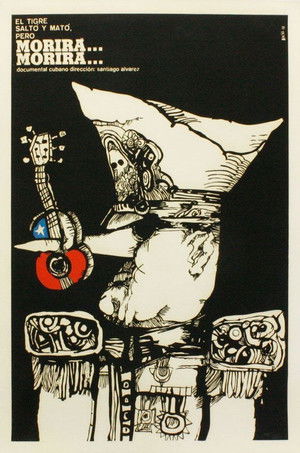
An obituary for Victor Jara, the Chilean folksinger who was murdered in a football stadium by the military junta during the days of the September 1973 coup.
Florence is a contemplative study of light and shadows, textures and planes, that makes beautiful use of the tonal qualities of black and white film. (mubi.com)
Peter Greenaway remembers his first meeting with Rotterdam Film Festival director Hubert Bals.
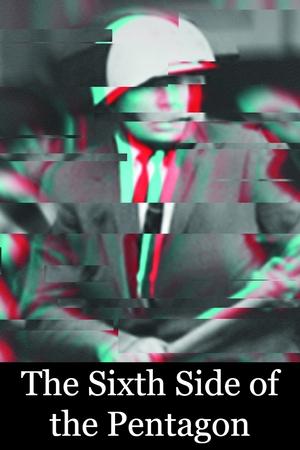
Chris Marker and François Reichenbach document the massive anti–Vietnam War protest held in Washington, D.C., on October 21, 1967, where more than 100,000 demonstrators gathered at the Lincoln Memorial before marching on the Pentagon. Filmed amid the crowd, the short captures the tension, idealism, and growing radicalism of the American peace movement.
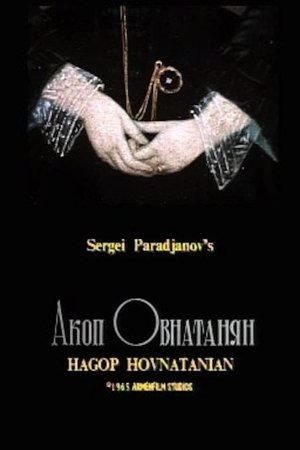
Exploring the art of Armenian portraitist Hakob Hovnatanyan, Parajanov revives the culture of Tbilisi of the 19th century.
Actor/cult icon Bruce Campbell examines the world of fan conventions and what makes a fan into a fanatic.
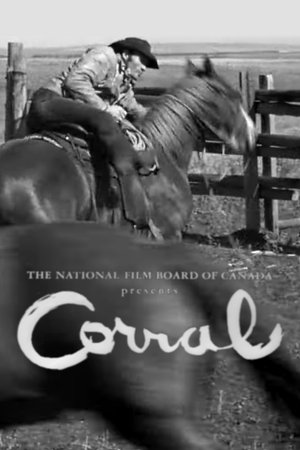
Corral is a 1954 National Film Board of Canada documentary by Colin Low, partly shot in the Cochrane Ranch in what is now Cochrane, Alberta. In the film, a cowboy rounds up wild horses, lassoing one of the high-spirited animals in the corral, then going on a ride across the Rocky Mountain Foothills of Alberta.
In 1967, de Andrade was invited by the Italian company Olivetti to produce a documentary on the new Brazilian capital city of Brasília. Constructed during the latter half of the 1950s and founded in 1960, the city was part of an effort to populate Brazil’s vast interior region and was to be the embodiment of democratic urban planning, free from the class divisions and inequalities that characterize so many metropolises. Unsurprisingly, Brasília, Contradições de uma Cidade Nova (Brasília, Contradictions of a New City, 1968) revealed Brasília to be utopic only for the wealthy, replicating the same social problems present in every Brazilian city. (Senses of Cinema)
A day and night in the life of three alcoholic derelicts: "and the meek shall inherit the earth - six feet of it".
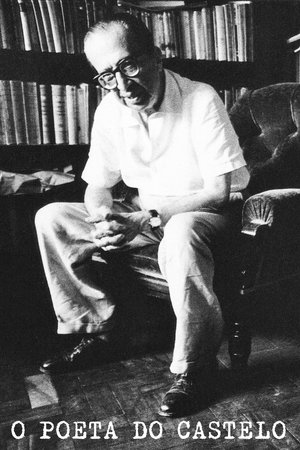
A 10-minute portrait of modernist poet and de Andrade’s godfather, Manuel Bandeira, is clear in its affection for it subject, though like many New-Waveish films of the time, depicts the modern urban landscape as an ominous and alienating force.
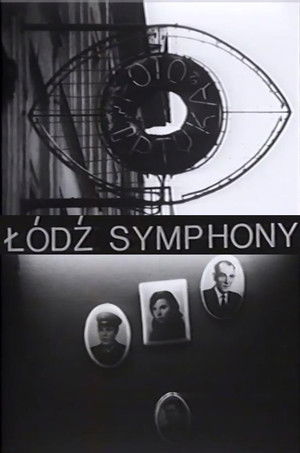
A portrait of Łódź, Poland that exists in a time-warp of sad memory.
Peter Hutton’s essay on the naturalization of the urban landscape. Voluptuously gray, worn and lived in, the city is like a stage set for an invisible drama.
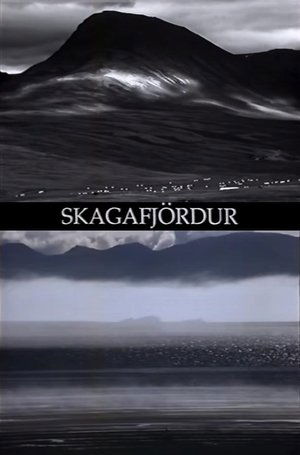
A film documenting the landscapes of northern Iceland.
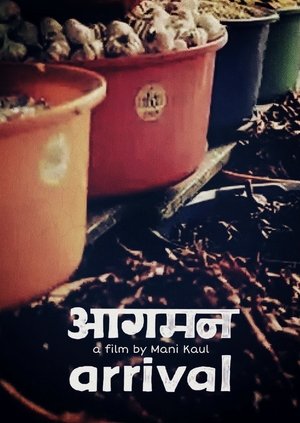
To the city come men, women, fruits, flowers, vegetables, goats and sheep – all ready for consumption. It is the process of consumption/exploitation that forms the core of the film.
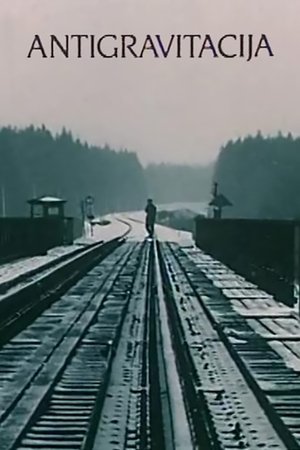
An isolated village in the Lithuanian countryside. Seated in her house, an elderly woman recites an old folk story. Then she climbs up the tall ladder that takes her to the rooftop of the church.