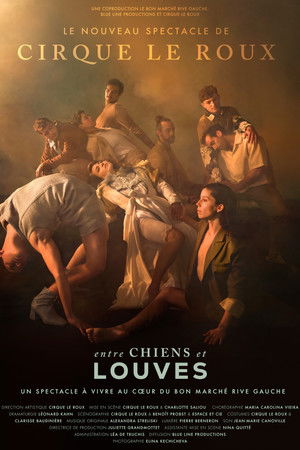
An examination of bodies, movement and the stillness of landscape brought to you by the entrancing Circus Debre Berhan.
Zarkana is a Cirque du Soleil stage production written and directed by François Girard. It began as a touring show in 2011 and was converted to a permanent show in Las Vegas in late 2012. It premiered at Radio City Music Hall in New York City on June 29, 2011 and later toured to the State Kremlin Palace in Moscow and the Madrid Arena in Madrid. Following Zarkana's successful run in Moscow, it was announced that the show would start residency at the Aria Resort and Casino in Las Vegas. The show replaced the Cirque du Soleil resident production Viva Elvis, which closed in August 2012 at the Aria Resort. Zarkana by Cirque du Soleil is about a spirited journey through an abandoned theater where an extraordinary circus comes back to life. Populated by a motley collection of off-the-wall characters and incomparable acrobats, Zarkana is a visual vortex set in a twisted acrobatic fantasy universe where, little by little, chaos and craziness give way to a true celebration.
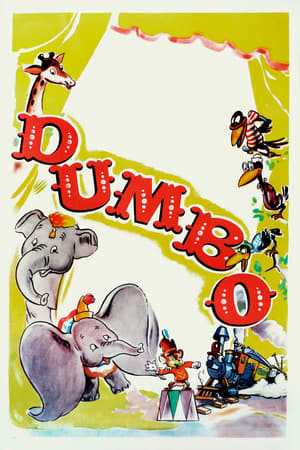
Dumbo is a baby elephant born with over-sized ears and a supreme lack of confidence. But thanks to his even more diminutive buddy Timothy the Mouse, the pint-sized pachyderm learns to surmount all obstacles.
Come in under the Big Top for a behind-the-scenes look at the making of Cirque du Soleil's ninth creation, which critics have described as "the most dramatic, the most esthetic and perhaps the most melancholy show in the history of this marvelous circus" (La Presse, Montreal). Full Circle shows you the making of Quidam, from its very beginnings to its triumphant finish.
Recently orphaned, a young boy is taken in by his godmother who is shocked to realize that she can see the boy's imaginary friend: a flamboyant, French magician named Bogus.
In a futuristic world that has embraced ape slavery, a chimpanzee named Caesar resurfaces after almost twenty years of hiding from the authorities, and prepares for a revolt against humanity.
"Don't pity me, just give me money." A smart little girl, Suzu, for the sake of her beloved sick mother, has no choice but to attempt all ways to fork up the money required for the operation. It includes stealing, cheating and almost anything that could yield cash. However, deep within her is a sadness unseen by many.
"Katharina Knie" is a 1929 German silent drama film directed by Karl Grune and starring Eugen Klöpfer, Carmen Boni and Adele Sandrock. It is based on the 1928 play of the same title by Carl Zuckmayer.
At a three-ring circus, 'Spangles' Delancy, a beautiful bareback horse rider, falls in love with a wanted man, Dick Radley, who uses the circus as a hideout. The show's owner Big Bill Bowman also falls in love with Spangles-- But only one man can have her.
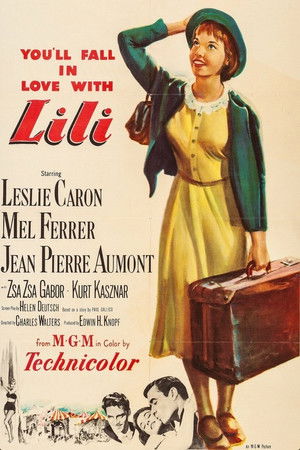
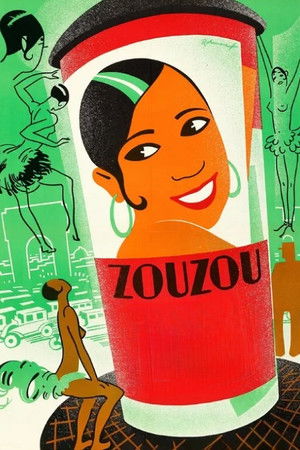
It's night on a Paris bridge. A girl leans over Seine River with tears in her eyes and a violent yearning to drown her sorrows. Out of nowhere someone takes an interest in her. He is Gabor, a knife thrower who needs a human target for his show. The girl, Adele, has never been lucky and nowhere else to go. So she follows him. They travel along the northern bank of the Mediterranean to perform.
The feature-length documentary Fakir portrays the success of fakirism in Brazil, Latin America and France. This circus art origin show is presented and analyzed through archives that reveals the success of these presentations with their pain resistance championships and the great public presence, including politicians and government officials. Fakir spans current footage from contemporary artists who keep this art alive in performances and shows.
After a carnival troupe saves his life, a man agrees to help its immortal leader collect five souls and win a bet with the devil.
Cirque du Soleil presents VOLTA – an inspiring story about the freedom to choose and the thrill of blazing your own trail.
A small circus has announced they are selling due to low concurrence now Jorge a clown that growed in the circus will fight so his home isn't closed down.
One out of three silent adaptations of the novella "Les quatre diables" written by Danish author Herman Bang. The most famous one, although unfortunately lost, is without any doubt F.W. Murnau's "4 Devils". This German version, by Danish director A.W. Sandberg, was done eight years prior to Murnau's American one, and was a big success at the time.
Mary Miles Minter is the title character. Pat (Minter) is a little orphan who has been raised around the circus. Her foster father is Toto the clown (Neely Edwards). Toto hopes to marry Pat until the day the circus comes to a Southern town and she meets handsome Dick Beverley (Jack Mulhall). Beverley falls in love with Pat and takes a job as trick rider just to be near her. Beverley's aristocratic parents (Winter Hall and Helen Dunbar) find out about his new job and insist that he come home. Two of the five reels survive.
Throughout his life Edward Bloom has always been a man of big appetites, enormous passions and tall tales. In his later years, he remains a huge mystery to his son, William. Now, to get to know the real man, Will begins piecing together a true picture of his father from flashbacks of his amazing adventures.
Two angels, Damiel and Cassiel, glide through the streets of Berlin, observing the bustling population, providing invisible rays of hope to the distressed but never interacting with them. When Damiel falls in love with lonely trapeze artist Marion, the angel longs to experience life in the physical world, and finds — with some words of wisdom from actor Peter Falk — that it might be possible for him to take human form.
Vienna’s Prater is an amusement park and a desire machine. No mechanical invention, no novel idea or sensational innovation could escape incorporation into the Prater. The diverse story-telling in Ulrike Ottinger’s film “Prater” transforms this place of sensations into a modern cinema of attractions. The Prater’s history from the beginning to the present is told by its protagonists and those who have documented it, including contemporary cinematic images of the Prater, interviews with carnies, commentary by Austrians and visitors from abroad, film quotes, and photographic and written documentary materials. The meaning of the Prater, its status as a place of technological innovation, and its role as a cultural medium are reflected in texts by Elfriede Jelinek, Josef von Sternberg, Erich Kästner and Elias Canetti, as well as in music devoted to this amusement venue throughout the course of its history.
On his deathbed, Ludovico entrusts his daughter Margot to the housekeeper, Felicia, asking that the family villa be transformed into an orphanage so that the little girl can grow up in joy with other children. But the wicked Felicia only wants the little girl's assets and not take care of her. With the complicity of her suitor, Max, she exploits the orphaned children and keeps Margot segregated and neglected to the point that the child withdraws into herself and no longer speaks. One night, however, Margot manages to escape and, after overcoming the darkness of the woods, she comes across a circus.