An old inventor is robbed of his inventions by an unscrupulous rich man. When the inventor dies, his daughter Violet goes to New York and joins the "Follies," where she is advertised as "The Belle of New York." The rich man's son is infatuated with Violet, and is introduced to her anonymously as Jack. When Violet learns of Jack's identity, she casts him off. He takes to drinking and she joins the Salvation Army. Jack is attacked in an underworld saloon just as Violet enters in Salvation Army attire. She nurses him at his home. When Jack's father discovers with whom Jack is in love, he begs forgiveness for the wrong he did Violet's father.
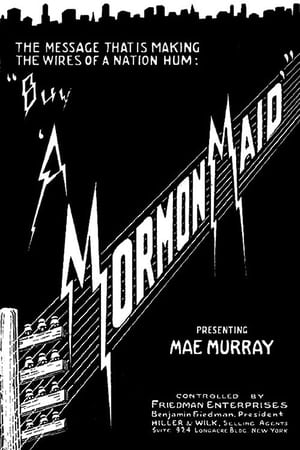
This silent melodrama is set against the 1840s westward migration of the Mormons. Dora, a young woman, and her family are saved from an Indian attack by a Mormon community traveling to Utah. They join the wagon train. Dora is pursued by two men, one a recent convert, the other a scheming elder with a stable of wives. The Mormon elder wants her in his harem. When the mother kills herself from revulsion toward polygamy, the daughter must consider her own future and the man she loves. One of Mae Murray's few surviving films, this was intended by Robert Leonard to be a thoughtful drama about the goods and evils of Mormonism, but today it is generally considered pure anti-Mormon propaganda.
During the Russian Revolution Princess Vera, though betrothed to Prince Dimitri, is attracted to the peasant Feodor.
Walking along with his bulldog, Charlie finds a "good luck" horseshoe just as he passes a training camp advertising for a boxing partner "who can take a beating." After watching others lose, Charlie puts the horseshoe in his glove and wins. The trainer prepares Charlie to fight the world champion. A gambler wants Charlie to throw the fight. He and the trainer's daughter fall in love.
The Force That Through The Green Fire Fuels The Flower, a contemporary silent film follows a man through a journey of memories in the course of one night. During one drunken night at a bar, vivid flashbacks of his life come back to him making him realize that memories may appear in unexpected forms.
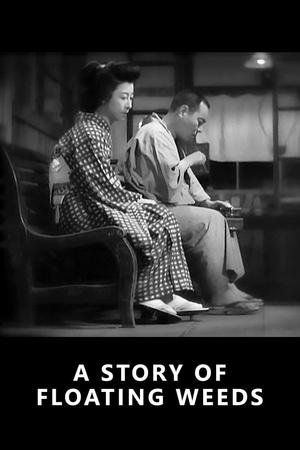
An aging actor returns to a small town with his troupe and reunites with his former lover and illegitimate son, a scenario that enrages his current mistress and results in heartbreak for all.
Alice tries to make two rival newsboys friends by telling them a story of a cat and a mouse whose constant battlings lead to being hunted by the police, when they learned to cooperate.
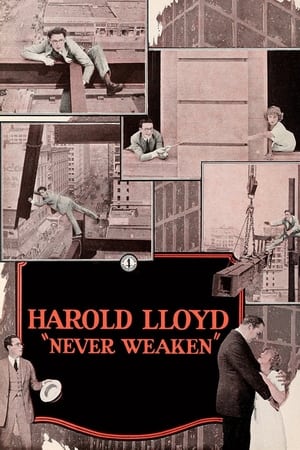
A young man schemes to drum up business for his girlfriend's employer but after seeing her being intimate with another man, he attempts to commit suicide.
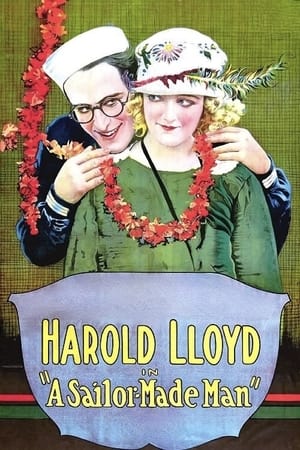
An idle, wealthy playboy foolishly joins the Navy when the father of the girl he wants to marry tells him to get a job to prove himself worthy.
While at an amusement park, trying vainly to forget the girl he has lost, a young man sees the girl with her new boyfriend. When her dog gets loose in the park, both suitors have to help her catch it. Then, the girl's uncle, a balloonist, gives her a pass for two in his balloon, provided that her mother approves. She then offers to take along the first of her admirers who is able to get her mother's consent.
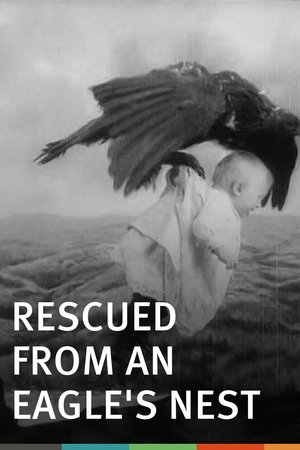
A woodsman leaves a hut followed by a woman with their baby. Nearby some men chop down a tree. The baby is left outside the hut, but an eagle flies away with it.
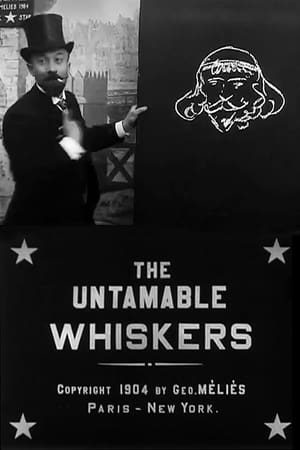
The background of this picture represents a scene along the beautiful river Seine in Paris. A gentleman enters, and taking a blackboard from the side of the picture, he draws on it a sketch of a novelist. Then, standing in the centre, he causes the living features of his sketch to appear in the place of his own, which is utterly devoid of whiskers. The change is made so mysteriously that the eye cannot notice it until one sees quite another person in the place of the first. Again another sketch is shown on the board, this one being that of a miser; then an English cockney; a comic character; a French policeman, and last of all, the grinning visage of Mephistopheles. It is almost impossible to give this film a more definite description; suffice it to say that it is something entirely new in motion pictures and is sure to please. (Méliès Catalog)
A sarcastic horror parody of comic book series from the 1930s.
Filmic insert to Eisenstein's modernized, free adaptation of Ostrovskiy's 19th-century Russian stage play, "The Wise Man" ("Na vsyakogo mudretsa dovolno prostoty"). The anti-hero Glumov tries to escape exposure in the midst of acrobatics, derring-do, and farcical clowning. Several members of Eisenstein's troupe at the legendary "Proletkult" stage theatre in Moscow briefly appear in this little film.
An orphan endures a harsh life in a workhouse before fleeing to London, where he falls in with a gang of juvenile pickpockets led by the criminal Fagin, and eventually finds a better life, exposing the cruelties of poverty and child labor in Victorian England.
Papa Gimplewart, father to three children is unimpressed by the young lawyer who wants to marry his daughter.
A European immigrant endures a challenging voyage only to get into trouble as soon as he arrives in New York.
The Poor Nut
The last of the impetuous Varicks, Lady Helen Haden is married to Sir Bruce Haden, a brute who treats her shamefully. She falls in love with Ned Thayer, a young American, but refuses to divorce her husband because of the attendant scandal and disgrace. Sir Bruce gains possession of a love letter written to Ned by Lady Helen and divorces her. Ned goes to Africa, and Lady Helen comes to the United States, where she encounters Rudolph Solomon, an art collector who wants her to become his mistress. The noblewoman at first refuses, but when her money runs out, she agrees to the proposal and attends a party at his home. Ned, who has learned of the divorce, comes looking for Helen and meets her at Solomon's party. Lady Helen is so humiliated and ashamed that she rushes from the house and throws herself in front of an automobile.
After graduating from a fashionable finishing school and touring Europe with her father, Selina Peake returns to the United States, where her father is accidentally killed after losing his fortune in a gambling den. Selina is reduced to teaching in a high school in the Dutch community at High Prarie near Chicago. She boards in the farmhouse of Klass Poole, a dull-witted market gardener, and finally marries Pervus DeJong, a poor and backward farmer. She shares the drudgery of her husband's futile life and finds happiness only in their small son, Dirk, whom she calls "So-Big."