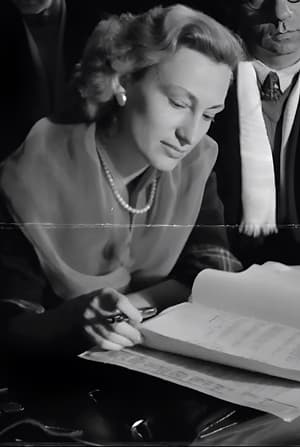
Les trente courageuses de La Réunion, une affaire oubliée
Nose and Tina are a couple in love. The film captures the domestic details of their life together and documents their hassles with work, money and the law. The unusual bit: He is employed as a brakeman, and she as a sex worker.
A two-hour in-depth exploration into the Hollywood musicals of the 1930s.
Using original animation, archival footage and personal interviews, this full-length documentary portrays the multiple relationships Canadian Muslim women entertain with Islam’s place of worship, the mosque. Islam is the fastest growing religion in the world. In North America, a large number of converts are women. Many are drawn to the religion because of its emphasis on social justice and spiritual equality between the sexes. Yet, many mosques force women to pray behind barriers, separate from men, and some do not even permit women to enter the building. Exploring all sides of the issue, the film examines the space – both physical and social – granted to women in mosques across the country.
William Shatner worked tirelessly to turn the Star Trek television franchise into movies, but the journey was not without its perils. In this documentary, Shatner captures the trials and tribulations of the project in refreshingly honest detail. Included are interviews with Gene Roddenberry, Leonard Nimoy, Ricardo Montalban and more, plus discussions on the challenges of hewing to a budget and filming during a writer's strike.
The end of World War II brings Europe a new political system, reshapes national and personal identities. Three women from Milan, Paris and Berlin report on the days of liberation in their diaries. Their personal stories expand the historical picture and make LIBERATION DIARIES a chronicle of female self-empowerment, resistance and resilience.
Keeping Up Appearances remains one of Britain's best loved series. Running for 5 years throughout the 90s, millions of viewers tuned in to watch the delightfully monstrous Hyacinth Bucket (pronounced Bouquet) as she attempted to climb the social ladder, only to be endlessly let down by her family. In this 90-minute celebration we feature the very best and most hilarious moments from the series, and cast, crew and celebrity fans pay tribute to the show and share backstage secrets. Featuring an exclusive interview with Dame Patricia Routledge, who shares her memories of the show, we learn how she came to be cast, how she developed the character, and what happened when the cameras stop rolling.
A Jupatarama
Pauline, Norah, Kristina and others wait for hours, sitting under a hut deep in the Bois de Vincennes. In front of the administrative detention center (CRA) in Paris, they have all come to see their loved ones locked up. Lives on hold, awaiting deportation or release. On this stage, these women tell their stories, talk to each other, share their experience, their revolt and their dreams with new visitors. They are the mirror of migrant detention, its reverse view.
Julia always said that her upbringing as a biological child in a foster family was a happy time. But something is wrong. In The Foster Family, we follow director Julia's journey back in time, where she, together with her parents Ewa and Lennart and the foster child Patrik, recollect the shocking events that changed their lives over thirty years ago. The children are at the center of this strong, touching and warm documentary about a system where you can love, but not too much.
Las Preguntas que Perdimos
Quel numéro ? - What number ? ou le travail automatisé
After four years away, Huiju returns home to South Korea. Exchanges with her loved ones are awkward and clumsy. Huiju turns once again to her familiar rituals: pruning the trees, preparing a sauce, tying a braid.
In her attempt to escape her past, Huiju relocated to the UK over 11 months ago. However, even after moving to a new country, she found that her nightmares from Korea continued to haunt her. Determined to move forward, she made the decision to confront her memories head-on in a very contemporary way, using dating apps to push the boundaries she had set due to her sexual trauma.
A young woman, who has inherited her grandparents' huge house, a fascinating place full of amazing objects, feels overwhelmed by the weight of memories and her new responsibilities. Fortunately, the former inhabitants of the house soon come to her aid. (An account of the life and work of Fernando Fernán Gómez [1921-2007] and his wife Emma Cohen [1946-2016], two singular artists and fundamental figures of contemporary Spanish culture.)
A lo Mejor Algún Día
In this layered short film, filmmaker Janine Windolph takes her young sons fishing with their kokum (grandmother), a residential school survivor who retains a deep knowledge and memory of the land. The act of reconnecting with their homeland is a cultural and familial healing journey for the boys, who are growing up in the city. It’s also a powerful form of resistance for the women.
What we show in Milk is literally the best of the best when it comes to dairy farming, yet, as soon we view what happens from the perspective of the mother cow, it becomes clear that this is an industry that runs on the exploitation and suffering of animals. By using animation, we are able to show a unique perspective and tell the story of the mother cow in a way that cannot be done from investigative footage alone. Milk centres the cow as the protagonist of her own story and allows us to view what is happening to her from an up close and personal perspective. Organic, free-range, high-welfare, humanely raised. It doesn’t matter what label we put on dairy products, all dairy cows are victims of an industry that forcibly impregnates them, takes their babies from them, exploits their bodies and then sends them to a slaughterhouse to cut their throats. It's time to end the dairy industry.
A compilation of interviews, rehearsals and backstage footage of Michael Jackson as he prepared for his series of sold-out shows in London.
With no choice, César faced leaving his family behind, quitting his job and joining the Army. In an unprecedented chain of events he became the first conscientious objector in Galicia (Spain) to be put in prison. Now, nearly thirty years later, Two Years, Four Months, A Day takes a look at what made him do it.