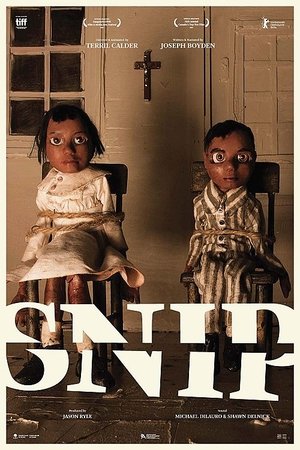
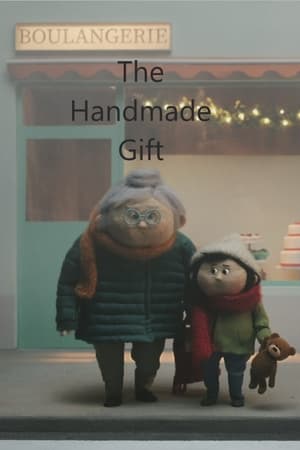
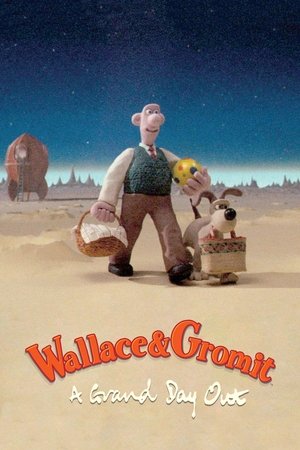
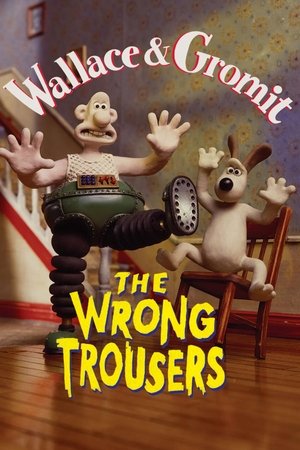
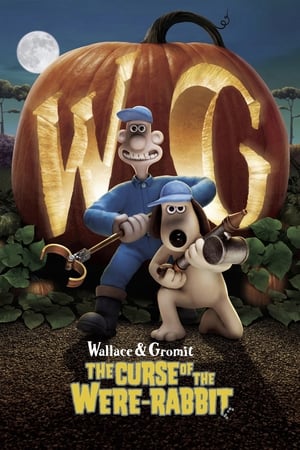
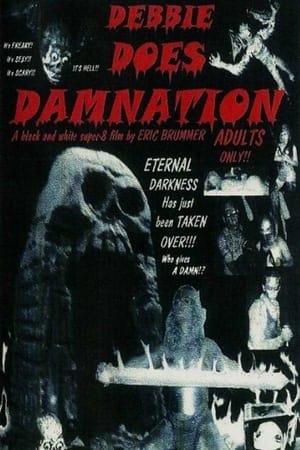
A horror game she plays turns into reality! A thrilling lego movie.
Krazy Kat follows Ignatz Mouse and thinks about family as the latter takes his children out on a walk.
Elephants Dream is the story of two strange characters exploring a capricious and seemingly infinite machine. The elder, Proog, acts as a tour-guide and protector, happily showing off the sights and dangers of the machine to his initially curious but increasingly skeptical protege Emo. As their journey unfolds we discover signs that the machine is not all Proog thinks it is, and his guiding takes on a more desperate aspect. Elephants Dream is a story about communication and fiction, made purposefully open-ended as the world’s first 3D animated “Open movie”. The film itself is released under the Creative Commons license, along with the entirety of the production files used to make it (roughly 7 Gigabytes of data). The software used to make the movie is the free/open source animation suite Blender along with other open source software, thus allowing the movie to be remade, remixed and re-purposed with only a computer and the data on the DVD or download.
The Forest Drum follows a monster looking to make friends with the other animals that live in the forest with him. While the animals are scared of him, the monster finds a drum that he plans to use to bridge the gap between him and the others.
One of the most exciting and memorable stories in the history of the World Trade Towers is that of Philippe Petit, a French man who walked a tightrope between the massive monuments in 1974. Narrated by Oscar nominee Jake Gyllenhaal, this is an animated adaptation of the lyrical Caldecott Award-winning book by Mordecai Gerstein. Directed and animated by Michael Sporn, with music by Michael Bacon (of the Bacon Brothers).
Wasteland is a five-part anthology film that deals with isolation, mental illness, and the subjectivity of reality. Each of the five parts can be watched individually, but when viewed in sequence, each story brings out a more interesting and distinct context to its respective pieces.
Short animated film by Tomoyasu Murata.
In the year 2150, Johnny, a lazy Space Delivery Man, must deliver a package on a planet he does not fully understand.
A man and a woman are involved in the production of an animated film. He animates by day, she makes and repairs the accessories at night. Behind the scenes, a woman is waiting for her entrance.
A deer, disillusioned by the consumerism that defines his life. A lizard, ostracized from society, forever wandering. A chance meeting in the middle of a field. Who will survive? And who will transcend existence? Preserved by the Academy Film Archive in 2009.
As the Earth wrestles with its agonizing birth, the peoples of this barren and desolate world struggle to survive. Driven by animal instinct they compete against the harsh conditions, their giant predators, and warring tribes. When two people from opposing clans fall in love, existing conventions are shattered forever as each tribe struggles for supremacy and Man embarks on his tortuous voyage of civilization.
In a 19th-century European village, a young man about to be married is whisked away to the underworld and wed to a mysterious corpse bride, while his real bride waits bereft in the land of the living.
The plot is the embodiment of everyday belief about the impact of a certain evil force on a person. The action develops in a peasant environment.
A rare spoof. With the success of the 1925 film, The Lost World, it is common that when something is popular and successful, it is bound to be a subject for parodies and cash-in attempts. One of them was The Lost Whirl. This film featured stop-motion animation by Joseph L. Roop, who worked on the original classic, The Lost World.
Bayaya, a young peasant, protected by the spirit of his dead mother, arrives at the castle of the King, where he entertains his three daughters. He soon realizes that the three princesses are nagged by evil spirits. The little peasant manages to rid them of them, fights a duel with a wicked lord who wanted to marry one of the three princesses. He finally wins the heart of the youngest sister while saving the soul of his mother who was in purgatory.
A monumental piece of art bringing the heroes of the ancient Czech myths back to life. The picture consists of seven parts: Cech the Forefather, Bivoj, Libuse, Premysl, Girls War, Horymir, Lucka War.
Adapting Jaroslav Hasek's raucous satirical novel, and also bringing Josef Lada's equally famous illustrations to garrulous puppet life, posed Trnka one of his biggest creative challenges. Trnka himself felt that the final episode was the most artistically successful, but there's much to enjoy in all three, not least the way that the lackadaisical layabout Svejk's own self-serving anecdotes are realized through cut-out animation.
In a lush and lively forest lives a hedgehog. He is at once admired, respected and envied by the other animals. However, Hedgehog’s unwavering devotion to his home annoys and mystifies a quartet of insatiable beasts: a cunning fox, an angry wolf, a gluttonous bear and a muddy boar. Together, the haughty brutes march off towards Hedgehog’s home to see just what is so precious about this “castle, shiny and huge.” What they find amazes them and sparks a tense and prickly standoff.
A young girl buries in her soul a memory of a painful moment, when as a child she brought home an injured bird and her father burdened by his own weight of worries didn’t notice her feelings and longing for understanding. The girl took her father’s reaction as indifference and closed herself in her inner world longing for her father’s love and its manifestations. Since that moment she and her dad continued to grow apart, and as an adult she is no longer able to accept his endearments. The father suffers from guilt and searches for a way back to his daughter, trying to revive their lost relationship.
This mostly lost film is often confused with director Paul Wegener third and readily available interpretation of the legend; Der Golem, wie er in die Welt kam (1920). In this version of the golem legend, the golem, a clay statue brought to life by Rabbi Loew in 16th century Prague to save the Jews from the ongoing brutal persecution by the city's rulers, is found in the rubble of an old synagogue in the 20th century. Brought to life by an antique dealer, the golem is used as a menial servant. Eventually falling in love with the dealer's wife, it goes on a murderous rampage when its love for her goes unanswered.