A group of young people made a bet, according to the terms of which they had to visit a cemetery at midnight.
A doctor kills and embalms a woman in order to preserve her beauty.
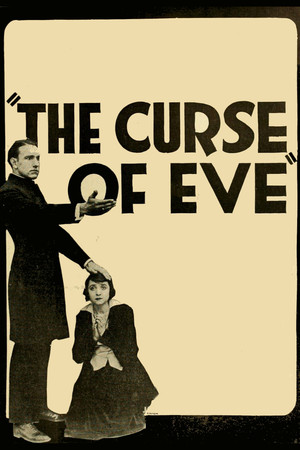
A young man discovers the reason his new bride killed herself.
This first co-production between the GDR and Great Britain is intended to contribute to an understanding of the situation and attitudes of millions of working people in opposing social orders. Using the example of shipyard workers, fishermen, the brigade and family of a trade union active cook and unemployed person of various ages and professions in Newcastle on the one hand and a brigade of crane operators of the Warnowwerft and fishermen of the Warnemünde cooperative on the other hand, insights into the way of life and attitudes of people of our time are to be conveyed.
Goodnatured J. P. Fippany loses his home and takes to the road on a chicken-wagon with his wife and daughter. The wagon is wrecked in an automobile collision involving Jimmy Pickett, who falls in love with daughter Aida, and through a misunderstanding involving Marseillaise, Fippany's racehorse, his wife Josephine and Aida go to live with relatives. The disconsolate Fippany sells Marseillaise to Jimmy's father, sends the money to his wife, then disappears. Meanwhile, Jimmy finds Aida and convinces her of his love. Marseillaise, badly driven in a race, loses a heat, but Fippany emerges and rides her to victory, following which there is a reconciliation between husband and wife.
This silent film from 1948 "The Creation of Life" briefly demonstrates how a fetus forms and graphically shows different types of births. It was made by Sherwood Picture Corp., and may have been sold both to schools and professional organizations for medical education, and to the public for shock value. (Several similar birth films were sold in this era through home catalogs and photography shops.) Summary: By means of diagrams, conceptions and pregnancy are explained. Views of various methods of delivery are shown. Created by: T. Marc Sherwood
An animated film about the history and use of hot water.
A high-society woman, Glenna Marsh (Dorothy Revier), is arrested for the murder of gigolo-gambler Cole Norwood (Norman Trevor), but his honest casino partner Peter Dane (Tom Moore) proves her innocence.
Blinded in a train accident James Driscoll (Holmes Herbert), whose wife, Miriam Driscoll (Belle Bennett), has been having an affair with his young male secretary Phillip Kingston )Carroll Nye), regains his eyesight. He keeps this from his wife, who continues her affair. Finally, he invites his young niece Nancy Driscoll (Josephine Borio) in the hopes she will fall for Philip and vice-versa. His ploy works, James reveals he can see again, and husband and wife are reconciled.
In a banana republic, way south of the Texas border, a dumb-Dora American girl, Norma (Olive Borden), lets her ruby-red lips promise more than she is willing to deliver, and she finds herself a prisoner in a notorious dance-hall/brothel. But her American aviator boyfriend, Barry Blake (John Boles), is flying to her rescue. He does just that but, alas, they are quickly captured by a gang of outlaws. Possibly the many expensive pieces of jewelry she has gathered from the many male friends she has made along the way, including El Presidente, captured the outlaws' attention.
Daisy Smith (Marceline Day), a floater and non-desirable citizen in most societies, seeks refuge on a tropical island in the South Seas. She meets Jim Curtis (Don Alvarado), another society-outcast and a piece of human driftwood, and a romance takes place that regenerates both and they sail back to the United States determined to start life anew.
A virtuous lawyer falls for a beautiful but extravagant woman, leading him into financial trouble as he tries to keep up with her wasteful spending, ultimately testing their relationship and his principles.
First Pa said Theodore was a lizzy-nizzy. He let that go, but when Pa said he was too sporty because he spent a nickel for a ticket for a voting contest for the fairest girl in town, Pa's daughter, of course, then Theodore decided to settle Pa. He played at being a lady. Then Pa said he might not be as young as he used to be, but Ma came along. So Pa said all on the sly, "Go to it, Theodore."
The story centers on a sordid love triangle involving a woman and two men. Their personal tensions and romantic complications reach a breaking point just as the local infrastructure fails. The climax of the film occurs when a massive dam bursts, unleashing a catastrophic flood. This disaster serves as the ultimate resolution for the characters' interpersonal struggles, forcing a conclusion to their conflicting relationships through the life-and-death stakes of the inundation.
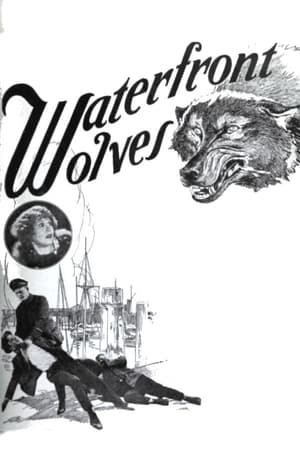
Captain Angus Swope (Noab Beery), known as The Black Yankee, skipper of the Golden Bough, treats his crew shamefully and he treats women no better, as evidenced by his handling of a woman he has abducted, together with her baby daughter, Mary (Sally Blaine), from seaman Newman (Willard Robertson). When the woman dies as a result of his cruelty, he brings up Mary as his own daughter.
Two married couples, Doris (Helen Chadwick) and John Manning (Gayne Whitman) and Clara (Dorothy Revier) and Herbert Bradley (Ray Ripley), each separate as a result of domestic arguments. After certain misunderstandings and false accusations, peace is returned on the home front.
When her father goes broke in the stock market, Jane Lee is forced to leave her prestigious boarding school. Glad-handing John Brock, an old friend of Jane's father, arranges for the girl to be hired as his stenographer. But Brock's lecherous ulterior motives become obvious when he locks Jane in the office and tries to rape her. When she manages to escape his advances, Brock vengefully frames the girl on a robbery charge.
Film on presidential campaigns and the right to vote. Used as educational material in American classrooms.
Tarnish
Trilby lounges on a table with her shoes off, smoking, laughing, enjoying a piece of cake, and kissing her friend in a scene from the popular eponymous novel and stage play. Now lost, it is considered the first book-to-film adaptation.